Finally, some sanity.
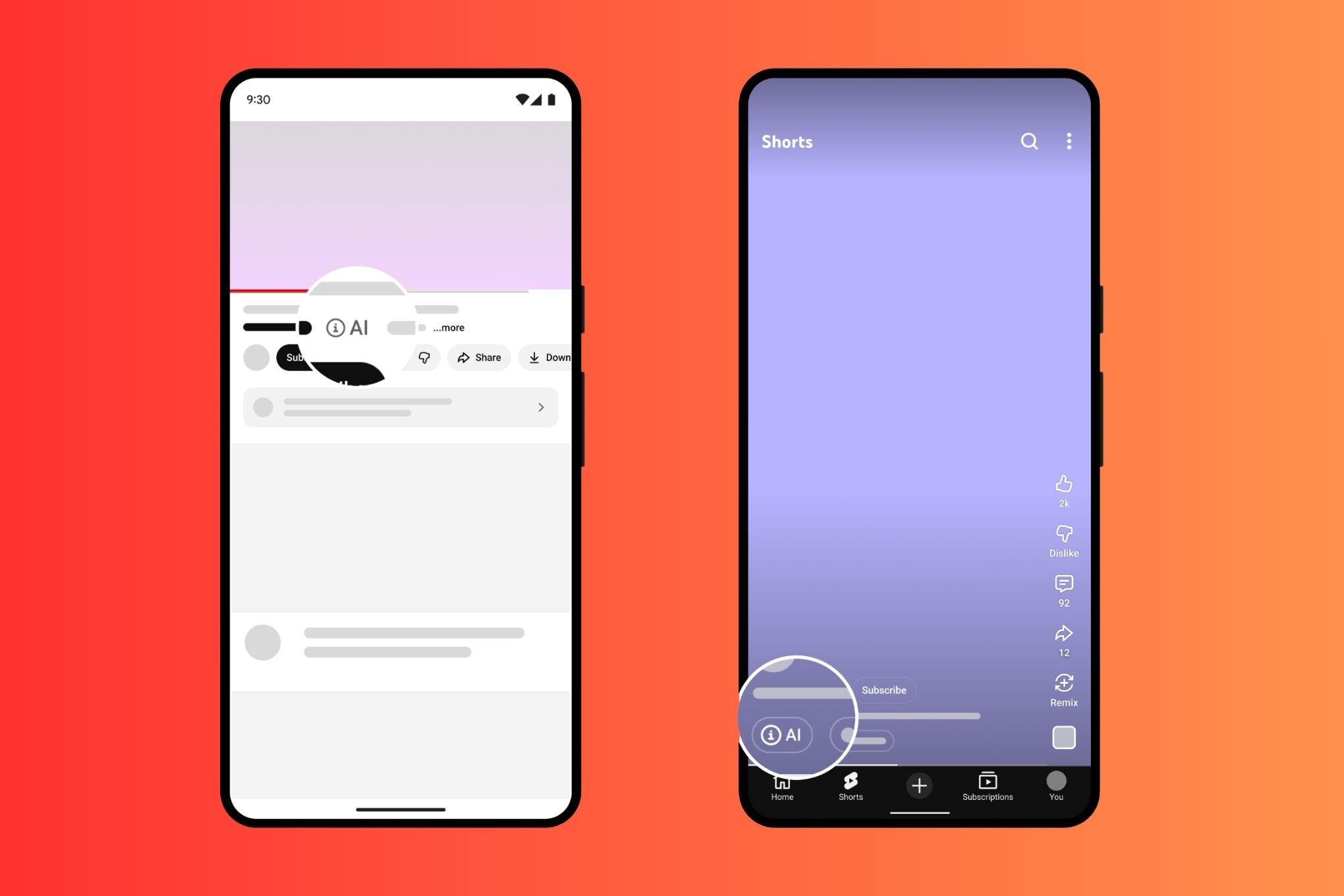
YouTube’s long, bewildering dance with AI disclosures is apparently over. Or at least, they’re making a half-hearted attempt at showing us where the digital fakery lies. The platform announced it’s moving those crucial AI labels out of the digital dust bunnies and onto the main stage. About damn time. For years, spotting AI-generated content felt like a scavenger hunt. You’d have to expand descriptions, squint at tiny text. A system built for apathy, frankly. Now, for standard videos, you’ll see a little “AI” next to an info symbol. Right there. Below the player. Above the description. Revolutionary, I know. For Shorts, it’s an overlay. Directly on the video. Imagine that. A label you can actually see while watching.
The Old Way Was Absurd
This is a stark improvement over the previous setup, which buried the AI disclosure deep within the “How this content was made” section. A place where, let’s be honest, few viewers ever bothered to venture. It was a technicality, not a transparent alert. They’ve admitted as much, sort of. YouTube stated, “By moving these labels on to the main stage, viewers get the context they need at a glance.” Yes, YouTube, that’s the point. Context. At a glance.
Is This Enough to Combat Deepfakes?
But let’s not get too excited. This is YouTube. They’re also deploying “new internal signals” to automatically catch AI videos. Which sounds good on paper. Until you remember that their definition of “significant photorealistic AI use” is still a moving target. Creators still have to manually disclose the photorealistic stuff. If they don’t, then YouTube’s AI steps in. It’s a reactive approach, not a proactive one. And what about content that’s animated, or only slightly altered? Those disclosures still live in the expanded description. So, the truly subtle stuff – the kind that can still be used for misinformation – remains hidden. A half-measure, at best.
And if a creator uses YouTube’s own AI tools? Or if the content has C2PA metadata? Those labels are permanent. Fine. But the reliance on creator honesty for the other stuff? It’s a gamble. Remember, these are the same folks who’ve struggled with copyright and moderation for years. Expecting them to suddenly become paragons of AI disclosure transparency feels… optimistic.
Permanent Labels for the Brave (or Foolish)
So, what’s the takeaway? YouTube is finally acknowledging that hiding AI disclosures was a terrible idea. They’re putting labels in more obvious places. They’re trying to automate detection. It’s a step. A small, shuffling step forward. But the real test will be their commitment. Will they stick with this? Will they expand it to cover more forms of AI manipulation? Or will this, like so many other platform announcements, fade into obscurity? Given their track record, I wouldn’t bet the farm on it.
Will This Make YouTube Safer?
Probably not entirely. It’s a good start for obvious photorealistic fakery. But sophisticated misinformation campaigns? They’ll find a way around this. The technology evolves faster than these corporate behemoths can implement policy. This is less about user safety and more about a compliance checkbox. And frankly, it’s about time they caught up to the reality of what’s on their platform.
🧬 Related Insights
- Read more: Rust for CPython: Slow March to Python’s Speed Salvation?
- Read more: Apple’s Zero-Day Double Whammy: iPhone Owners, Patch Up or Perish
Frequently Asked Questions
What does the new AI label on YouTube mean?
The new label indicates that a video has been identified as containing photorealistic AI-generated or meaningfully altered content. It aims to provide viewers with context at a glance.
Do I have to disclose AI use on my YouTube videos?
Yes, creators are required to manually disclose when they use photorealistic AI. If a creator doesn’t specify, and YouTube’s systems detect significant photorealistic AI use, an AI label will be applied automatically.
Are AI labels permanent on YouTube?
AI disclosures will be permanent if creators use YouTube’s AI tools like Veo or Dream Screen, or if the content contains C2PA metadata indicating it was fully AI-generated.