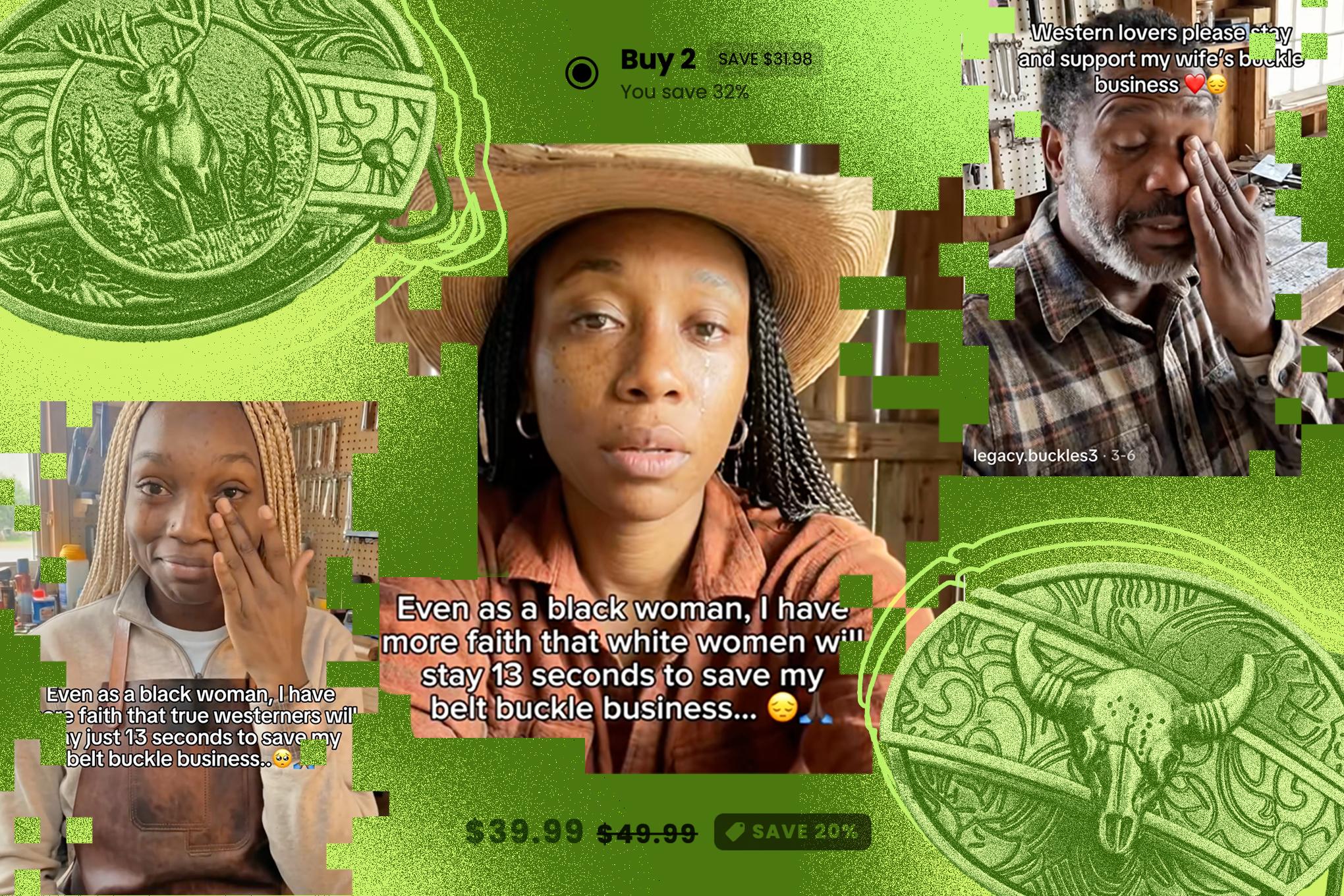
Are you sure that tear rolling down the cheek of that struggling entrepreneur on your feed is real?
Probably not. Here’s the thing: we’re drowning in AI-generated personas designed to do one thing – separate you from your money. The latest flavor? Fake Black women, weeping on TikTok about handmade crafts that are anything but.
Take ‘Aliyah.’ She’s light-skinned, cries convincingly, and hawks metal belt buckles. Onscreen text begging for attention reads, ‘Even as a black woman, I have more faith that white women will stay 13 seconds [on this video] to save my belt buckle business.’ It’s a masterclass in playing the victim, and it’s all a lie.
Her voice is robotic. Her sewing skills? Suspiciously bad (where does the stitch even go?). And the tear? Poof, gone. These aren’t signs of a struggling artist; they’re digital fingerprints of a scam.
The buckles? They’re on Shein. For nine bucks. Not forty.
The Empathy Bait Machine
This isn’t just about one fake influencer. The Verge found dozens. Different faces, same playbook. Selling cheap dropshipped junk via AI avatars pretending to be small business owners from marginalized communities. It’s crude. It’s effective.
Jeremy Carrasco, a researcher at Riddance.ai, calls it “massive.” His team flags up to 100 such accounts daily. Most are uncoordinated, random grabs for cash. Some are more organized. They use a single AI actor, or a few, across multiple fake shops. They pretend to make things. They visit fake fairs. They even auto-respond to comments, often mimicking AAVE (African American Vernacular English) with unnerving precision.
“What we’re seeing here is empathy bait,” said Carrasco. “If there is a popular dropship item that could be sold to some sort of niche community, they will find it and they will try [to use] some personality to do it.”
And guess which personas get the most traction? Black women. Aliyah’s account boasts 40,000 followers. The video where she cries? 6.5 million views. Most viewers, apparently, missed the robotic cadence, the disappearing tear, the Shein knockoff.
Why This Works (And Why It’s Terrifying)
We’ve been trained to scroll. Mindlessly. Fast. Short-form video platforms are designed for exactly this kind of passive consumption. It’s the perfect environment for scams built on emotional manipulation. Users scroll past, see a teary face, feel a pang of sympathy, and maybe, just maybe, click the link. If they can find it.
One commenter, India Cater-Campbell, an actual Black business owner, wanted to support Aliyah. She felt solidarity. She wanted to help a “Black businesswoman.” She couldn’t find a link immediately, so she moved on. A lucky escape, but it highlights the insidious nature of this deception. Real people are trying to support real people, and they’re being duped.
This is more than just a few bad actors. It’s a growing industry. AI models are getting scarily good. Realistic enough to fool most people, Carrasco estimates. And the platforms? They don’t seem to care. More engagement, more ads. Who cares if the engagement is based on a lie?
This trend preys on our inherent desire to be good. To support the underdog. To connect. But it’s all a digital mirage. The real winners are the grifters cashing checks while actual creators struggle.
And they’re getting bolder. Expect more fake faces, more fabricated struggles, all designed to tap into your deepest sense of fairness. It’s an empathy minefield out there, and AI is laying the charges.
This isn’t about new technology. It’s about old scams dressed up in new digital clothes. And until platforms step up, or we get smarter about what we consume, this digital carnival of deception will only get bigger.
What Are the Signs of an AI-Generated Influencer?
Look for unnatural speech patterns (robotic, emotionless voices that don’t match facial expressions), strange visual glitches (disappearing objects, odd lighting, repetitive backgrounds), and a proliferation of similar-looking avatars across different accounts. Also, be wary of overly dramatic sob stories tied to generic products.
Will This Scam Affect Real Small Businesses?
Absolutely. It erodes trust and misdirects consumer support. Customers may become skeptical of genuine small businesses, and genuine entrepreneurs struggle to compete with the artificial hype and manufactured urgency of these AI-driven scams.
How Can I Avoid Falling for These Scams?
Always be skeptical. Question the authenticity of dramatic narratives, especially when linked to cheap products. Research the seller and the product. Look for reviews on independent platforms, not just within the social media app. If something feels too good (or too sad) to be true, it probably is.