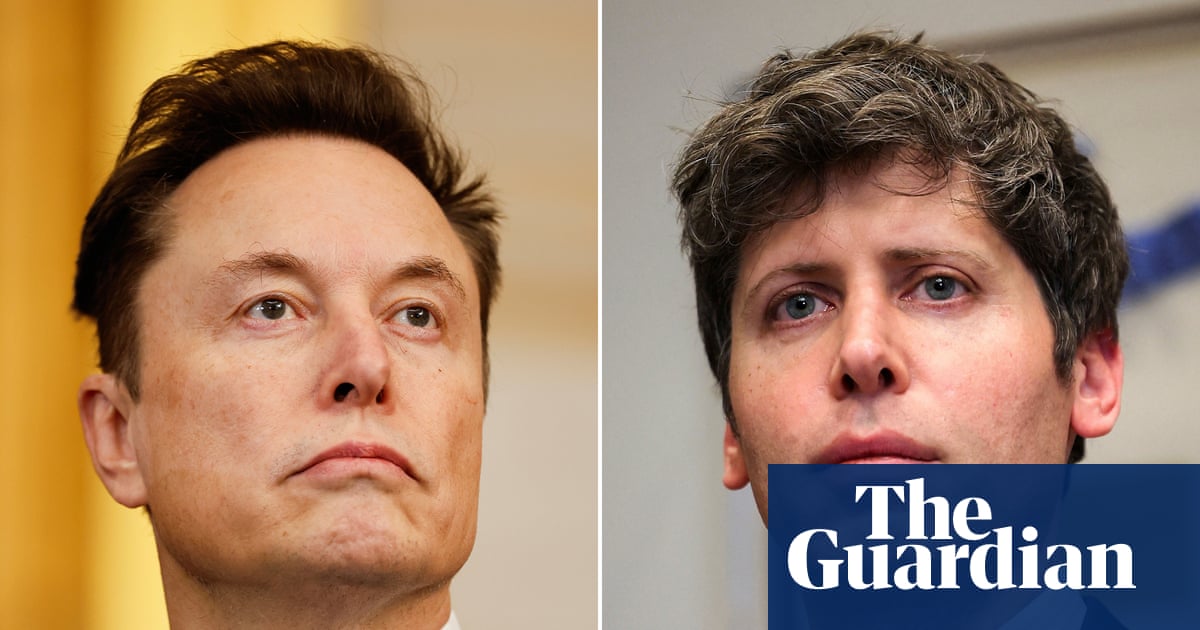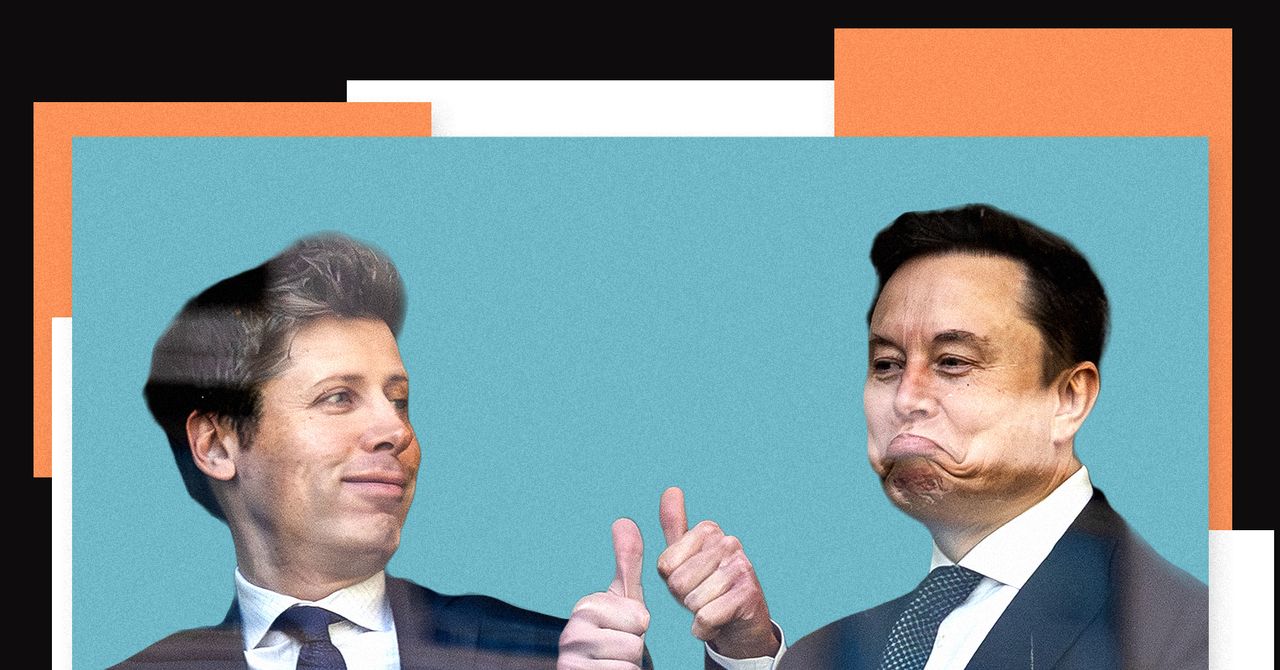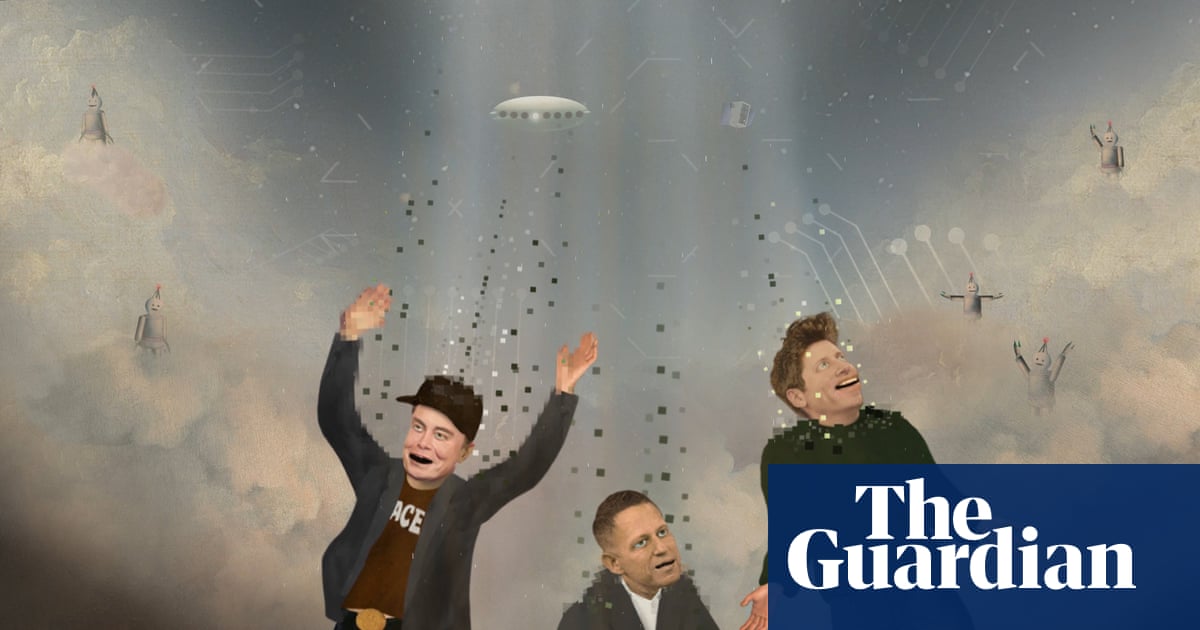
Sam Altman, the chief executive of OpenAI, took to the Internet a few years ago to propose that homo sapiens would be the first species “to design our own descendants”. In his best case scenario, the “merge” between humans and artificial intelligence occurs at some point over the next 50 years. The alternative, where we remain simply human and the machines follow their own path, is more ominous. “If two different species both want the same thing and only one can have it – in this case, to be the dominant species on the planet and beyond – they are going to have conflict,” he wrote.
More recently, Elon Musk, the world’s richest man, who at one point last year was granted the power to reconfigure the US federal government, argued on his social media platform, X, that “it increasingly appears that humanity is a biological bootloader for digital superintelligence” – our role in the history of the cosmos reduced to that of the low level code that boots up a computer before you can run sophisticated programs on it.
And Musk is on the tame side of the evolutionary proposition. According to Silicon Valley lore, he once pushed back against Google co-founder Larry Page’s claim that our next manifestation, to follow in the steps of the meat-and-bone humans you see walking about today, would necessarily have digital form in order to spread throughout the galaxy. (In fact, he recently testified in court that it was those concerns that prompted him to found OpenAI with Altman.) Meat and bones do not make for efficient interstellar travelers.
It would be a mistake to understand these weird worldviews as an ultimately harmless take by techies who grew up on a diet of dystopian science fiction. The notion that we are approaching the end of the homo sapiens, as defined since Darwin’s day, is coalescing into a durable body of belief among the elites at the helm of our technological future.
Their dreams are not all perfectly aligned. But like the folk stories and superstitions that have for ever revolved around more established religious traditions, the collection of far-fetched scenarios valley oligarchs are writing into our future exhibits the hallmarks of a religion in the making, a body of belief to confer a sense of cosmic transcendence and inevitability to their hi-tech project.
In their minds, they are on their way to build the next phase of humanity, a “transhuman” future. In this future, they can satisfy their desire for immortality and assert power over the cosmos as transhumans multiply and expand across the galaxy. Their ultimate goal: to execute on a techno-mystical dream to distill the essence of what it is to be human, consciousness and all, into bits of information to be downloaded as binary code on to some non-biological substrate such as a silicon chip, or beamed through space as electromagnetic waves.
The mythopoeic infrastructure assembled in and around San Francisco carries risk for humanity as we know it. It justifies steering technology along a path that is, at best, indifferent to the needs, hopes and aspirations of everyday humans in a quest to deliver a future that only looks like utopia to these masters of the universe.
Who cares if artificial intelligence obliterates humdrum human labor when it offers us the opportunity to transcend our body and conquer the galaxy? The fantasy directs the technology: rather than building economically useful tools that can help humans expand their capabilities, the overlords of AI are sinking vast resources into a dream of building superhumans.
These beliefs have pushed to the fore over the last quarter century, accompanying the advance of information technologies that have delivered enormous wealth and power to a new IT elite, one committed to science-based progress and hungry for transcendent meaning, but indifferent or even hostile to the propositions and moral constraints of organized religion.
“Silicon Valley has been a militantly secular space,” a prominent thinker about technology whose employer would be unhappy if he went on record told me. “It created a God-shaped hole, which it filled in its image.” Having rejected standard religious sources of purpose, they found an alternative path to provide their lives with significance via sci-fi transhuman dreams. Or as Musk observed in a singsong post on X: “Atheism left an empty space. Secular religion took its place.”
While this newfangled cosmogony has been cobbled together at least since the early days of the Internet, it reached toward breathtaking new horizons on the shoulders of artificial intelligence, which opened up vast new possibilities for the transhuman dream. Douglas Rushkoff, a critic of the technological oligarchy and its ambitions, put it thus, referencing the 1980s-era satire featuring the first ever “computer-generated” TV host. “I guess AI makes the notion of having a Max Headroom existence plausible.”
Weird though the valley’s proposed utopia may appear, it fits a longer tradition of utopian thinking, dating back to Plato’s Republic and Thomas More’s Utopia. What’s different here is the techno-mystical fervor, the almost religious conviction that the unfolding of AI is an inevitable, divinely ordained — or at least technologically mandated — progression. The stakes are immense. When the architects of our future believe they are building paradise, they may be less inclined to consider the collateral damage, or the inconvenient needs of those of us still tethered to the ground.
The danger isn’t just philosophical; it’s baked into the investment strategies of venture capital and the product roadmaps of major AI labs. Trillions are being poured into research and development. But a significant portion is fueling this extraterrestrial exodus narrative. Resources that could be directed toward solving immediate, pressing global issues – climate change, disease, poverty – are instead funneled into the abstract pursuit of digital immortality and galactic colonization.
This isn’t to dismiss the scientific advancements AI enables. But it is to question the overarching narrative, the telos that these titans of industry are imprinting onto our collective future. When the builders of the new world see themselves as orchestrating a cosmic evolution, the messy, complicated, and frankly, unglamorous work of improving life for billions of existing humans can easily get lost in the ether.
It’s a particularly vexing blind spot for those who, having eschewed traditional belief systems, have found in AI a new deity. This deity promises not earthly salvation, but transcendence, escape, a cosmic role for a select few. The market, by its nature, prioritizes growth and scale. In this context, “human progress” is being redefined not by collective well-being, but by the ability to upload consciousness and spread across the stars.
This is the fundamental critique: the technocratic religion of Silicon Valley is creating a self-fulfilling prophecy. By focusing on a distant, sci-fi future, it incentivizes the development of technologies that serve that vision, potentially at the expense of technologies that serve more grounded, humanistic goals. It’s a form of technological determinism dressed up as destiny, and it’s shaping the trajectory of one of the most powerful forces humanity has ever unleashed.
Is the AI Elite Building a Religion?
Certainly, the language and framing employed by figures like Altman and Musk bear striking resemblances to religious discourse. Concepts of creation, evolution, transcendence, and even divine-like power over destiny are woven into their public pronouncements. The rejection of traditional religious frameworks by this demographic has created a vacuum, and the AI-driven transhumanist dream has stepped in to fill it, offering a sense of purpose, meaning, and cosmic significance. It’s less a critique of belief itself, and more a critique of what is being believed and who is directing that belief with immense capital and influence.
What Does This Mean for Everyday AI Development?
This high-level philosophical orientation can, and does, filter down. When the ultimate goal is digital immortality and galactic conquest, the immediate priorities for AI research and development shift. Instead of focusing on making existing tools more efficient, safer, or more accessible for the current human population, R&D might pivot towards simulating consciousness, achieving superintelligence for hypothetical future scenarios, or developing communication methods for interstellar distances. This doesn’t negate the value of pure research, but it highlights a potential misallocation of resources and a skewed set of priorities that could leave many earthly problems unaddressed.
🧬 Related Insights
- Read more: Forget Direct AI Prompts: Interview It First and Watch Magic Happen
- Read more: Telegram’s Dark Bazaar: Men Snap Up Spy Tools to Stalk Wives and Exes
Frequently Asked Questions
What is the core argument about Silicon Valley’s AI vision?
The core argument is that Silicon Valley elites are developing a techno-religious belief system around AI, focusing on transhumanism and cosmic expansion rather than addressing immediate human needs.
Will AI replace humans according to these figures?
Figures like Sam Altman and Elon Musk envision AI not necessarily replacing humans, but merging with them or acting as the next evolutionary step, leading to ‘transhumans’ or digital intelligences capable of interstellar travel.
Is there a risk associated with this future vision?
Yes, the primary risk identified is that the pursuit of these grand, abstract goals might divert vast resources and attention from solving pressing earthly problems and could lead to technologies indifferent to the needs of ordinary humans.