For the average person scrolling through social media, a perfectly rendered portrait is just that – a portrait. But increasingly, those faces aren’t real. They’re synthetic, churned out by algorithms that have become so sophisticated they’re starting to fool even the keenest eyes. This isn’t just an academic curiosity; it has real-world implications for everything from online identity to the spread of misinformation. A new test from the University of New South Wales (UNSW) aims to gauge just how good we are at spotting these digital doppelgängers.
The Blurring Line Between Reality and Algorithm
It’s not just about a few oddities anymore. Generative Adversarial Networks (GANs) and similar AI models have reached a point where they can produce hyper-realistic images, including human faces, with astonishing detail. The ‘this person does not exist’ phenomenon has moved from a novelty to a pervasive element of the digital landscape. This raises immediate concerns about authenticity and trust online. How can we be sure the person we’re interacting with, or the image we’re seeing, is genuine when AI can conjure them up from scratch?
Consider the implications for journalism, where visual evidence is often paramount. Or for online marketplaces where seller profiles might be entirely fabricated. The ability of AI to generate convincing human likenesses means the stakes for verification are higher than ever. It’s a race where technology often outpaces our ability to regulate or even comprehend its effects.
How Good Are We, Really?
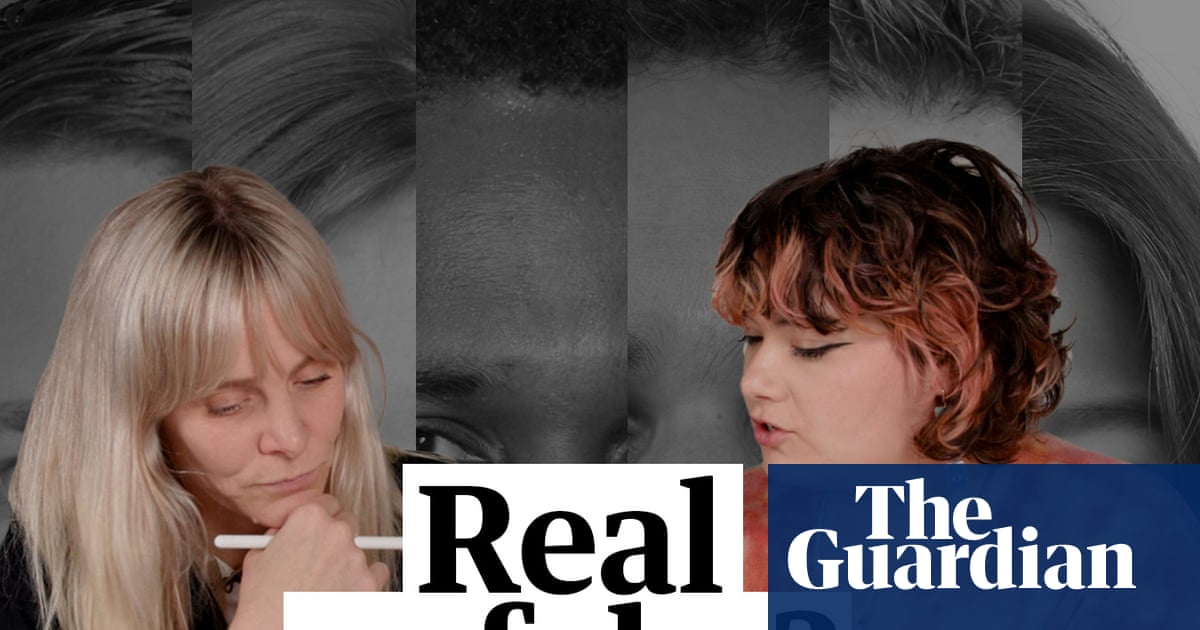
The UNSW AI Faces test, developed by researchers there, challenges users to differentiate between photographs of real people and AI-generated images. It’s a simple premise, but the execution is where the difficulty lies. Guardian Australia’s Carly Earl and Matilda Boseley, both presumably with a professional eye for detail, took the test. Their experience highlights just how challenging this task has become. It’s not a matter of just ‘vibes’ anymore; it requires a nuanced understanding of subtle visual cues—or perhaps, a growing reliance on AI tools to detect AI-generated content.
This human test is more than just a game; it’s a diagnostic. It shows where our collective perceptual capabilities stand against increasingly advanced AI. And the results? They likely reveal a significant gap, indicating that our reliance on visual intuition alone is becoming insufficient.
“The AI-generated faces are so good that it’s hard to tell the difference. It’s not just a few glitches anymore; they’re incredibly realistic.”
This quote, echoing the sentiment of many who have encountered high-quality AI art, underscores the core problem. The sophistication of these models means that mere aesthetic judgment isn’t enough. The AI isn’t just creating faces; it’s mastering the subtle imperfections and variations that define human appearance.
Beyond the ‘Vibes’: The Data-Driven Approach
What’s interesting here is that the test itself signifies a shift. We’re moving from an era where identifying AI might have been a matter of spotting the obvious flaws (a thumb with six fingers, or a background that makes no sense) to one where we need data-driven, potentially AI-assisted, methods. This is what the UNSW test is trying to operationalize – can we codify the characteristics that betray an AI’s origin?
It’s not just about random guessing. Experts suggest there are statistical anomalies and patterns that AI models, despite their advancement, might still exhibit. For instance, inconsistencies in lighting, unnatural symmetry, or a lack of subtle micro-expressions can be giveaways. However, these are becoming harder and harder to discern without specialized tools or rigorous training.
The market for AI-generated imagery is exploding. Companies are using these tools for marketing, content creation, and even virtual avatars. This economic incentive fuels further development, pushing the boundaries of realism. As the technology becomes more accessible, the number of AI-generated faces will only increase, making the problem of detection even more pressing.
The Future of Identity and Trust
This isn’t just about fooling users on a website. The implications are far-reaching. Imagine AI-generated profiles used for sophisticated phishing scams, or deepfakes used to spread political disinformation. The erosion of trust in visual media could have profound societal consequences. Our current authentication methods, which often rely on visual identification or user profiles, may become increasingly vulnerable.
Perhaps the most critical insight is that this challenge demands a multi-pronged approach. Education is key, as the UNSW test implies. We need to understand the capabilities of AI. But we also need technological solutions – AI detection tools that can analyze images for algorithmic signatures. Furthermore, clear regulatory frameworks will be necessary to govern the creation and use of synthetic media, especially when it can be used to deceive.
Ultimately, the ability to distinguish real from AI is becoming a fundamental digital literacy skill. As the technology advances, our own faculties will be tested, and likely, augmented. It’s a continuous game of cat and mouse, where the mouse is getting incredibly clever.
A historical parallel might be the early days of digital photography and Photoshop. Initially, manipulated images were easier to spot. Over time, the tools became more sophisticated, and the need for forensic image analysis grew. We’re seeing a similar, accelerated evolution with AI-generated imagery. The difference is the scale and speed at which AI can operate.
🧬 Related Insights
- Read more: Cursor Composer 2’s Hidden Engine: Kimi K2.5 and the Trust Fallout for Devs
- Read more: DocuPil: AI Crawls Your Site, Builds Docs—Reality Check
Frequently Asked Questions
What is the UNSW AI Faces test? The UNSW AI Faces test is an online challenge designed to assess a user’s ability to distinguish between real photographs of human faces and faces generated by artificial intelligence.
Will AI-generated faces replace real photos? It’s unlikely they will completely replace real photos in all contexts, especially where genuine human emotion and authentic representation are critical. However, they are increasingly being used for synthetic content generation, marketing, and virtual environments.
How can I tell if a face is AI-generated? While it’s becoming harder, potential tells include unnatural symmetry, inconsistent lighting, lack of subtle micro-expressions, or strange artifacts in the background. Specialized AI detection tools are also being developed to identify algorithmic patterns.