AI's 'Quiet Scandal': Why JEPA Might Finally Teach Machines Common Sense
We’ve built AI that can write poetry and pass the bar, yet struggles with a falling coffee cup. Is this a scaling issue, or a fundamental architectural flaw?

⚡ Key Takeaways
- Current generative AI models excel at predicting tokens/pixels but lack real-world causal understanding, unlike humans. 𝕏
- JEPA (Joint Embedding Predictive Architecture) aims to teach AI by predicting abstract representations (meanings) rather than raw data, mirroring human intuition. 𝕏
- This architectural shift could unlock true AI reasoning capabilities, with significant implications for fields like robotics and autonomous systems. 𝕏

Worth sharing?
Get the best AI stories of the week in your inbox — no noise, no spam.
Originally reported by Towards AI
Related Stories

Large Language Models
LeCun's JEPA Exposes LLM Limits — AGI's Next Frontier?
Large Language Models
Claude Shannon Died in 2001: AI's Digital Ghost
AI Research
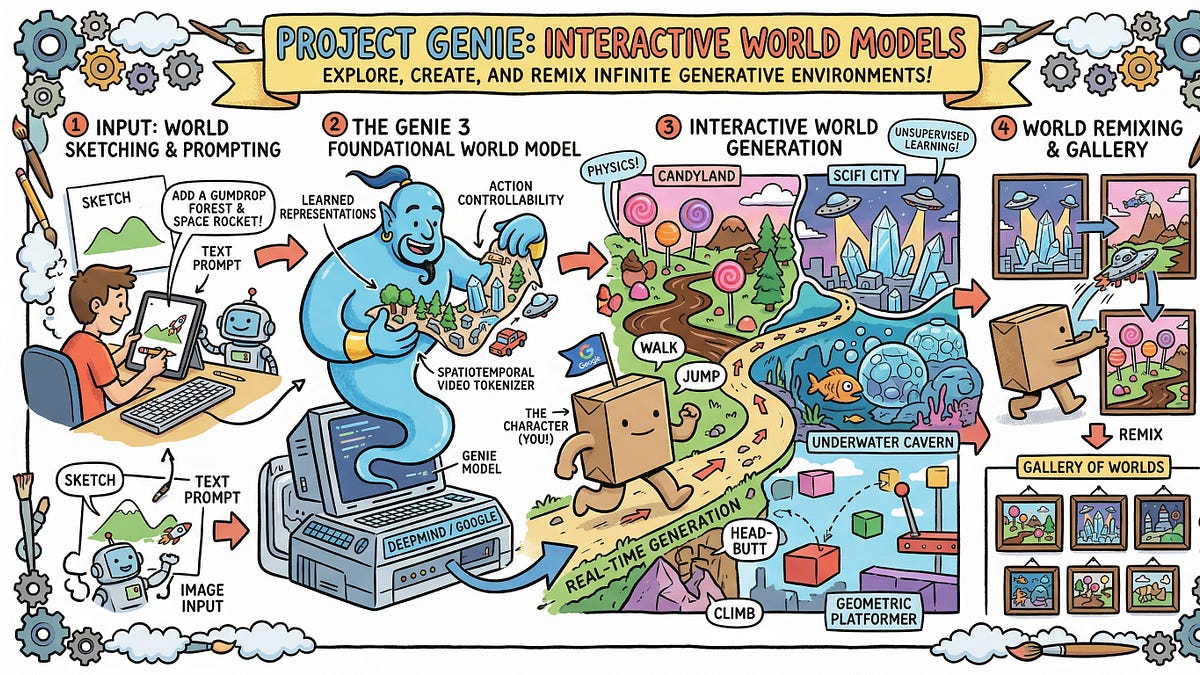
DeepMind's Project GENIE: Pixels to Playable Worlds, or Just Fancy Hallucinations?

AI Research