Ever wonder why quantum computers, with all their mind-bending potential, aren’t churning out AI breakthroughs on every corner? It’s not the qubits’ fault. It’s the data. Or rather, the agonizingly slow process of getting that data where it needs to go.
We’re talking about Quantum Machine Learning (QML). Sounds fancy, right? It is. It also suffers from a problem so fundamental, so infuriatingly simple, it makes you want to toss your quantum processor out the window. Quantum computers can’t read bits. Shocking, I know. They’re built for the ethereal dance of superposition and entanglement, not the mundane 0s and 1s that populate our digital lives.
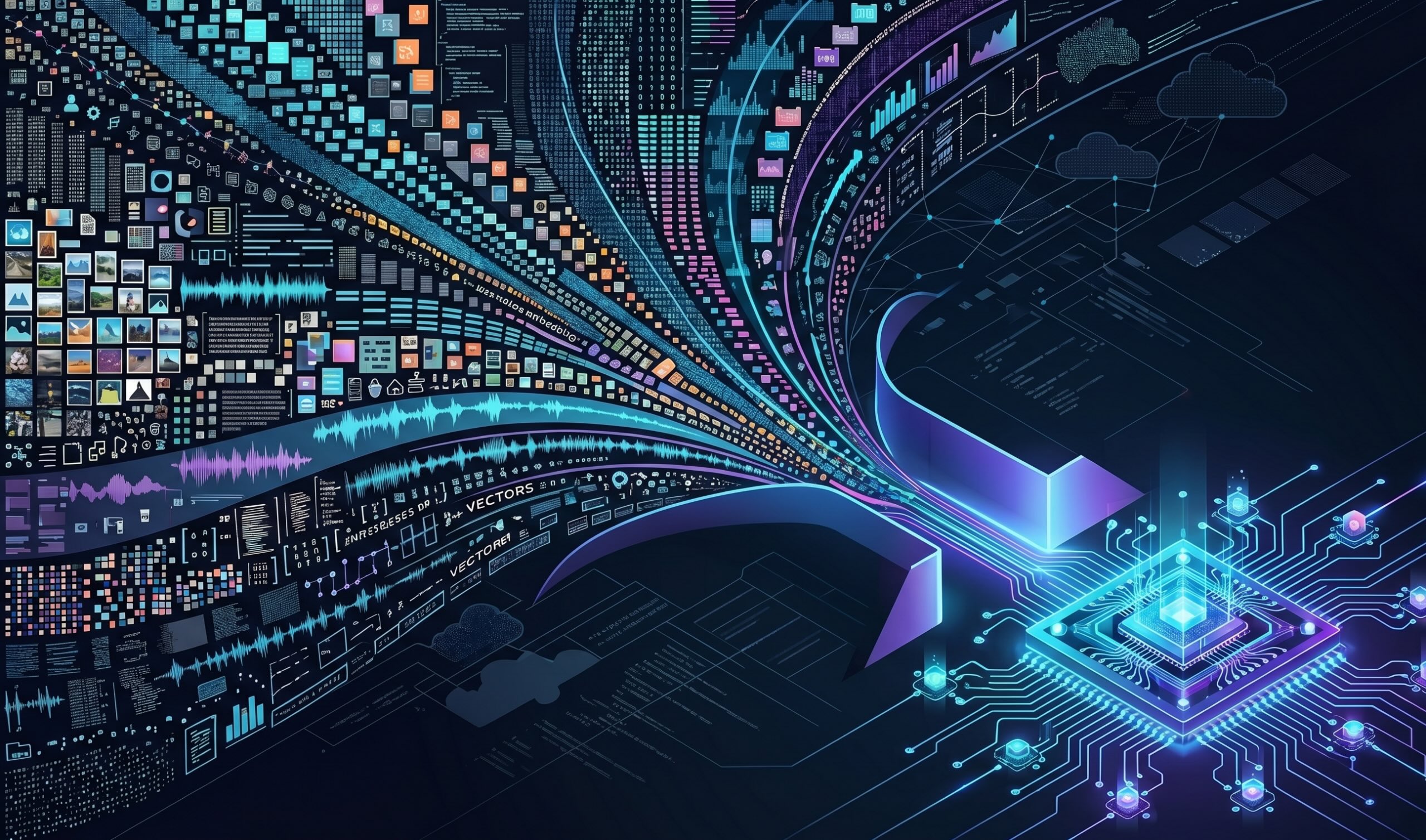
Classical neural networks? They gobble up data. Images, text, sound waves – it’s all just numbers to them, a structured buffet of vectors and tensors. Think of it like this: a neural network sees a painting and converts it into a spreadsheet of RGB values. Easy peasy. It’s designed for this. It thrives on it. More data equals better generalization. That’s the golden rule.
But quantum computers? They’re different beasts. They operate on qubits. And qubits, bless their quantum little hearts, don’t speak the language of bits. They speak the language of quantum states. So, before any actual quantum computation can even begin, that classical data – your spreadsheets, your images, your cat videos – has to be painstakingly translated, embedded, into these quantum states. This isn’t just a translation; it’s a full-blown quantum state preparation.
And here’s the kicker: it’s hard. Mind-bendingly hard. As the data gets bigger, the cost of preparing these quantum states can explode. We’re talking exponential growth in complexity. No one has a magic bullet for loading arbitrary classical data into quantum systems efficiently. It’s the hidden bottleneck, the silent killer of QML progress.
The Data Loading Bottleneck: A Closer Look
Researchers have tossed around a few ideas. Angle encoding, for instance. It’s simple, really. You take a piece of data and map it to an angle on a qubit. Rotate the qubit accordingly. Boom. Done. Or amplitude encoding. That’s where you use the amplitudes of the qubits to represent your data. Clever, perhaps. But is it efficient? Not really, especially as the dimensions of your data climb. For a d-dimensional data point, amplitude encoding can require a number of qubits that grows logarithmically with d, but preparing those states can still be costly. Angle encoding, while simpler, can be less powerful in terms of representing complex correlations.
As the size and complexity of the data increase, the cost of preparing these quantum states can grow exponentially. In fact, no universally efficient method for loading arbitrary classical data into quantum systems is currently known.
This isn’t just an academic niggle. It’s a fundamental constraint. Imagine trying to feed a supercomputer the size of a city through a drinking straw. That’s roughly the scale of the problem. We’re building these incredibly powerful quantum machines, capable of tackling problems that would make classical computers weep, but we’re hobbled by our inability to get the information in them at a rate that makes sense.
Why This Matters for the Future of AI
So, what does this mean for the grand promises of QML? It means we’re still in the very early stages. The hype is outpacing the reality. We’re seeing theoretical papers, small-scale demonstrations, but the widespread application of QML is being held back not by the algorithms, but by the plumbing. This isn’t a problem that can be solved with a better algorithm. It’s a hardware and systems engineering challenge. It demands innovation in how we interface classical and quantum systems.
One promising avenue? Hybrid approaches. Using classical computers to do what they do best – data preprocessing, feature extraction – and then feeding the condensed, more manageable quantum-ready information to the quantum processor. Think of it as a specialized data funnel. Another is developing quantum memory that can store quantum states more directly, reducing the need for constant re-encoding. But these are complex, long-term solutions.
What about more direct data loading? Some research is exploring ways to use quantum hardware itself to perform the encoding, rather than relying solely on external classical control. This could potentially speed things up, but it adds its own layer of complexity to the hardware design and control.
We’re essentially stuck trying to build a faster car without a proper road. The engine is incredible, but the journey is hampered by infrastructure. This data loading issue is a stark reminder that building a new computing paradigm isn’t just about the processor; it’s about the entire ecosystem surrounding it.
The race for practical QML isn’t just about quantum algorithms; it’s about the humble, yet critical, act of getting data into the machine. Until we solve that, the true power of quantum computation in AI will remain largely theoretical, a tantalizing glimpse of what could be, rather than the reality we’ve been promised.
**
🧬 Related Insights
- Read more: 1,600 npm Downloads Expose MCP’s Side-Hustle Goldmine
- Read more: Cash App Splits Your Buddy’s Bar Tab into Four Easy Payments
Frequently Asked Questions**
What does quantum data embedding actually do?
Quantum data embedding translates classical data, like numbers or images, into quantum states (qubits) that a quantum computer can process. It’s a necessary first step before any quantum computation can occur.
Will this data bottleneck stop Quantum Machine Learning?
It’s a significant hurdle, not necessarily a full stop. Researchers are actively working on solutions, including hybrid classical-quantum approaches and improved encoding techniques, but it’s a major challenge that is slowing down progress.
Is amplitude encoding better than angle encoding?
Both have pros and cons. Amplitude encoding can represent more information per qubit but is often more computationally expensive to prepare. Angle encoding is simpler but may not capture as much data complexity. The best choice depends on the specific QML task.