Google’s new Fitbit Air is here, and it’s a deliberate retreat from the increasingly cluttered smartwatches that dominate the wearables market. Forget screens; this device is a tiny, almost imperceptible puck of sensors meant to live on your wrist. You’re meant to forget it’s there, which, frankly, is a welcome change. But where you won’t forget it’s there is in the AI-powered health platform that underpins it all. And that’s where things get… interesting.
No Frills, Just Data
The Fitbit Air strips away the extraneous. No speaker. A single LED for battery status, checked by a double-tap. That’s it. Notifications? Forget about it. Haptic feedback is reserved solely for alarms. It’s a deliberate design choice, a stark contrast to the notification deluge most of us actively try to avoid. This isn’t a smartwatch extension; it’s a dedicated health monitor. This minimalist approach, while refreshing, immediately raises questions about user engagement and the inherent value proposition when so much functionality is relegated to a companion app.
Bandwagon Economics: Overpriced Accessories
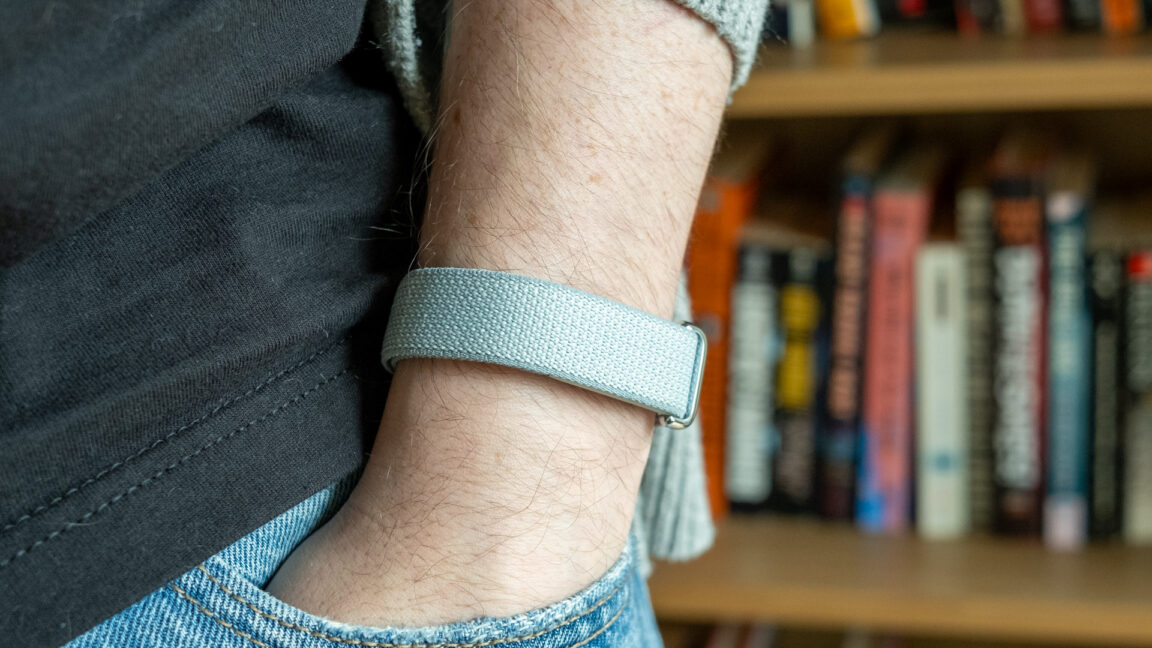
And then there are the bands. Google’s commitment to proprietary connectors for wearables — a strategy that’s historically hobbled third-party support on Pixel Watches — hasn’t exactly inspired confidence. For the Air, the approach is different: a snap-in system. Simple. Effective. Yet, the first-party options are eye-watering. A $35 silicone band feels like highway robbery, and the $50 polyurethane option? That’s half the cost of the tracker itself for a marginal aesthetic upgrade. It’s a classic bait-and-switch tactic: low hardware cost, high accessory margin.
While $35 for a bit of silicone is rather spendy, that’s nothing compared to the $50 Elevated band, which is a more understated polyurethane option.
This pricing strategy feels less like a business decision and more like a test of consumer tolerance. For a device intended to be unobtrusive and, presumably, accessible, these band costs create an immediate barrier to a truly personalized experience.
The ‘Coaching’ Conundrum: Is Google’s AI Too Nice?
The real story, however, isn’t the hardware. It’s Google’s AI. The company proudly touts an AI-driven health platform designed to be your personal coach. But based on early impressions, this AI seems to be a corporate diplomat rather than a drill sergeant. While user-friendly AI is generally a good thing, in the context of health and fitness coaching, a certain level of assertiveness or even bluntness can be motivating. Google’s AI, it appears, is afraid to offend. It delivers insights with a gentle nudge, offering suggestions rather than directives.
Think about it: real coaching, whether in sports or business, often involves pushing boundaries, identifying weaknesses, and providing actionable, sometimes uncomfortable, feedback. If your AI coach is too polite, too agreeable, it risks becoming background noise. Will users respond to gentle encouragement when they’re struggling with motivation, or do they need something more compelling? The market is flooded with devices that tell you your stats; the differentiator is supposed to be actionable intelligence and behavioral change.
A Historical Parallel: The ‘Friendly Robot’ Trap
This reminds me of early attempts at personalized learning software, where the AI was programmed to be universally encouraging. The result? Students quickly learned they could coast. The AI wouldn’t penalize them, wouldn’t push them. It was a nice experience, but not an effective one for driving significant improvement. Google’s AI appears to be falling into a similar trap, prioritizing a positive user experience over the rigorous demands of genuine behavior modification. It’s the digital equivalent of a pat on the back when what’s needed is a firm shake.
The data-driven analyst in me sees a market where differentiation is key. Fitbit Air’s hardware is a strong play for simplicity. But if the AI coaching is merely a digital echo of polite encouragement, its long-term impact will be negligible. The true test isn’t how well the AI tracks your steps, but how effectively it compels you to take more. Early indicators suggest Google’s AI is too busy being nice to actually be effective.
Will this AI replace my job?
Not directly, but it might change how you approach your work. The AI in the Fitbit Air is focused on personal health tracking and gentle guidance. It’s not designed for complex decision-making, creative problem-solving, or tasks requiring human-level judgment. However, as AI advances, it will undoubtedly automate more data analysis and provide more sophisticated insights, potentially augmenting or changing certain roles.
What does the Fitbit Air actually do?
The Fitbit Air is a screenless health tracker. Its primary function is to collect biometric data like heart rate, activity levels, and sleep patterns. This data is then processed by Google’s AI platform, which provides insights and coaching suggestions through a companion app. It intentionally lacks on-device smart features like notifications or a speaker, focusing solely on health monitoring.
Are the Fitbit Air’s bands worth the cost?
Based on the pricing, the first-party Fitbit Air bands appear significantly overpriced, especially the $50 polyurethane option which costs half as much as the tracker itself. While proprietary accessories can sometimes be expensive, the cost-to-value ratio here seems questionable, suggesting users might be better off seeking third-party alternatives if available, or sticking with the included band.