Did you ever stop to think about the physicality of AI? We’ve been so busy teaching machines to talk and write, we almost forgot they need to interact with the actual, messy, three-dimensional world we inhabit. Well, hold onto your hats, because NVIDIA just threw the kitchen sink—and a whole lot more—at this problem.
It’s a platform shift. A fundamental re-wiring of how we conceive of and build artificial intelligence. Forget the static text-based models; we’re talking about AI that can perceive, reason, and act across language, image, video, audio, and even physical actions, all in one go. This is the promise of NVIDIA’s newly unveiled Cosmos 3.
Imagine an AI like a hyper-observant, multi-talented artist who also happens to be a brilliant physicist and a seasoned choreographer. That’s the essence of Cosmos 3. It’s not just a model; it’s a whole architecture – a Mixture-of-Transformers – designed to weave together all our sensory inputs and output commands for real-world tasks. We’re getting base Nano (16B) and Super (64B) versions, plus specialized Text2Image and Image2Video fine-tunes that are apparently nudging the SOTA needle, sitting pretty just shy of some unreleased internal NVIDIA tech. This isn’t just about generating pretty pictures anymore; it’s about generating understanding.
The Era of Open, Physical Intelligence Dawns
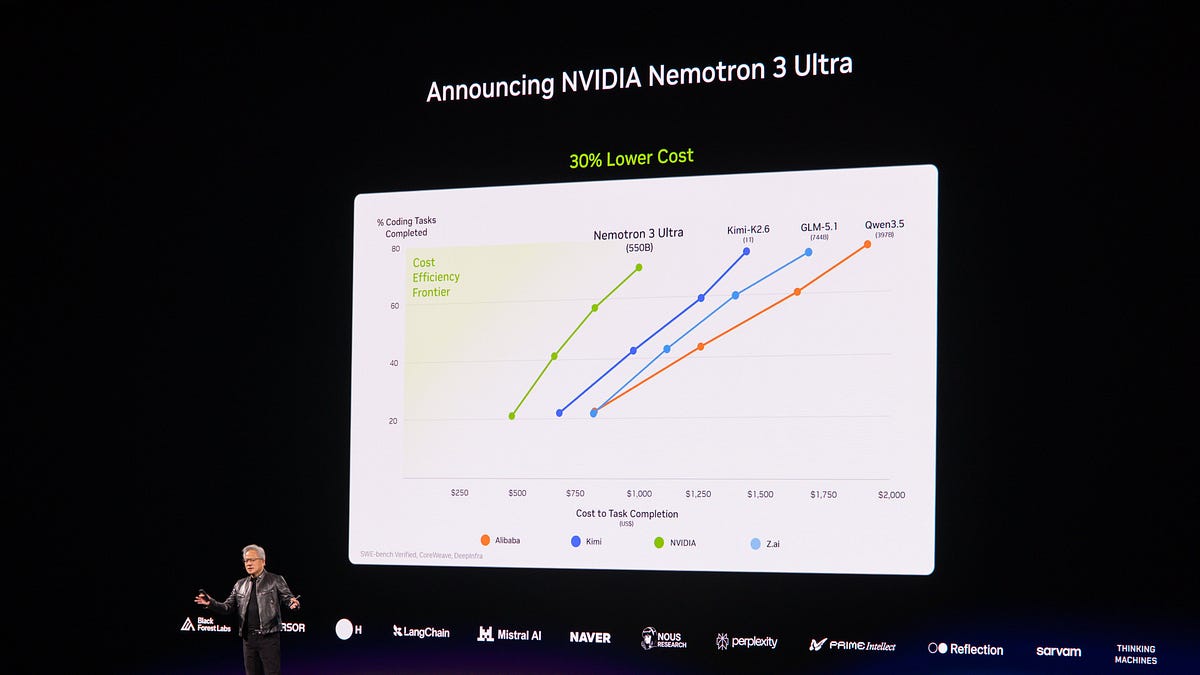
And Jensen Huang, bless his tech-evangelist heart, didn’t stop there. At Computex, he also unleashed Nemotron 3 Ultra, a colossal 550B open-weight LLM that’s already making waves as the new king of the hill for U.S.-based open models. Think of Nemotron as the brainiest, fastest, and most accessible conversationalist in the room – capable of processing information at speeds that make previous giants look sluggish. The chatter around it suggests it’s not just about raw power, but also about efficiency, potentially serving responses at over 300 tokens per second. That’s the kind of speed that moves AI from a novelty to a utility.
What’s truly remarkable here is NVIDIA’s commitment to an open ecosystem. The Cosmos 3 release isn’t just about the models themselves; it’s a full-stack offering: weights, code, datasets, and even the recipes for fine-tuning. They’ve even launched the Cosmos Coalition with partners like Runway. This is HUGE. It’s like Apple suddenly deciding to open-source macOS and hand out free MacBooks. It signals a deliberate strategy to democratize the development of what NVIDIA is calling “physical AI.”
Cosmos 3 unifies language, image, video, audio, and action in a single Mixture-of-Transformers design pairing an autoregressive reasoner with a diffusion generator.
This isn’t just corporate PR spin; it’s a strategic pivot. For years, we’ve seen AI research largely confined to digital realms. Cosmos 3 is NVIDIA’s explicit attempt to bridge that gap, to create AI that can truly understand and interact with the physical world. This has massive implications for robotics, autonomous systems, and any application where AI needs to go beyond the screen.
Why Does This Matter for Developers?
This launch fundamentally changes the game for anyone building with AI. The availability of powerful, open-weight, omnimodal models like Cosmos 3 and the efficient, massive Nemotron 3 Ultra means developers can now experiment and build with a level of sophistication previously reserved for the absolute giants of the industry. We’re talking about the ability to create AI agents that can understand not just text prompts, but visual cues, audio commands, and sequences of actions. This opens up a universe of possibilities for creating more intuitive interfaces, more capable robots, and more intelligent applications.
The community reaction has been electric. Posters on AI Twitter are buzzing about Nemotron 3 Ultra’s speed and capabilities, with some noting its architecture seems less sparse than its peers, which could have fascinating implications for both cost and behavior. On the Cosmos 3 front, it’s about the sheer ambition – unifying modalities in a way that feels less like combining separate tools and more like building a unified intelligence. The AI community is practically vibrating with the potential.
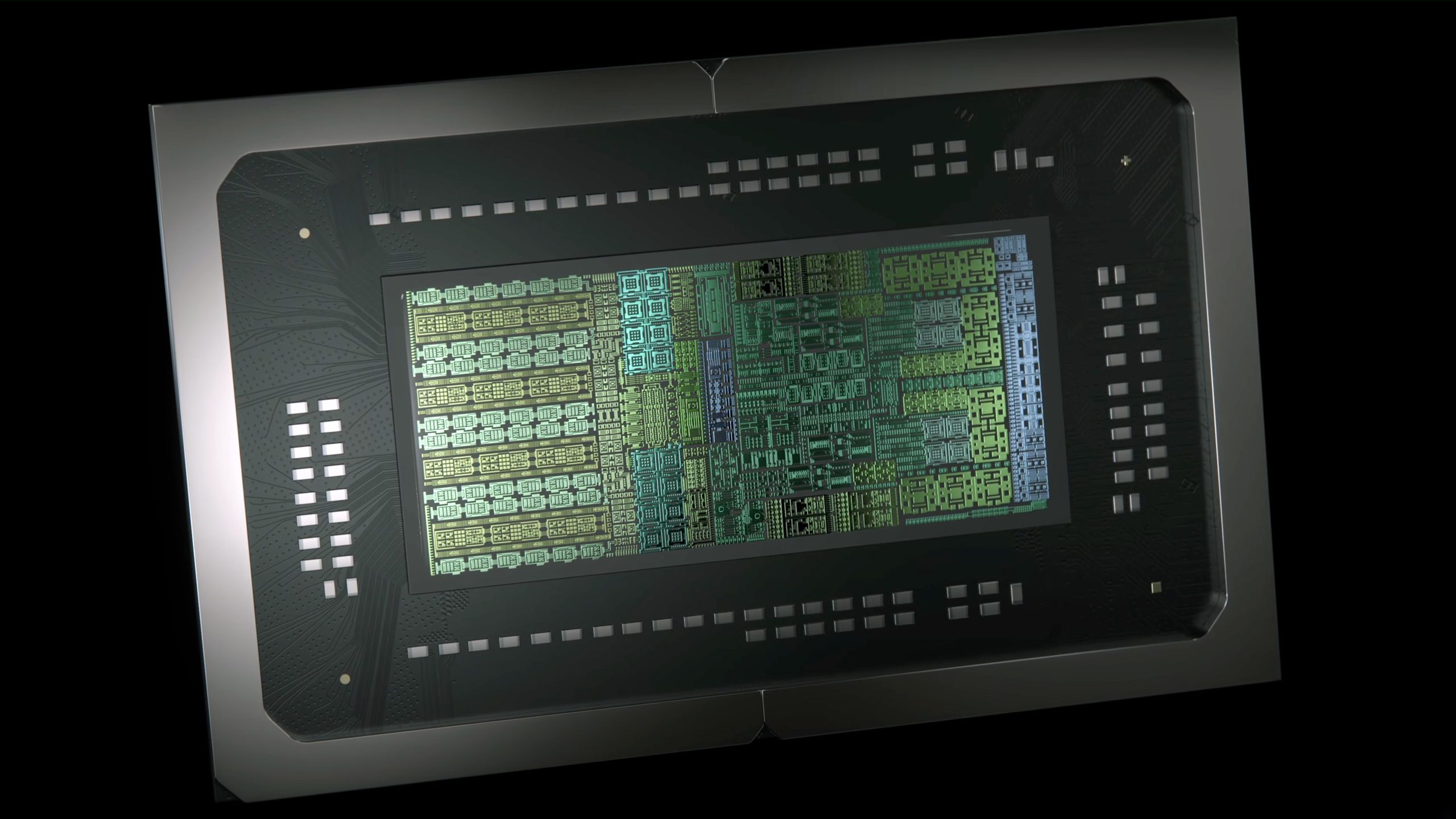
And let’s not forget the RTX Spark. NVIDIA is also previewing this 1-petaflop superchip for personal computers, partnering with Microsoft and others. This is the hardware underpinning the future of AI on our desks, bringing supercomputing power to individual workstations. It’s the physical manifestation of NVIDIA’s software ambitions.
This isn’t just an incremental update; it’s a statement of intent. NVIDIA isn’t just building better AI models; they’re building the foundational platform for AI’s next act – an act where AI steps out of the screen and into our world. The AI catch-up just got a whole lot more interesting.
🧬 Related Insights
- Read more: Notifee Bites the Dust: react-native-notify-kit Steps In as the No-Bullshit Replacement
- Read more: The _id Sort That Nuked Our OpenSearch Cluster: A Heap of Trouble
Frequently Asked Questions
What is NVIDIA Cosmos 3?
NVIDIA Cosmos 3 is a family of omnimodal world models designed to unify language, image, video, audio, and action understanding in a single architecture, enabling AI to interact with and reason about the physical world.
What is Nemotron 3 Ultra?
Nemotron 3 Ultra is a 550 billion parameter open-weight large language model released by NVIDIA, noted for its high efficiency, speed, and strong performance in open evaluations.
Will this make AI more physical?
Yes, the explicit goal of Cosmos 3 and the associated open ecosystem is to advance AI’s ability to understand and operate within the physical world, moving beyond purely digital interactions.