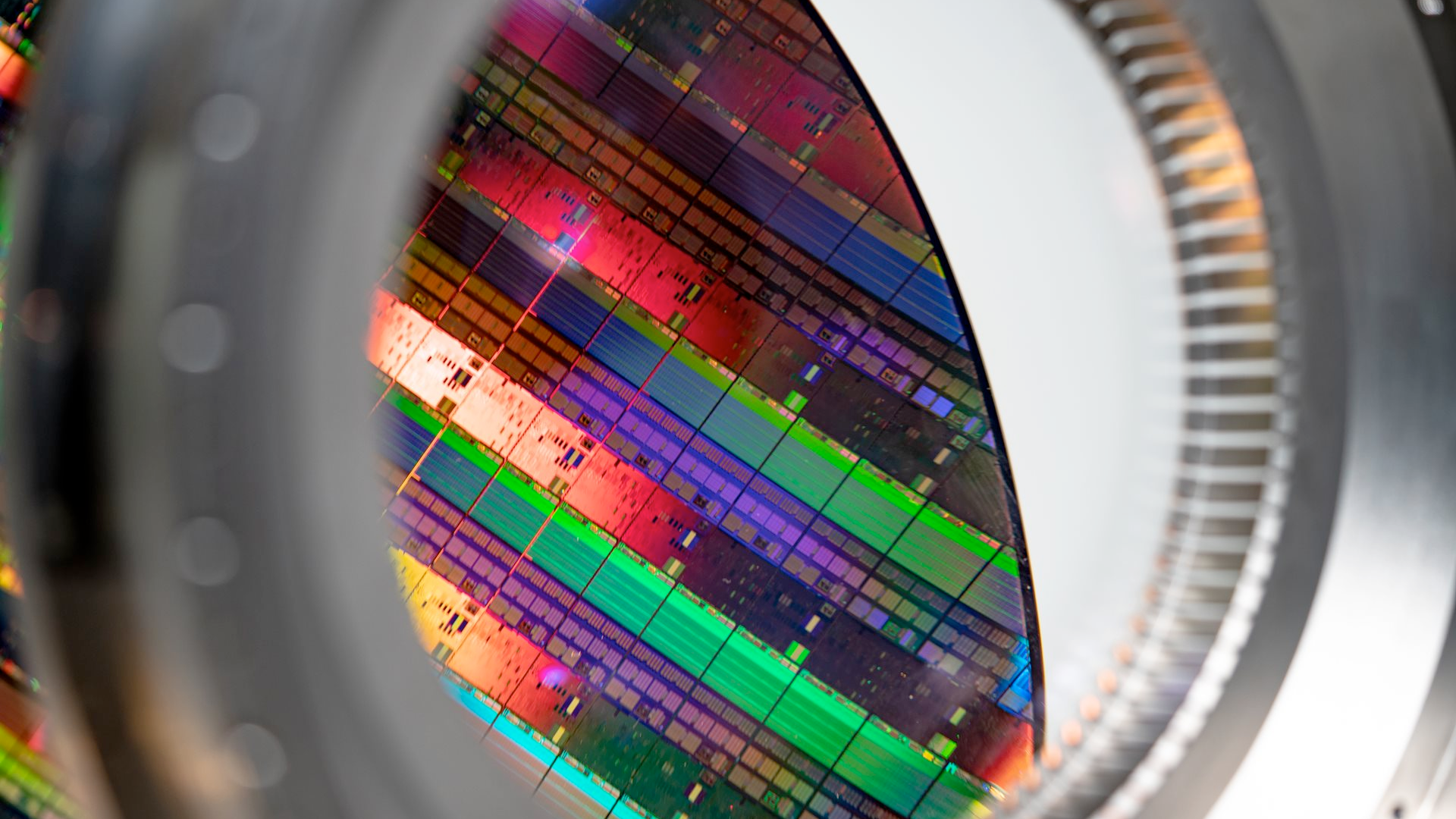
The prevailing narrative in semiconductor lithography has long been dominated by ASML’s unassailable position, particularly in the cutting-edge EUV space. This was the expected order of things, a kind of technological inevitability. But here’s the thing: Nikon, the once-formidable rival, is attempting a seismic shift, weaponizing pure price advantage on its established ArF immersion tools to pry customers away from the Dutch giant. It’s a strategy that reorders expectations, moving from inevitable ASML dominance to a potential price war in a segment of the market that still underpins a significant chunk of chip production.
Nikon’s new president, Yasuhiro Ohmura, is making no bones about it. He told Nikkei Asia that the company is actively in talks with U.S. and Asian chipmakers, with purchase orders seemingly on the horizon. This isn’t just idle chatter; it’s a direct assault on ASML’s pricing structure. While ASML enjoys a stranglehold on the high-end EUV market, the more mature ArF immersion technology, still critical for a vast majority of patterning steps even on 3nm chips, presents an opening. ASML’s advanced ArF immersion machines command a hefty $82.5 million apiece, a figure that leaves Nikon considerable room to maneuver downwards.
Is Price Enough to Break a Monopoly?
This aggressive pricing strategy comes after a dismal period for Nikon’s lithography business. The numbers are stark: just 11 ArF systems shipped in their fiscal year ending March 2024, and a shocking zero in the first three quarters of fiscal 2025. Compare that to ASML, which holds over 80% of the lithography market. Nikon’s market share has been in a tailspin, exacerbated by Intel—once a massive client—scaling back orders amid its own manufacturing struggles.
Nikon’s pivot is clear. Ohmura stated, “We manufacture many parts in-house, giving us an advantage in cost competition.” This vertical integration is their trump card, allowing them to absorb costs and offer a significantly lower price point. They’re not just competing; they’re aiming to disrupt by making the cost of entry dramatically more palatable for chipmakers, who might be eager for a second supplier to keep ASML’s pricing in check. The argument for market diversification is potent, especially when supply chain resilience is paramount. A duopoly, even with one dominant player, is often preferred over a de facto monopoly when it comes to critical, high-cost equipment.
But whether price alone can woo back customers is the multi-billion dollar question. ASML’s market dominance wasn’t built on price; it was forged through relentless R&D, strategic partnerships, and an early, exclusive focus on the most advanced lithography techniques. Nikon walked away from EUV development in 2008, a decision that appears increasingly costly in hindsight, though perhaps pragmatic at the time. Their new ArF immersion platform, slated for fiscal year 2028, is designed for compatibility with existing ASML installations, a smart move to ease customer adoption. Still, overcoming ASML’s established relationships and technological lead with simply a lower sticker price feels like a steep climb.
Ohmura argues that chipmakers would rather buy from two suppliers than depend on one to keep a lid on equipment costs.
This statement encapsulates Nikon’s core thesis: use market anxiety about single-supplier dependency. It’s a sound business principle, but execution is everything. Nikon’s financial performance offers a grim backdrop; they posted a record net loss of 86 billion yen ($540 million) for the year ended March, a direct consequence of the wilting equipment orders. Their strategic refocus on cameras and chipmaking tools signals a desperate attempt to shore up core competencies and stem losses. The question remains: is this a calculated market play or a Hail Mary pass from a company in financial distress?
Why Does Nikon’s ArF Offensive Matter?
For the broader semiconductor industry, Nikon’s gambit is significant. The AI boom has put an unprecedented strain on tool supplies, creating a seller’s market. ASML’s order backlog alone stood at €38.8 billion at the close of 2025, demonstrating insatiable demand. Nikon’s move could inject much-needed competition into the DUV segment, potentially lowering costs for chipmakers and accelerating production cycles. It also highlights a strategic bifurcation: ASML continues its march into EUV dominance, while Nikon is carving out a niche by becoming the value proposition in mature but essential DUV lithography. This isn’t about beating ASML at its own game; it’s about making a compelling case for a different set of priorities—cost and availability—in a critical segment of the chip manufacturing process.
This is not just a story about two companies; it’s a reflection of the complex economics of advanced manufacturing. The semiconductor industry thrives on innovation, but also on efficient, cost-effective production. Nikon’s strategy, while reliant on a mature technology, is a calculated attempt to re-enter a vital market by playing a different game. The market’s reaction will be telling. Will chipmakers prioritize immediate cost savings and supplier diversification over the perceived cutting-edge advantage ASML offers? It’s a high-stakes play, and the outcome will define Nikon’s future in the semiconductor equipment landscape.
🧬 Related Insights
- Read more: Thinking Machines’ Interactive AI: The Model IS the Interface
- Read more: Robinhood’s Stealth Bet on Trump’s Baby Bonds: Infrastructure Goldmine or PR Stunt?
Frequently Asked Questions
What is ArF lithography?
ArF lithography uses argon fluoride (ArF) excimer lasers to project circuit patterns onto silicon wafers. It’s a form of deep ultraviolet (DUV) lithography, considered a mature but still widely used technology for many chip manufacturing steps, even in advanced nodes.
Will Nikon’s cheaper tools replace ASML’s machines?
Nikon’s strategy targets the ArF immersion segment, where ASML is also a major player but not as exclusively dominant as in EUV. It’s unlikely to replace ASML’s advanced EUV machines, but it could offer a more cost-effective alternative for certain ArF-based patterning steps, potentially leading to a split in customer choices based on price sensitivity and specific process needs.
Is Nikon struggling financially?
Yes, Nikon posted a record net loss for the fiscal year ending March 2024, significantly impacted by weak orders for its semiconductor manufacturing equipment and struggles in other business units. The company is undergoing a strategic realignment to focus on cameras and chipmaking tools.