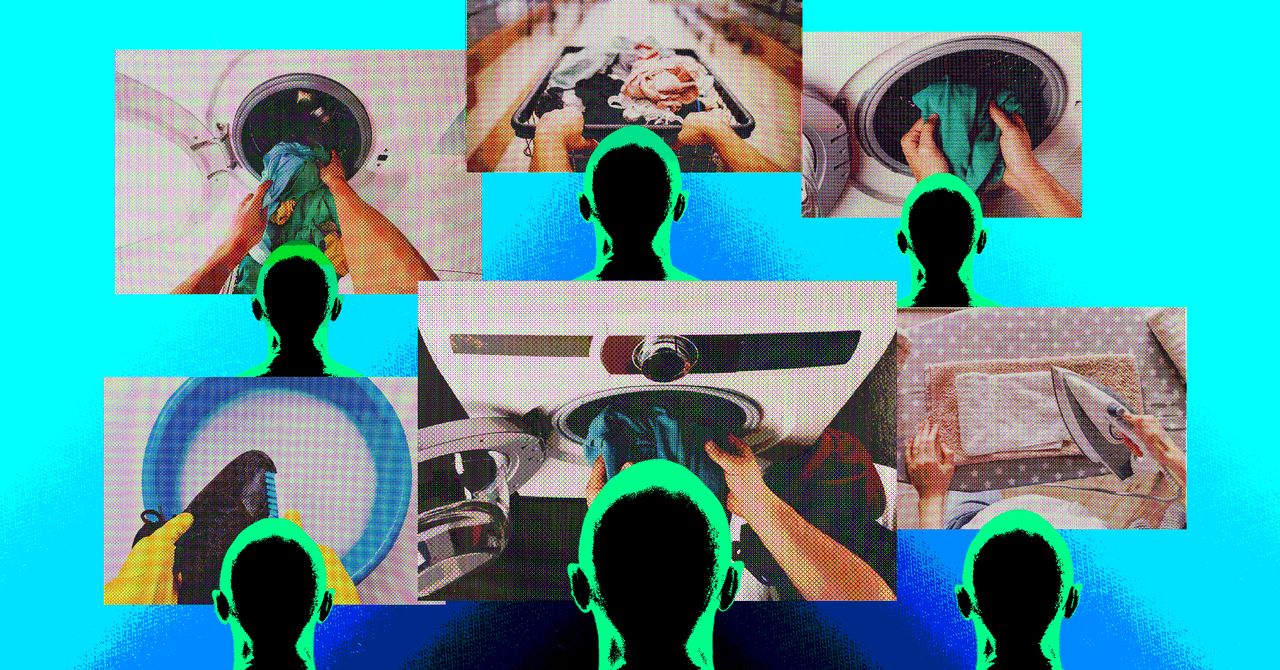
Slicing cucumbers. Folding socks. Pouring milk without a single drip. Sounds thrilling, right? For one desperate week, this was my life, strapping an iPhone to my forehead and becoming a human webcam for the burgeoning world of artificial intelligence. My apartment transformed into a real-world training ground for the robots we’re told will soon be our helpers, and frankly, I’m still not sure who ended up smarter: the bots or me.
This isn’t some fringe tech experiment; it’s a gold rush. Companies churning out AI models, the ones that promise to revolutionize everything from your smart fridge to self-driving cars, have an insatiable appetite for real-world data. And not just any data. They crave those hyperspecific, first-person views of human hands performing everyday tasks. We’re talking millions of hours of footage, and folks like me are being paid — pennies on the dollar, mind you — to provide it. It’s a bizarre twist on the gig economy, where your mundane existence is the product.
Why the sudden obsession with egocentric video? Turns out, those foundational models we hear so much about struggle with the nitty-gritty. They can process vast amounts of text and images, but getting a robot to smoothly tie a shoelace or precisely butter toast? That requires a much more granular understanding of fine motor skills, and that’s where we, the unpaid (or underpaid) workforce, come in.
My initial dive into this world was via DoorDash’s Tasks app, an experimental venture that feels like a dystopian echo of its food-delivery past. No dice in California, so I pivoted to platforms like Kled and Luel, all promising to turn my domestic drudgery into digital gold. The reality? My bank account barely twitched, a stark contrast to the $2,500 San Francisco rent I split. But hey, my apartment has never been this immaculately clean.
The promise, according to Kled’s 22-year-old founder Avi Patel, is nothing short of eliminating chores forever. “I want every person on the planet to be recording themselves doing the dishes,” he’s quoted saying. “That’s going to make a robot so that you never have to do the dishes ever again.” A noble goal, perhaps, but the current execution feels more like a digital sweatshop.
Take my first official task: “take out the trash.” A “medium pay” gig, the app instructed me to capture the entire process—bag removal, tying, new liner placement, and disposal. Simple enough. I strapped on the head-mounted phone, a slightly awkward but necessary tool, and dutifully filmed myself wrestling with the kitchen garbage bag. The entire affair was a two-minute affair before the app cut me off, leaving the can unlined and my data collection incomplete.
This isn’t exactly cutting-edge. It’s manual labor, repackaged. And the companies involved are already grappling with the same issues that plague any gig platform: fraud and privacy. Apparently, people try to upload downloaded videos or just black screens. And then there’s the whole “anonymization” bit – a crucial step when you’re filming yourself in your most private spaces.
Who is Actually Making Money Here?
Let’s cut through the AI jargon. The real money, as always, is flowing upwards. The platforms are taking a cut, the AI labs and foundational model developers are getting the data they need to further their multi-billion-dollar projects, and the gig workers? We’re left with a few bucks and a slightly cleaner apartment. It’s a classic Silicon Valley play: democratize the labor, centralize the profits.
This model is already taking root in places like India, where equivalent monthly earnings from these gigs can be a significant income boost. The expansion into the US suggests a broader trend: the transformation of everyday life into a data commodity. For companies building the future of robotics, this first-person, egocentric data is the oil in their new machine.
The internet is full of scrapeable videos, hyperspecific clips—like thousands of close-ups showing hands pouring water into a glass without spilling—can be critical for fine-tuning machines to excel at real-world tasks.
And this is where my skepticism truly kicks in. We’re being asked to believe that this data collection spree will lead to a future where robots handle our chores. But what if it’s just a cheap way to offload data acquisition costs while the real innovation continues elsewhere? It smells like a pyramid scheme for the digital age, where the base is our labor and the apex is a handful of tech giants.
Think about it: hundreds of millions of hours of video are projected to be purchased. Who is buying? The big players. Who is selling? Increasingly, it’s everyday people like you and me, recording ourselves doing the most mundane things imaginable. The PR spin is about helpful robots; the reality is a vast, underpaid workforce feeding the beast of AI development. It’s not so much a training ground for robots as it is a training ground for a new, more pervasive form of data exploitation.
Will This Replace My Job?
For now, the answer is probably no. While this data is crucial for teaching robots fine motor skills, it doesn’t replace the complex decision-making, creativity, or nuanced interaction that human jobs often entail. It’s more likely to augment existing roles or create new, highly specific data annotation tasks rather than eliminate entire professions.
How Much Can I Actually Make?
Earnings vary wildly. Some platforms offer per-task payments that can add up slowly. For context, the article mentions rates in countries like India where these gigs can offer income comparable to a $125/month average. However, the reporter’s experience suggests meager earnings, often not covering basic living expenses, especially in high-cost-of-living areas.
What Kind of Tasks Are Most In-Demand?
Tasks requiring fine motor skills and precise movements are particularly sought after. This includes actions like pouring liquids without spilling, folding laundry neatly, preparing food (like chopping vegetables), and general household tidying. The key is specificity and accuracy, often captured through first-person camera views.