Asian suppliers now represent a staggering 90% of Nvidia’s production costs, a stark increase from the roughly 65% reported just a year ago, according to Bloomberg data. This isn’t just about the silicon itself; it encompasses TSMC’s fabrication, the HBM memory from giants like SK Hynix and Samsung, and even the final server assembly by behemoths like Foxconn and Quanta. It’s a concentration that, while efficient in scale, carries inherent risks.
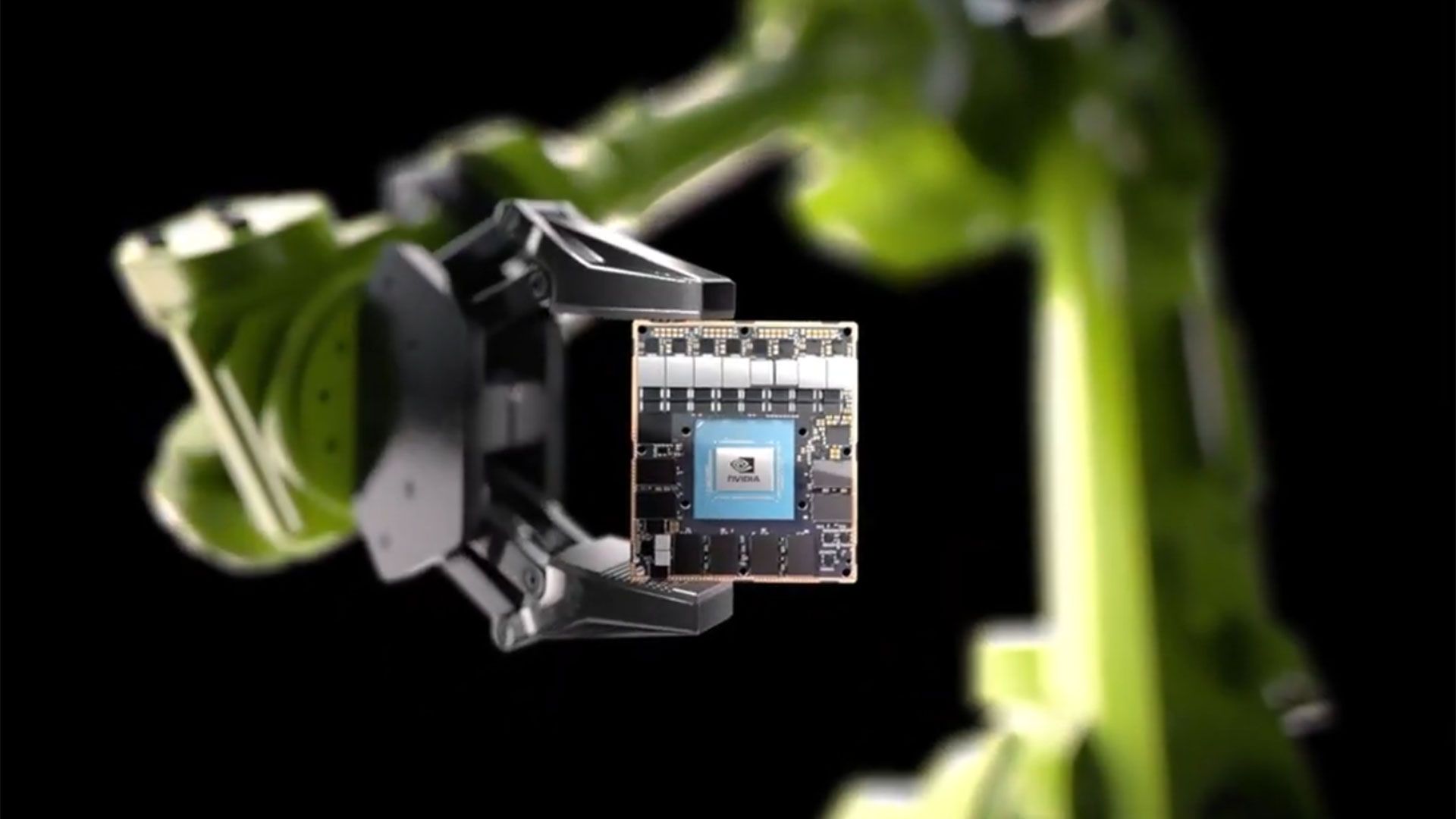
But here’s the kicker: this already hefty reliance is about to get even more pronounced. Nvidia’s push into ‘physical AI’—think robotics and autonomous systems—is rapidly spooling up entire new product categories that funnel directly through these same Asian manufacturing arteries. The Jetson Thor robotics platform, for instance, built on the Blackwell architecture and utilizing TSMC’s cutting-edge 3nm process, demands memory from Samsung or SK Hynix. These aren’t just footnotes; they’re core components, directly competing for the very same constrained wafer capacity that powers Nvidia’s data center GPUs.
Is Physical AI Nvidia’s New Achilles’ Heel?
This expansion into physical AI isn’t some minor side project. The top-tier Jetson Thor T5000 module boasts an eye-watering 2,070 FP4 TFLOPS, coupled with 128 GB of LPDDR5X memory. Even the more accessible T4000 variant, priced at $1,999 in volume, offers a substantial 1,200 FP4 TFLOPS with 64 GB. Both are built with Arm Neoverse-V3AE CPU cores and LPDDR5X memory, sourced from those same Asian suppliers already stretched thin. The implications are clear: Nvidia’s cutting-edge robotics and automotive platforms, like the DRIVE AGX Thor automotive SoC, are now directly vying for limited 3nm wafer starts and crucial LPDDR5X memory capacity that’s already in high demand for its data center products.
While these physical AI products don’t require TSMC’s ultra-critical CoWoS advanced packaging—the current bottleneck for high-end data center GPUs—they absolutely consume 3nm wafer capacity and Asian-sourced LPDDR5X. Both are already tight markets. This isn’t a hypothetical concern; it’s an immediate constraint.
The ripples of this memory squeeze are already being felt elsewhere. Nvidia recently accelerated end-of-life timelines for its older Jetson TX2 and Xavier modules. Why? LPDDR4 supply has become so constrained that maintaining production is no longer viable. Samsung has shifted its focus away from LPDDR4, and the insatiable AI demand has redirected memory manufacturing capacity toward higher-margin products—exactly what Nvidia needs for its newer, more advanced platforms. This forces existing Jetson customers onto the Orin or Thor modules, which rely on LPDDR5X from the very same Asian memory suppliers whose capacity is already strained by HBM and data center DRAM demands. It’s a classic case of market forces creating a domino effect.
“None of these physical AI products requires TSMC’s CoWoS advanced packaging, which remains the primary bottleneck for data center GPU production, but they do consume 3nm wafer capacity and Asian-sourced LPDDR5X, both of which are already constrained.”
Nvidia’s commitment to building $500 billion in U.S. server manufacturing capacity, with partners like Foxconn and Wistron, and the establishment of advanced packaging facilities in Arizona by Amkor and SPIL, are all steps in the right direction. However, these domestic operations are not yet at production scale. The reality is that Nvidia’s physical AI product lines are expanding the breadth of components sourced from Asia at a pace that significantly outstrips the current capacity of domestic manufacturing to absorb them. This widening gap, driven by a demand for more complex, integrated hardware, presents a critical strategic challenge.
Why Does This Matter for Nvidia’s Future?
The rapid ascent of Asian supply chain dependency, now touching 90% of production costs, is a double-edged sword. On one hand, it reflects Nvidia’s dominance in securing the advanced manufacturing capabilities needed to produce its state-of-the-art AI chips. On the other hand, it concentrates immense use with a limited set of suppliers, many of whom are located in a geopolitically sensitive region. This isn’t a new problem for the semiconductor industry, but Nvidia’s sheer scale and the critical nature of its products amplify the stakes. The company’s aggressive expansion into physical AI, while strategically sound for market capture, is simultaneously deepening this supply chain entanglement. Investors and analysts alike will be watching closely to see how Nvidia navigates this complex web of production demands and geopolitical realities. The era of easily scaled AI hardware may be hitting a supply-side wall, and Nvidia, despite its technological prowess, isn’t immune.
**
🧬 Related Insights
- Read more: Poll: Americans Overwhelmingly Want Superhuman AI Paused or Banned
- Read more: Why Your Novel Invention Might Still Lose Patent Protection: Preemption’s Overlooked Edge
Frequently Asked Questions**
What does Nvidia’s increasing reliance on Asian supply chains mean for product availability? It means potential delays and price increases if supply chain disruptions occur, as Nvidia has limited domestic alternatives at scale for key components like advanced memory and wafer fabrication.
Will this impact the cost of AI hardware? Yes, increased demand and constrained supply, especially for components like LPDDR5X memory and 3nm wafer capacity, are likely to drive up manufacturing costs, which could translate to higher prices for end-users.
Can Nvidia’s U.S. manufacturing investments mitigate these risks? While U.S. investments are crucial for long-term resilience, they are not yet at production scale and are unlikely to fully offset the immediate reliance on established Asian supply chains for current and near-future production needs.