The future is physical.
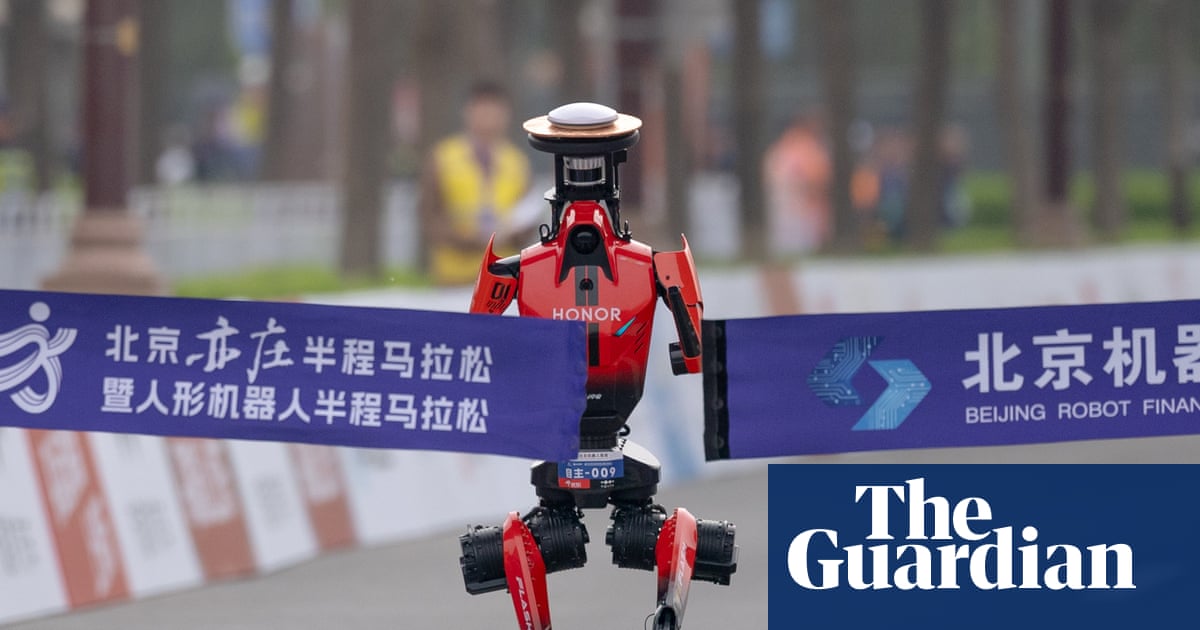
This isn’t about words on a screen anymore; it’s about actuators whirring, metal limbs grasping, and autonomous systems navigating our tangible world. Just last month, a robot named Lightning blazed through the Beijing half marathon, shattering the human world record by an astonishing seven minutes. This wasn’t just a neat trick; it’s a siren call, signaling that the era of general-purpose robots smoothly integrating into our daily lives—much like chatbots did with ChatGPT—is no longer science fiction. And who’s fanning these flames? China, a nation committed to pouring over £100 billion into robotics research and development over the next two decades. This isn’t incremental progress; this is a platform shift in the making.
Is This Another Hype Cycle?
Look, we’ve seen robotic promises before. Remember the shiny domestic help bots of the early 2000s that mostly ended up collecting dust? This feels different. The speed of advancement, fueled by breakthroughs in AI — the same AI that powers our conversational agents — is accelerating at an almost dizzying pace. We’re talking about robots that can achieve human-like dexterity, not just repeat programmed tasks. Nathan Lepora, a professor of robotics and AI at Bristol University, researches precisely this: how to imbue machines with the fine motor skills and adaptability we take for granted. Imagine robots weeding your garden with surgical precision or folding your laundry without mangling your favorite shirt.
Amy Hawkins, the Guardian’s senior China correspondent, paints a vivid picture of this impending reality. The investment isn’t just about theoretical research; it’s about practical application. China sees robotics as the next great industrial revolution, a crucial pillar for its economic and societal future. This isn’t just about automation in factories, though that’s a significant part. It’s about envisioning robots as companions, caregivers, and essential workers in every facet of life.
China’s government has pledged to invest more than £100bn in robotics over the next 20 years.
This gargantuan sum isn’t pocket change; it’s a declaration of intent. It signifies a national priority, a commitment to becoming the global leader in a field that will undoubtedly reshape economies and societies. While the headlines might focus on a record-breaking robot runner, the deeper story is about the infrastructure being built, the talent being cultivated, and the sheer ambition driving this transformation.
Why Does This Matter for Everyday Life?
So, when can we expect a robot butler to serve us martinis? Well, it’s not quite that simple. The journey from a race car bot to a household assistant involves a chasm of challenges. For robots to truly clean our homes and tend our gardens, they need to navigate cluttered environments, understand context, and interact safely with unpredictable human beings — and pets! This requires a level of environmental perception and decision-making that is exponentially more complex than, say, a chatbot understanding a nuanced query.
But the underlying AI, the ability to learn, adapt, and generalize, is the common thread. ChatGPT showed us the power of large language models to understand and generate human-like text. Now, the same principles are being applied to the physical world. Computer vision, reinforcement learning, and advanced sensor technologies are converging to give robots eyes, ears, and a sense of touch that’s becoming increasingly sophisticated. It’s like building an entirely new nervous system for machines, and the progress is breathtaking.
The question isn’t if robots will enter our everyday lives, but when and how extensively. China’s massive investment acts as a powerful accelerant, likely pushing these timelines forward. We’re moving from robots that perform single, repetitive tasks to systems that can learn and adapt to new situations. This is the true platform shift, where AI’s intelligence is finally being grounded in the physical realities of our world. Get ready; the future is coming, and it’s bringing its own set of hands.
The Human Touch – Still Essential?
It’s easy to get swept up in the excitement, the sheer technological spectacle. But as we envision robots tidying our living rooms, it’s vital to remember the human element. What jobs will this displace? What new roles will emerge? And crucially, how do we ensure these incredibly powerful tools are developed and deployed ethically? The conversation needs to move beyond the ‘can we’ and firmly into the ‘should we’ and ‘how should we’. The physical manifestation of AI is a profound step, and one that demands our careful consideration, not just our awe.
🧬 Related Insights
- Read more: Google DeepMind Unions: What It Means for AI Workers
- Read more: One Indie Studio’s Rebellion: 14 AI Tools Powered Purely by Stripe One-Time Payments
Frequently Asked Questions
What is the significance of the robot beating the marathon record?
The robot, Lightning, beating the marathon world record by nearly seven minutes signifies a major leap in robotic capability, demonstrating advanced speed, endurance, and potentially autonomous navigation, mirroring the impact of AI chatbots. It highlights the rapid progress in physical AI.
How much is China investing in robotics?
China’s government has pledged to invest over £100 billion in robotics over the next 20 years, underscoring its commitment to becoming a global leader in this field.
Will robots replace human jobs?