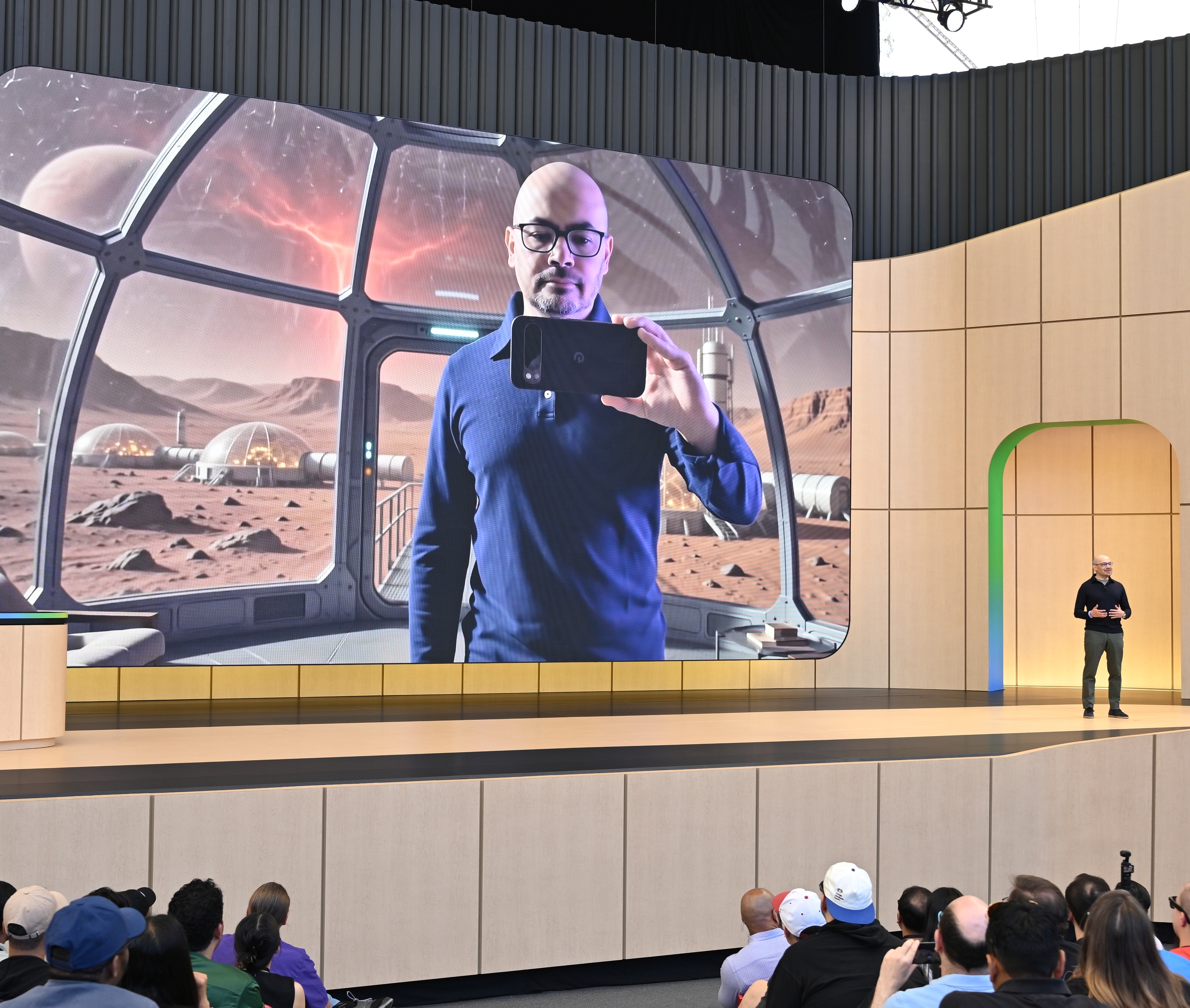
The roar of anticipation at Google I/O always builds to a crescendo, but this year, it’s underscored by a palpable tension. Google, once the undisputed AI vanguard, arrives not as the clear leader, but as a company scrambling to reassert its dominance. A year ago, with Gemini 2.5 Pro freshly minted, the landscape felt different, the competition a blur of impressive but often indistinguishable foundation models. Now, the battlefield has narrowed, and Google finds itself looking up at OpenAI and Anthropic, particularly in the arena that matters most: coding.
This isn’t just about vanity metrics. A foundation model’s current reputation hinges significantly on its coding prowess, and for months, Google’s internal tools have been distinctly outgunned. Reports suggest even DeepMind engineers, the crown jewels of Google’s AI research, have been granted access to Anthropic’s Claude Code – a tacit admission that their own offerings are lagging behind. The specter of falling further behind looms large.
So, as the developer faithful descend on Mountain View, the primary question isn’t just what new AI marvels Google will unveil, but whether these unveilings represent a genuine leap forward, a credible challenge to the current leaders, or merely a well-executed defense. Beyond the headlines, however, lies an equally compelling narrative: Google’s deep, foundational work in areas like AI for science. These quieter advancements, while perhaps receiving less fanfare, could prove to be just as consequential.
Here’s where the real investigative work begins.
The Coding Comeback Bid
Google isn’t pretending the coding gap doesn’t exist. The internal whispers of a dedicated AI coding team at DeepMind, bolstered by the addition of Nobel laureate John Jumper – yes, the AlphaFold guy – signal a serious pivot. It’s difficult to imagine them not rolling out a significant update to their Antigravity agentic coding platform, or something similarly ambitious, during I/O. This is an all-hands-on-deck situation for their AI coding ambitions.
But let’s temper expectations. Even with privileged access to cutting-edge internal models, Google engineers were reportedly scrambling for Claude Code access. This suggests that even if they unveil something impressive, it’s unlikely to be a quantum leap that immediately catapults them back to the absolute forefront. The gap is wide, and closing it in a single conference is a Herculean task.
Science: The Unsung Frontier
While coding might be Google’s current Achilles’ heel, science remains its undisputed fortress. Earning a Nobel Prize for AI work isn’t something OpenAI or Anthropic can claim. As large language models have permeated scientific discovery, Google’s lead has only solidified. Last year’s showcase included the AI co-scientist, capable of formulating hypotheses and research plans – a veritable “oracle” to some – and AlphaEvolve, a problem-solving engine. Any new scientific AI tools announced here will undoubtedly be significant, and critically, areas where Google consistently innovates.
What’s particularly interesting is the intersection of AI with health. OpenAI has largely defined the health AI conversation with ChatGPT Health. Google is set to launch its AI-powered Health Coach, but early promotional materials suggest a focus on fitness and diet, rather than critical medical advice. Is this a strategic caution in a high-stakes field, or another instance where Google is playing catch-up?
The Underlying Architectures
Beyond the product announcements, the true story of Google I/O will be in the subtle shifts in their underlying architectural approach. Are they doubling down on multimodal architectures, trying to integrate language and vision more deeply? Or are they exploring new paradigms for agentic systems, aiming for more autonomous and context-aware AI? The devil, as always, is in the computational details – the data pipelines, the training methodologies, and the fundamental model designs that power these experiences.
Consider the evolution of their Transformer models. While the core architecture remains, the innovations lie in the scaling laws, the attention mechanisms, and the efficiency gains. This year, I’ll be looking for hints of what’s next – are they pushing the boundaries of model size and complexity, or focusing on making existing models more accessible and efficient for broader deployment? The whispers about new forms of neural network search or retrieval-augmented generation will be particularly telling.
The Drama, Always the Drama
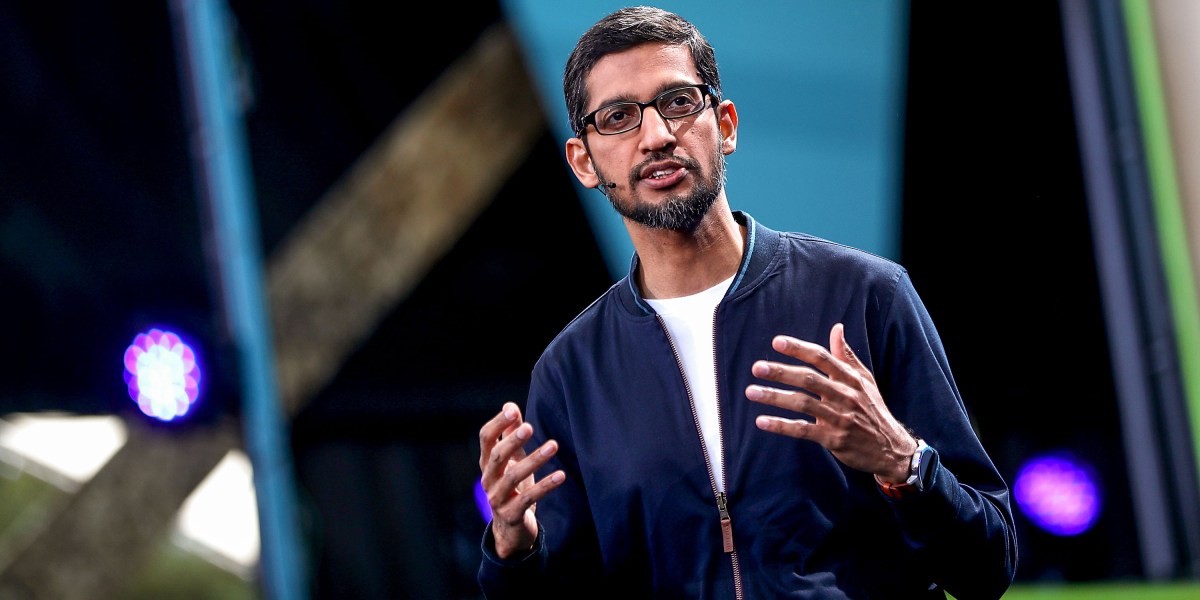
Meanwhile, a different kind of AI drama unfolds. As I/O attendees gather, the Musk v. Altman trial, a proxy for the existential debates within AI, concludes nearby. The past few months have been rife with executive clashes, most notably between Altman and Anthropic’s Dario Amodei. DeepMind CEO Demis Hassabis, however, has largely maintained a more stoic, scientist-first persona, presenting himself as an academic rather than a combatant. Yet, even Google isn’t immune to controversy. A recent internal protest by hundreds of employees, many from DeepMind, against a DoD deal – a deal Google subsequently signed – reveals internal friction. Expect Gassabis and CEO Sundar Pichai to artfully navigate these thorny issues on stage, but the underlying tensions are undeniable.
My unique insight here? The real power struggle in AI isn’t just between companies, but within them. The ethical quandaries are becoming internal HR and legal battles, a far cry from the serene, whiteboard-driven innovation we’re often sold. Google’s ability to project unity while managing internal dissent will be as telling as any product demo.
Google has announced that it will be making its AI-powered Health Coach publicly available tomorrow, but promotional material suggests that the tool is geared more toward providing advice on topics such as fitness and diet than to addressing users’ medical concerns.
It’s a delicate dance between ambition and responsibility, and Google’s performance this week will set the tone for how these giants navigate the increasingly complex ethical and competitive landscape. The coding comeback might be the headline, but the quiet advancements in science and the internal corporate dynamics are where the truly consequential shifts might be found.
🧬 Related Insights
- Read more: DeepSeek V3’s Latent Attention Crushes KV Cache Bloat
- Read more: Leap Wallet’s Sudden Shutdown Signals Cracks in Cosmos’ Wallet Wars
Frequently Asked Questions
**What is Google I/O?
Google I/O is Google’s annual developer conference, where the company showcases its latest software, hardware, and AI innovations to developers and the tech community.
Will Google’s new AI models be open source?
Google often releases some of its models or related research as open source, but their most advanced or proprietary models are typically kept closed. Specific announcements will clarify this year’s strategy.
How does Google’s AI compare to OpenAI and Anthropic?
Historically, Google has been a leader in AI research. However, in the current LLM race, OpenAI and Anthropic have recently garnered more attention for their coding capabilities and perceived performance advantages, though Google maintains strengths in other AI domains like scientific research.