AWS SMGS sees leaders losing ten hours of work each week to the soul-crushing drudgery of data preparation. Think about that. An entire workday, gone. Not strategizing, not leading, but sifting through dashboards and reconciling spreadsheets. This isn’t just inefficient; it’s a bottleneck choking agility at one of the world’s most dynamic companies.
Traditional business intelligence, with its static reports and arcane dashboards, feels almost prehistoric in this context. It’s like trying to navigate a superhighway with a horse and buggy. The data is there, vast and valuable, but getting to it, understanding it, and acting on it requires a level of manual effort that’s simply unsustainable.
This is where NarrateAI, AWS’s internal conversational AI, steps onto the stage. Powered by Amazon Bedrock AgentCore, it’s not just another chatbot. It’s an intelligent agent designed to democratize access to complex business intelligence, making it understandable and actionable for everyone from the CEO down to the boots-on-the-ground teams.
The promise is simple, yet profound: ask a question in plain English, and get an immediate, contextually rich answer. No more waiting for reports, no more deciphering cryptic charts. Just pure, unadulterated insight, delivered on demand.
The Data Deluge Problem: Why Old Tools Fail
AWS, by its very nature, generates staggering amounts of data. Managing this across multiple hierarchies and making rapid, global decisions is a Herculean task. The existing BI tools, while functional, weren’t built for this scale or speed. They created a frustrating disconnect.
Leaders were spending an inordinate amount of time just preparing for meetings. This involved pulling data from disparate systems, a process riddled with potential for error and inconsistency. The result? Precious little time left for actual decision-making and strategic thinking. It’s a classic case of the tools hindering, rather than helping, the very people they’re supposed to support.
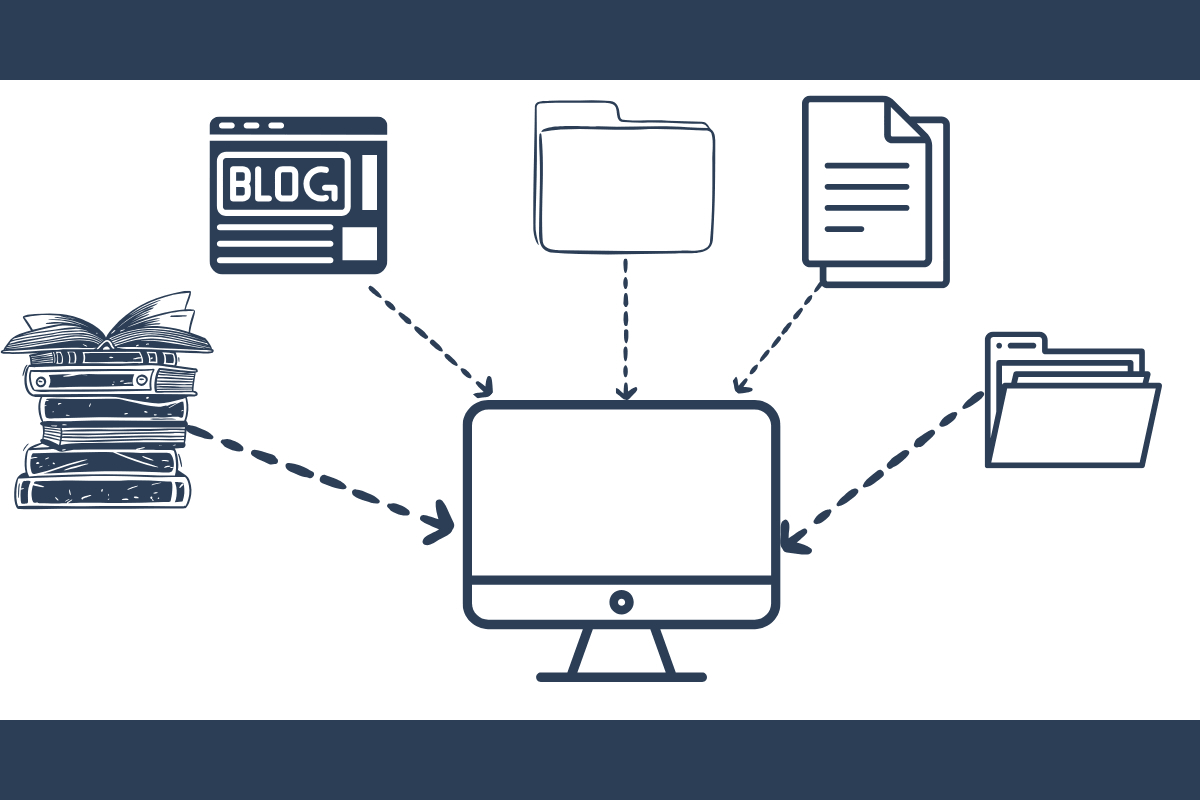
Data fragmentation was another huge hurdle. Information was scattered across various dashboards and systems, forcing leaders to cobble together a coherent picture. This often led to conflicting metrics and a lack of a unified view of business performance. Imagine trying to understand the health of a vast organism by looking at individual cells in isolation – you miss the bigger picture.
Accessibility was also a major issue. Navigating complex BI platforms required specialized knowledge, creating a dependency on reporting teams. Leaders couldn’t get the insights they needed when they needed them, leading to delays and missed opportunities. This dependency inherently limited organizational agility.
Architecting for Insight: The Two-Layered Approach
NarrateAI’s architecture is a masterclass in separating concerns. It’s built on a two-layer model: one for the heavy lifting of batch narrative generation, and another for lightning-fast, real-time conversational interaction. This separation is key to its effectiveness.
Amazon Bedrock AgentCore is the linchpin here. It provided a ready-made foundation, eliminating the need for AWS to build custom orchestration infrastructure from scratch. Think about the engineering cycles saved. Built-in authentication, memory management, and smoothly integration with foundation models meant deployment went from a months-long ordeal to mere weeks. Plus, it’s backed by AWS’s own observability and security tools, like CloudWatch, ensuring production-grade reliability from day one.
The Batch Engine: Crafting Narratives Behind the Scenes
This is where the magic of preparation happens, out of the direct line of sight but critically important. NarrateAI batch-generates comprehensive, persona-based narratives for each user. This involves a three-stage pipeline designed for efficiency and precision.
First, data extraction. This uses configuration-driven SQL templates. These aren’t static queries; they’re dynamic, adapting to each user’s role and permissions. They pull structured data from Amazon Redshift, handling multi-level breakdowns and time-series analysis while respecting strict access controls. Security and relevance are baked in.
Next, data transformation. AWS Lambda takes this raw data and shapes it into structured JSON. It employs section-type logic – think objects, arrays, breakdowns, and containers – to organize the information logically. Field mappings and hierarchical structuring ensure the data is ready for consumption.
Finally, narrative rendering. Here, Jinja templates, a standard Python templating engine, transform the structured data into human-readable narratives. The system employs a hierarchical, business-domain-aware chunking strategy to manage even massive datasets efficiently. The resulting narratives, essentially rich text files, are stored in Amazon S3. And yes, row-level security is maintained through complete data isolation. This means each leader gets their own tailored, secure briefing.
The Real-Time Interface: Conversational Power
When a leader poses a question, the conversational AI interface springs to life, orchestrated by Amazon Bedrock AgentCore. It’s designed for speed and accuracy.
AgentCore acts as the conductor, identifying the relevant persona-based narrative stored in S3. Then, it use specialized AI agents to reason over this content. The engine behind this is Anthropic’s Claude Sonnet 4, chosen for its strong reasoning capabilities. AgentCore’s native multi-agent coordination framework is particularly noteworthy here. It allows the system to handle straightforward queries almost instantaneously, routing complex ones to further processing or clarifying questions.
“AgentCore’s native multi-agent coordination framework lets the system handle simple queries instantly.”
This ability to differentiate and efficiently handle query complexity is what truly separates this from a simple Q&A bot. It’s about intelligent delegation and rapid response. The system doesn’t just retrieve information; it understands the intent behind the question and synthesizes an answer grounded in the user’s specific context and data.
Key Engineering Patterns for Production
Building a system like NarrateAI for an organization as large and complex as AWS involves more than just AI models. It requires strong engineering practices.
Observability: Integrating with Amazon CloudWatch was critical. This means every aspect of the system, from data ingestion to query response times, is monitored. This allows for proactive issue identification and performance tuning, ensuring the AI assistant remains reliable.
Security: As mentioned, data isolation and row-level security are paramount. Using S3 for narrative storage with proper IAM policies and leveraging Bedrock AgentCore’s built-in authentication mechanisms ensures sensitive business data remains protected.
Scalability: The two-layer architecture inherently supports scalability. The batch processing layer can be scaled independently to handle growing data volumes, while the real-time interaction layer, being serverless and managed by AWS services, can handle fluctuating query loads without manual intervention.
Agent Design: The development of specialized AI agents is crucial. These agents are trained or fine-tuned for specific tasks like data retrieval, context summarization, and response generation. Their modularity allows for easier updates and improvements without disrupting the entire system.
A Glimpse into the Future of Management
NarrateAI isn’t just a tool for AWS SMGS; it’s a blueprint for how AI can fundamentally reshape business management. By abstracting away the complexity of data access and analysis, it frees up human leaders to do what they do best: strategize, innovate, and lead.
This move towards agentic AI in core business operations signifies a major architectural shift. We’re moving beyond simple automation to intelligent augmentation, where AI partners with humans to achieve outcomes previously thought impossible.
AWS has managed to turn a persistent organizational pain point into a compelling demonstration of AI’s practical power. It’s a quiet revolution, unfolding one saved hour at a time.