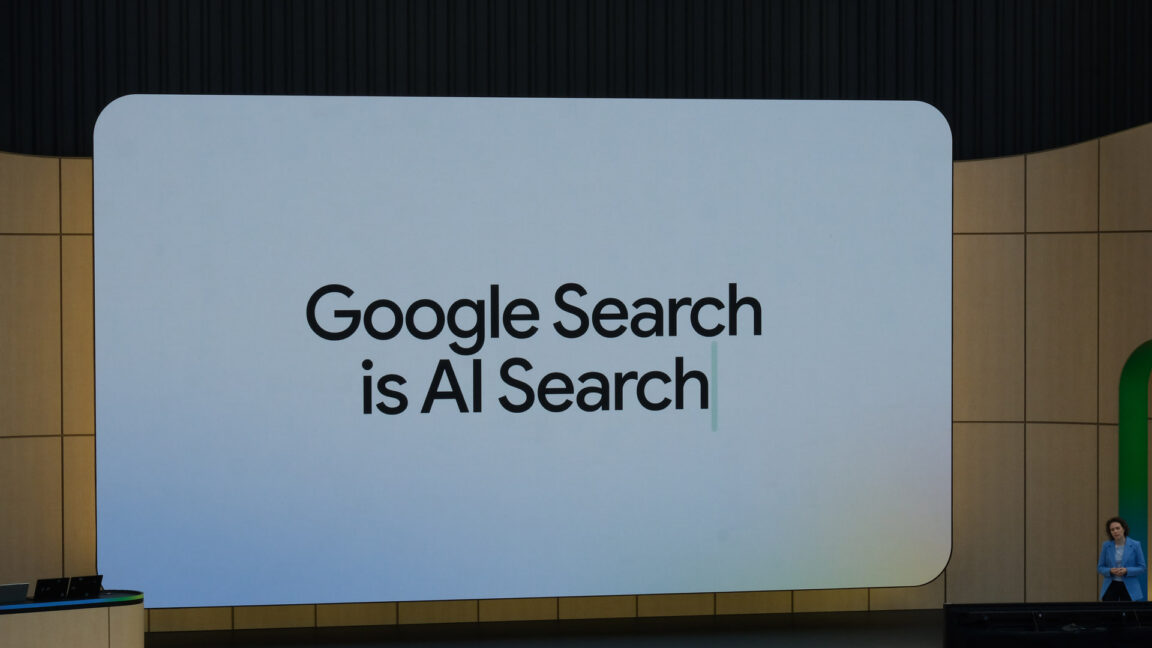
Forget keyword searches. The real impact of Google’s latest AI Search announcements isn’t about finding information faster; it’s about Search evolving from a passive repository into an active, intelligent assistant that anticipates your needs and even takes action on your behalf. This isn’t just an upgrade; it’s a fundamental architectural shift in how we interact with the web’s vast ocean of data. The promise of truly personalized information agents, capable of monitoring the web 24/7 and synthesizing updates, could redefine everything from apartment hunting to staying on top of niche fandoms.
At its core, the upgrade hinges on Gemini 3.5 Flash, now the default model for AI Mode. This isn’t just about spitting out text; it’s about sustained performance for ‘agents and coding.’ And that’s where things get truly interesting. The revamped Search box, described as the biggest upgrade in over 25 years, is no longer just a text input field. It’s designed to dynamically expand, anticipating user intent and offering AI-powered suggestions that go far beyond simple autocomplete. Imagine typing a complex, multi-faceted question, and the box morphing to accommodate your detailed thinking – it’s a subtle but powerful change in user experience, designed to lower the friction for more nuanced queries.
We’re entering the era of Search agents. This isn’t science fiction; it’s happening now, integrated directly into the search experience. Think of it as having a dedicated researcher working for you around the clock. These ‘information agents’ will sift through blogs, news, social posts, and real-time data feeds—finance, shopping, sports—to monitor specific topics. The goal? To send you synthesized updates, proactively. For example, detailing precise apartment requirements and having an agent continuously scan listings, notifying you when something perfect pops up. Or getting an instant alert the moment your favorite athlete announces a sneaker collaboration. This moves Search from a ‘pull’ mechanism to a ‘push’ one, where information finds you.
Your agent will intelligently look across everything on the web, like blogs, news sites and social posts, plus our freshest data, such as real-time info on finance, shopping and sports, to monitor for changes related to your specific question.
This is a significant departure from the traditional search paradigm. It suggests a future where your search history isn’t just a record of what you looked for, but a blueprint for agents that act on your behalf. The implication for real people is profound: less time spent actively searching, and more time spent acting on curated, relevant information. The efficiency gains could be enormous, freeing up cognitive load for more complex tasks.
And then there’s the agentic coding and generative UI. Search will now be able to construct bespoke interfaces on the fly. This means custom generative UI, complete with visual tools and simulations, tailored precisely to your query. Imagine needing to understand astrophysics; Search could assemble interactive visuals, tables, and simulations in real-time, presenting the information in a way that’s most effective for your learning style. This is a huge leap from static search results, moving towards a truly dynamic and personalized information experience.
Why This Agentic Leap Matters for Developers
For developers, this heralds a new landscape. The integration of agentic capabilities, particularly for coding, means Search itself can become a development partner. The ability to generate custom UI and simulations on the fly suggests that developers might soon be using Search not just to find code snippets, but to actually prototype and visualize applications in real-time. This blurs the lines between information retrieval and active development tooling, potentially accelerating the development lifecycle significantly. The ‘Google Antigravity’ mention hints at sophisticated backend agent orchestration, promising a more powerful and adaptable AI development environment within the Search ecosystem.
Is This Just More Corporate Hype?
It’s easy to dismiss ambitious announcements from tech giants as marketing fluff. However, the underlying technological shifts here — the move towards multimodal understanding, the deep integration of advanced language models like Gemini 3.5 Flash, and the conceptualization of proactive agents — are tangible. The real question isn’t if these capabilities are being developed, but how effectively they will be implemented and how users will adapt. The success of ‘AI Mode’ surpassing a billion users indicates a strong public appetite for more intelligent search. The challenge will be in delivering on the promise of truly useful, non-intrusive agents and interfaces that genuinely simplify, rather than complicate, our digital lives.
The ability to “call businesses on your behalf” for services like home repair or pet care is particularly intriguing. This moves the AI beyond information gathering into direct action, a significant step toward digital autonomy. Of course, questions of privacy, data security, and the potential for misuse will inevitably arise. But for now, the focus is on the potential for unprecedented user convenience and efficiency.
This isn’t just about making search faster; it’s about making it smarter, more proactive, and more integrated into the fabric of our daily tasks. The architecture is evolving from a static library into a dynamic, intelligent ecosystem, and the implications for how we consume and interact with information are only just beginning to unfold.
🧬 Related Insights
- Read more: Nikon’s Lithography Gambit: Can Lower Prices Dislodge ASML?
- Read more:
Frequently Asked Questions
What does Google’s new intelligent Search box do?
The new intelligent Search box is designed to be more intuitive, dynamically expanding to allow for detailed queries. It uses AI-powered suggestions to help users formulate questions and supports searching across multiple modalities like text, images, and videos.
How do Search agents work?
Search agents operate in the background, continuously reasoning across information on the web to find what you need. They can monitor for changes related to specific queries and send synthesized updates, with the ability to take action, such as notifying you about new apartment listings or product drops.
Will these new AI features cost money?
While Gemini 3.5 Flash is the new default model for AI Mode for everyone globally, some advanced features like information agents will initially launch for Google AI Pro & Ultra subscribers. However, generative UI capabilities will be available for free to everyone in Search this summer.