![Google Search's AI Shift: SEO Strategy Obsolete? [Analysis] — The AI Catchup](/og-image.svg)
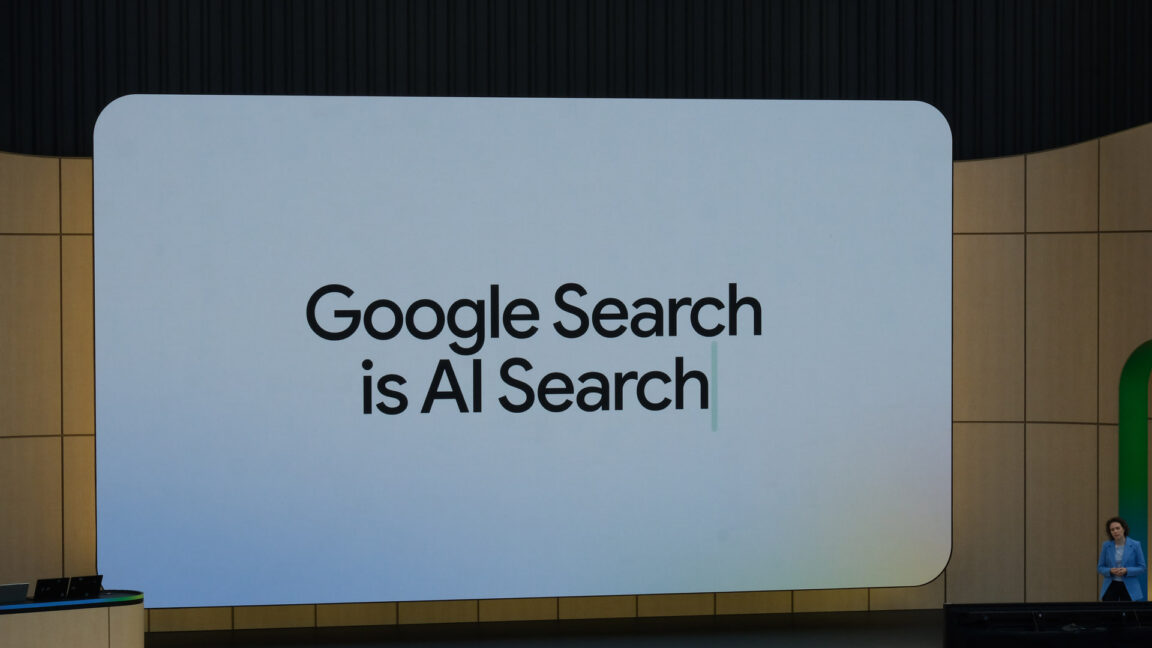
The faint hum of servers backstage at Google I/O wasn’t just about new AI models; it was the death knell for an entire generation of SEO strategy. For years, the digital marketing world was a meticulously cultivated garden, each bloom representing a keyword, a backlink, a meta description aimed squarely at those ten blue links. Now, that garden has been plowed under, replaced by something far more… conversational. And brands, blissfully unaware or willfully ignorant, are often the last to know how they’re being described.
This isn’t a subtle tweak. It’s a paradigm shift, and the folks at Scrunch, a startup positioning itself squarely in the path of this AI tsunami, are acutely aware. Their VP of partnerships, Matt Thompson, recently sat down with TechCrunch’s Equity podcast to dissect exactly what this seismic move by Google means for everyone whose livelihood depends on digital visibility.
It’s the kind of change that makes you want to pound your desk. The traditional organic search referral, once the golden ticket, is now looking like yesterday’s news. Thompson dropped a stat that should make every CMO and marketing director spill their coffee: AI referrals are converting at a staggering 400% higher rate than traditional organic search. Four. Hundred. Percent. This isn’t just about traffic; it’s about the quality of that traffic, and it forces a fundamental rethink of what ‘driving traffic’ even means.
Is ChatGPT Still King?
Here’s the kicker: while Google is rolling out its AI-powered search experiences, ChatGPT, that household name in conversational AI, still commands the lion’s share of AI search traffic. Optimizing solely for Google, in this new AI-centric world, is akin to preparing a feast for one guest while ignoring the hundreds waiting at the door. It’s a myopic view that will cost brands dearly. The architecture of discovery has fractured, and Google’s polished interface is only one part of the story.
And it gets even more ironic. Google’s own long-standing SEO best practices, the very gospel many marketers have slavishly followed, might actually be leading them down a rabbit hole, away from the AI’s attention. The algorithm, in its quest for direct answers, might be penalizing the very content structures that once propelled sites to the top of the rankings. It’s a twisted feedback loop, where yesterday’s wisdom is today’s handicap.
The rules just changed in a pretty significant way.
Thompson introduces the concept of making websites ‘agent-ready.’ This isn’t about slapping on a few more keywords. It’s about structuring content, data, and user experience in a way that AI agents — the nascent intelligences that will increasingly mediate our interaction with the web — can easily digest, understand, and use. Most enterprise sites, he suggests, are fundamentally not built for this. They’re built for human eyes, for the familiar click-and-scroll, not for the efficient, often invisible, parsing by an AI.
The underlying architectural shift here is profound. We’re moving from a search engine that indexes and ranks pages to an AI that synthesizes information and delivers direct answers. This means the value proposition for content has to evolve. It’s no longer enough to be found; content must be understandable and usable by AI. Think of it as a shift from building a beautiful billboard to writing a concise, factual instruction manual that can be immediately acted upon. The implications for content creation, website architecture, and ultimately, brand strategy, are immense.
This isn’t a drill. This is the new reality of how people will find information, and how brands will be represented. The ‘10 blue links’ era is over. The age of the AI answer has begun, and preparedness will be the only differentiator.
🧬 Related Insights
- Read more: The Bug Report That Won’t Die: Five Questions Developers Secretly Ask
- Read more: Institutions Chase Bitcoin to $80K—While Secretly Armoring for a Crash
Frequently Asked Questions
What does ‘agent-ready’ website mean?
An agent-ready website is structured and designed so that AI agents can easily understand, extract, and utilize its information. This involves clear data formatting, semantic markup, and content optimized for AI comprehension, rather than solely human readability.
Will Google AI replace traditional SEO?
Traditional SEO tactics focused on ranking in search result pages are becoming less relevant as AI provides direct answers. However, the underlying principles of creating high-quality, relevant content and ensuring website accessibility are still crucial, though the execution will shift towards AI understandability.
How can my business adapt to AI in search?
Focus on creating authoritative, factually accurate content that is easily digestible by AI. Ensure your website’s technical foundation is sound, and consider how your information can be presented in structured formats. Diversifying your online presence beyond just Google’s direct search results is also wise.