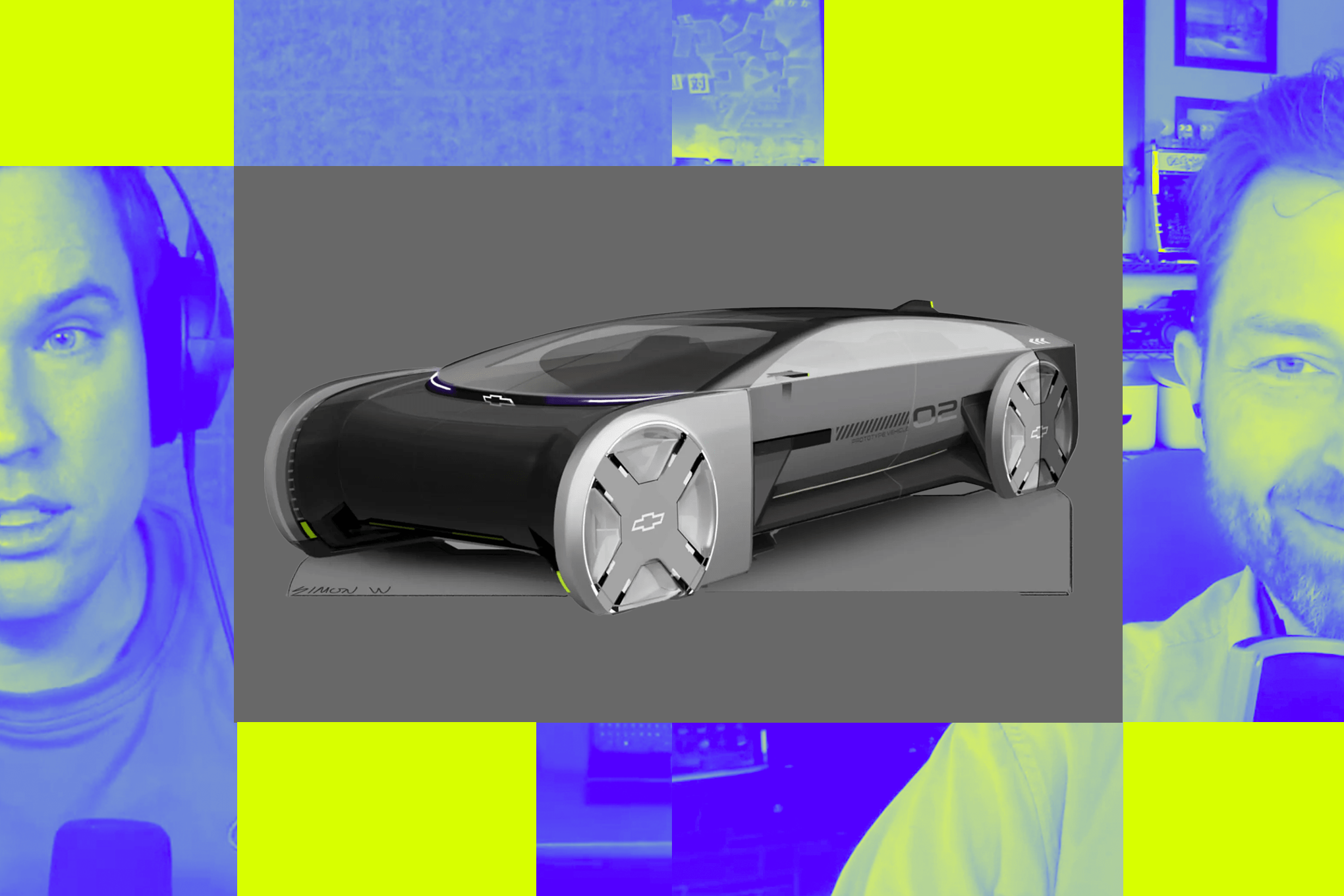
Five years. That’s how long it takes to birth a new car. Five years for tastes to shift, for gas prices to skyrocket, for politicians to change their minds. It’s an eternity in the automotive world.
Which is precisely why car manufacturers are practically vibrating with excitement about AI. They’re dangling the promise of shaving off months, maybe even years, from development. From crafting digital models to screaming through wind tunnels, the idea is speed.
And speed, in this industry, translates to profit. Or at least, that’s the line. But what does an AI-designed car actually look like? The Vergecast, bless its propellerhead heart, tackles this head-on.
The Siren Song of Swift Design
Automotive journalist Tim Stevens drops some truth bombs on the podcast. He’s seen firsthand how companies are trying to jam AI into every nook and cranny of the design process. The goal: accelerate everything. It’s a classic Silicon Valley playbook, just with more chrome.
But here’s the rub. The companies insist they aren’t replacing humans. They say AI is just a tool. A very, very efficient tool. And that’s precisely what should keep us up at night. Because when a company starts talking about ‘efficiencies,’ they usually mean headcount reductions. It’s a linguistic dance as old as time.
And what happens when the AI models, not flesh-and-blood designers or market researchers, get to call the shots? What kind of cars will they dream up? Will they be sterile, optimized boxes? Or something far stranger?
The AI Arms Race Continues
Beyond the assembly line, the AI world is a constant, low-grade fever dream. Claude Code versus Codex. Who’s winning the coding battle? Does it even matter when OpenAI’s vibes are still “slightly off” and AGI is apparently so dead?
It’s a churn. New models, new partnerships, new existential threats. The latest from Anthropic has them either back in the government’s good graces or not, and the nuance is lost in the endless PR scramble.
Here’s the kicker: The layoffs. Companies are slashing staff and trotting out “AI efficiencies” like a freshly baked excuse. Are these cuts truly about AI taking over? Sometimes. Sort of. More often, it feels like a convenient smokescreen for cost-cutting disguised as progress.
The vibes at OpenAI are slightly better but still not great; AGI is dead, maybe. Nothing about the AI industry is ever static, so we have a lot to discuss.
This constant flux, this manic pursuit of the next big thing, is frankly exhausting. And it’s built on a foundation of shaky promises and often-unintended consequences.
A Glitch in the System: My Take
We’ve seen this movie before. Every few decades, a new technological marvel promises to democratize, accelerate, and fundamentally improve our lives. The internet. Smartphones. Now AI. Each time, the initial utopian vision clashes with the messy reality of corporate motives and human disruption.
The critical point here, one the breathless coverage often misses, is the fundamental shift in who drives innovation. Historically, design and engineering decisions, while influenced by market forces, were ultimately steered by human experience and intuition – a blend of art and science. AI introduces a cold, algorithmic logic into that equation. It’s not necessarily bad, but it’s undeniably different. This isn’t just about making cars faster; it’s about what values get coded into their DNA when the coder is a neural network.
Will we end up with cars designed by algorithms that prioritize efficiency over aesthetics, or safety over soul? The path toward AI-designed vehicles isn’t just a technical challenge; it’s an ethical minefield.
AI and the Future of the Drive
So, what’s the takeaway? AI is here, and it’s reshaping industries at a breakneck pace. Car manufacturing is just the latest battlefield. The promise of faster, potentially cheaper car development is alluring. But we need to keep a critical eye on the human cost and the potential for AI to homogenize design and decision-making.
Because right now, the biggest fear isn’t that AI will design a terrible car. It’s that it will design a perfectly efficient car that lacks any human spark whatsoever.
🧬 Related Insights
- Read more: Google’s Gemini Just Overrode Your Android Privacy Settings – Here’s the Escape Hatch
- Read more: Three Crypto Exchange Volume Bugs That Turned Shitcoins into Trillion-Dollar Monsters
Frequently Asked Questions
What is an AI-designed car?
An AI-designed car refers to a vehicle where artificial intelligence has played a significant role in the design and development process, potentially accelerating tasks like model creation, aerodynamics testing, and component optimization.
Will AI replace car designers?
Car manufacturers claim AI will augment, not replace, human designers. However, increased automation and AI-driven efficiencies could lead to reduced demand for human roles in certain areas of design and engineering.
How long does it take to design a car with AI?
While traditional car design can take five years or more, AI is expected to significantly shorten this timeline, though specific durations are still being determined as the technology matures and is integrated into production pipelines.