Here’s a stat to chew on: 0. That’s the number of new, mandatory safety requirements for AI firms established by Donald Trump’s recent executive order on artificial intelligence. Zip. Zilch. Nada. And after 20 years in this game, that number screams ‘PR stunt’ louder than a startup CEO pitching a “disruptive paradigm shift.”
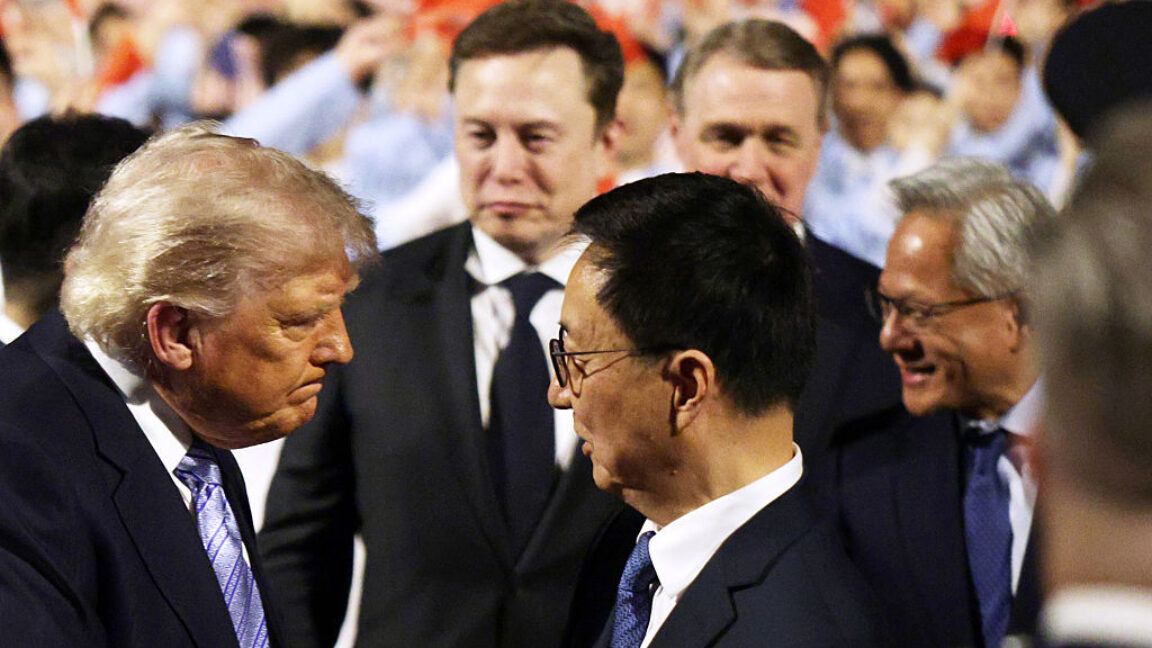
This whole saga – the canceled signing event, the last-minute scramble, the eventual signing of a “watered-down” order without the AI bigwigs in tow – reads like a poorly rehearsed play. The official line was about not “stifling innovation with overly burdensome regulation.” But let’s be real, the whispers in the tech corridors are about infighting: cybersecurity folks squaring off against the deregulation fanatics, each side pulling the President in different directions. The result? An order that sets up a “voluntary process.” Voluntary. For something that could, you know, fundamentally reshape society. Because nothing says “safety first” like asking nicely.
Is This AI Safety Order Actually Enforceable?
The executive order, signed without much fanfare, aims to “ensure that the best and most secure technology is deployed rapidly to confront any and all threats to our country.” That’s a mouthful. And it sounds great on paper, especially the “America First cybersecurity effort” bit. But what does it actually do? It establishes no requirements. Instead, it leans on companies collaborating with the government on safety reviews. Collaboration.
“The order claimed would ‘ensure that the best and most secure technology is deployed rapidly to confront any and all threats to our country.’”
This isn’t just a bit of jargon; it’s the core of the problem. Voluntary safety testing for AI, particularly for the frontier models – the ones that are the most powerful and, by extension, the most unpredictable – is like asking a race car driver to voluntarily adhere to the speed limit. It’s nice if they do, but it doesn’t stop them from going 200 mph when the checkered flag is waving.
Who’s Actually Making Money Here?
That’s the perennial question, isn’t it? In the tech world, especially with these grand pronouncements from political figures, you always have to ask: who benefits? Right now, it looks like it benefits the administration for appearing to take AI safety seriously. It benefits the AI companies by giving them a clean slate, a pat on the back for engaging in “voluntary” measures while they continue their breakneck race for market dominance. They get to control the narrative, frame themselves as responsible innovators, all without the messy business of actual regulation.
What about the public? What about the potential for misuse, for job displacement, for societal disruption on a scale we haven’t even begun to comprehend? This order feels like it’s designed to appease the loudest voices without addressing the underlying, fundamental risks. It’s a classic case of regulatory theater – a lot of sound and fury, signifying very little in terms of concrete change.
What About That Cancelled Signing Event?
Remember the big fanfare that was supposed to happen last month? Trump canceled it at the eleventh hour. The story went that he thought the original EO was too restrictive, a “blocker” to innovation. But reports hinted at something more messy: administration officials duking it out. Cybersecurity experts versus those who apparently believe AI can do no wrong. It paints a picture of a White House scrambling to keep up with a technology that’s moving at light speed, grasping for policies that look decisive without actually doing the hard work of establishing them.
This isn’t just about Trump; it’s a symptom of a larger problem. Governments worldwide are struggling to get a handle on AI. They’re caught between the immense potential of the technology and the very real, existential risks it poses. And when political expediency and industry lobbying collide, you often end up with something like this: an executive order that looks good from a distance but unravels upon closer inspection, revealing a whole lot of ‘voluntary’ and precious little ‘mandatory’.
This order, the one that Trump signed, feels more like a placeholder than a policy. It’s a signal that “we’re looking into it,