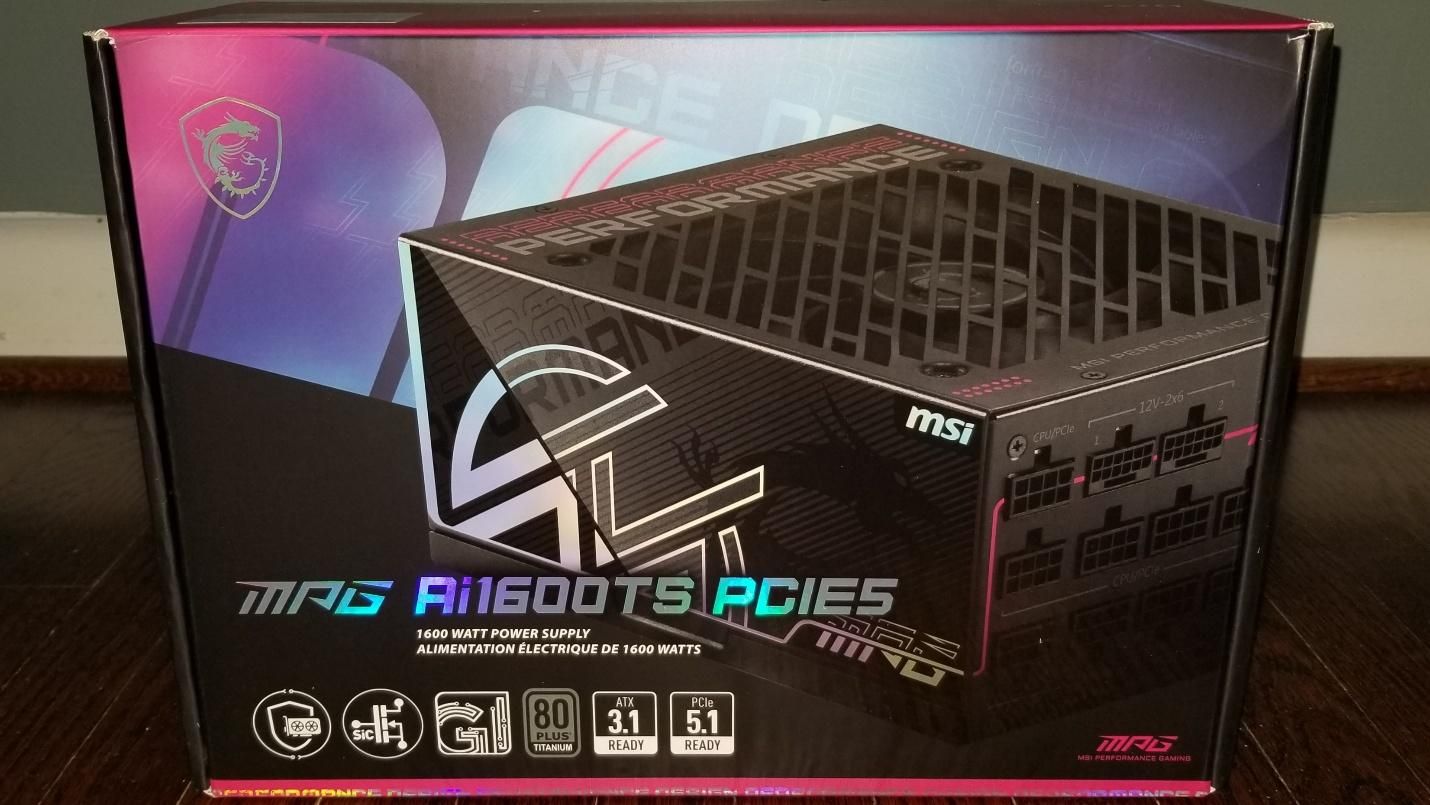
Has the PC building world finally found an answer to the increasingly common, and frankly terrifying, problem of melting GPU power connectors? For years, enthusiasts and even seasoned builders have grappled with the 12VHPWR and its successor, the 12V-2x6 standard, where a poorly seated cable can lead to catastrophic connector meltdown, taking expensive GPUs and PSUs with it. MSI, at CES 2026, unveiled its MPG Ai1600TS power supply, touting a new feature called GPU Safeguard+ specifically designed to prevent this fiery fate. But does it deliver on its promise, or is it just another layer of PR spin on a persistent hardware flaw?
The Persistent Peril of Poor Connections
The story of the 12VHPWR connector, introduced with NVIDIA’s RTX 40-series, was meant to be one of simplification. One 16-pin connector replacing the bulky trio of 8-pin PCIe power cables. Sounds good, right? In theory, yes. In practice, however, the real world proved messier. The specification, while technically sound when implemented perfectly, seemed to be exceptionally sensitive to user error and even adapter cable quality. Reports of fried connectors, warped PCBs, and even outright component destruction quickly surfaced, impacting GPUs across the spectrum, from the flagship RTX 4090 down to mid-range cards like the RTX 4070 and even AMD models utilizing the newer 12V-2x6 standard.
What exactly goes wrong? The core issue often boils down to load balancing. If the 12V-2x6 connector isn’t fully seated, power delivery can become unevenly distributed across its pins. One or a few pins end up carrying a disproportionate amount of the load, leading to localized overheating. This thermal stress, over time or under heavy load, can degrade the plastic housing, cause melting, and ultimately lead to connection failure and, potentially, irreparable damage to the GPU. It’s a design that, while efficient in theory, has demonstrated a worrying fragility in practice. Manufacturer attempts to mitigate this, like colored housings on the connector to ensure full seating, have only partially addressed the problem. Many still point to third-party adapter cables as a significant contributing factor, suggesting that native PSU cabling is the safest bet.
Does MSI’s GPU Safeguard+ Offer a Real Solution?
This is where MSI’s GPU Safeguard+ enters the arena. The MPG Ai1600TS PSU, and its 1300W sibling, come equipped with this new protection system. It operates in a multi-stage fashion. The first phase is detection: the PSU’s internal monitoring identifies an anomaly. This could be an imbalance in current draw between the 12V-2x6 connector’s pins or a sudden, unexpected current spike that exceeds the connector’s rated safety limits. Think of it as the PSU’s vigilant guardian.
Once a fault is flagged, the system issues a warning. This isn’t a subtle blink-and-you’ll-miss-it notification; it’s designed to be heard. A built-in buzzer sounds, and this alert is also relayed through MSI’s software suite. The buzzer will continue its insistent alert for a full three minutes after the initial fault detection. This buffer period is an interesting design choice by MSI. The company states it’s intended to give users time to save their work or gracefully shut down their system, especially if they aren’t physically present when the fault occurs. It’s a thoughtful concession to the practicalities of PC usage, acknowledging that not every user will be right at their desk the moment something goes awry.
If, during that three-minute window, the current distribution normalizes, the buzzer continues, but the PC remains operational. The onus is then on the user to investigate, force a shutdown, and reseat or replace the offending cable. However, if the anomaly persists, the system escalates its response. The buzzer keeps sounding, yes, but the power delivery to the GPU is abruptly cut. The screen goes black. At this point, a forced shutdown is the only recourse, and a thorough inspection of the connection is mandatory. Crucially, both scenarios log the event for future reference.
The issue has continued to persist, with reports of damage affecting GPUs ranging from the RTX 5090 to the RTX 5070, as well as models of the 9070 XT that utilize the 12V-2x6 connector.
This persistent reporting is precisely why a hardware-level safeguard is compelling. It’s not just about alerting the user; it’s about actively intervening to prevent damage.
Monitoring the Magic: Software Integration
MSI hasn’t left users in the dark regarding the system’s functionality. The MPG Ai1600TS and its 1300W brethren include a USB-C port. This connects via an included cable to a standard 9-pin USB header on the motherboard, enabling communication between the PSU and the PC. Through MSI Center, users gain access to a wealth of real-time performance data. This isn’t just cosmetic fluff; it’s granular insight into the PSU’s operation.
Within MSI Center’s ‘power supply’ section, users can view total system wattage, PSU efficiency, internal temperature, and, most critically, the per-pin current distribution for the 12V-2x6 connector. A real-time dashboard provides graphical representations of this data, and crucially, it can be exported as a CSV file for deeper analysis. This level of transparency is invaluable for diagnosing potential issues before they become critical. For overclockers and performance enthusiasts, this data can also inform system tuning.
But what happens when you simulate a fault? The review details a test where a deliberately improper cable connection was made. The immediate response was a rapid increase in current imbalance on the 12V-2x6 connector, a clear indicator of a problem. MSI Center registered this surge, and the PSU’s buzzer began its audible warning. This visual and auditory confirmation is a strong indicator that the Safeguard+ system is indeed active and responsive. The power to the GPU was cut after the grace period when the fault persisted, demonstrating the system’s fail-safe mechanism.
The Verdict: A Step in the Right Direction?
MSI’s GPU Safeguard+ represents a significant and pragmatic step in addressing a real-world hardware vulnerability. By integrating detection and active intervention directly into the power supply, it moves beyond software alerts and user reliance for fault mitigation. The inclusion of detailed software monitoring further empowers users, turning a potential disaster into a manageable, albeit alarming, event. This isn’t just a feature; it’s a necessary evolution for PSUs powering modern, power-hungry GPUs. While it’s impossible to test every conceivable fault scenario, the demonstrable response to a simulated improper connection is highly encouraging. For builders who prioritize stability and wish to mitigate the risks associated with high-power GPU connectors, MSI’s Ai1600TS PSU and its Safeguard+ system warrant serious consideration. It’s a data-driven approach to a data-demonstrated problem, and in the often-speculative world of PC hardware, that’s a breath of fresh air.