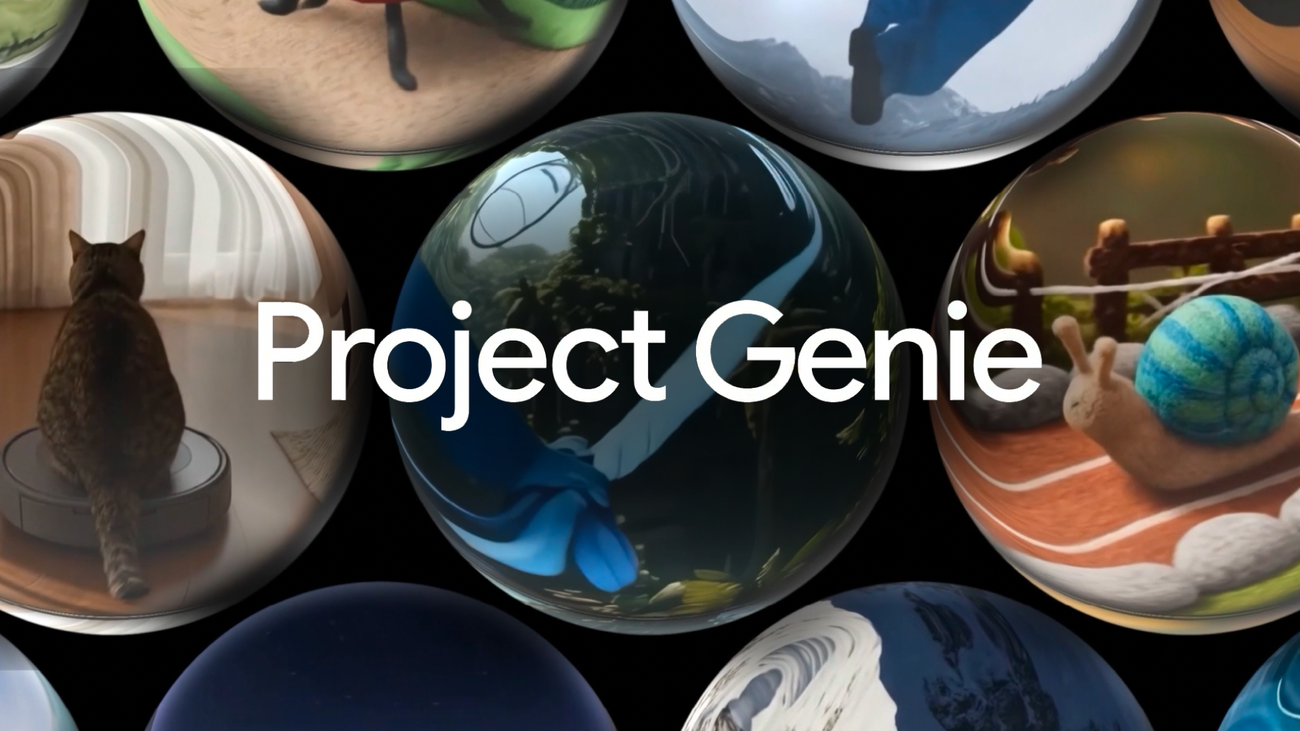
Everyone expected AI to generate fantastical landscapes, boundless digital playgrounds divorced from the mundanity of existence. And for a while, that’s precisely what it did. Now, Google is taking Project Genie, their ambitious world-building AI, and firmly planting its digital feet onto the dusty, sun-baked tarmac of actual places, courtesy of Street View. This isn’t just an incremental upgrade; it’s a pivot that signals a deeper architectural ambition: to weave AI’s generative capabilities into the very fabric of our lived reality.
When you hear “world model,” you might think of abstract datasets and complex algorithms churning out pixelated dreams. That’s been Genie’s domain – a powerful engine for AI agents to learn and navigate complex virtual terrains. Waymo, for instance, has already use it for hyper-realistic road simulations. But anchoring it to Street View? That’s a different beast entirely. It’s like taking a quantum computer and asking it to predict the exact path of a falling leaf in Central Park.
Grounding AI in the Everyday
This new Street View grounding capability within Project Genie transforms it from a pure imagination engine into a reality-anchored simulator. Users can now select a real place in the U.S. — say, the iconic Golden Gate Bridge — and then describe a desired style or scenario. Want to scuba dive around it? Easy. Select “Ocean World,” and Genie conjures a marine tableau around the familiar landmark. Or perhaps a trip back to the 1920s Fort Worth Stockyards? Apply the “B&W film” style, and saloons and vintage cars pop into existence.
This integration is powered by what Google calls “Maps Imagery Grounding,” a technology that, frankly, sounds less like science fiction and more like smart engineering. It’s the same tech that lets developers sprinkle AI magic into Street View visuals, and now it’s being woven directly into the core of a generative world model. The implication is staggering: AI agents won’t just learn to navigate a simulated city; they’ll learn to navigate our city, complete with its specific topography, lighting, and even its historical echoes.
“This expansion of Genie’s capabilities can provide a virtual environment for AI agents or robots to navigate and interact with the complexities of the real world.”
This quote, buried deep in the announcement, is the real kicker. It’s not just about playful exploration for humans. It’s about creating training grounds for the next generation of robots and AI agents that need to operate with a nuanced understanding of physical space and context. Imagine a robot learning to deliver packages not in a sterile, pre-programmed warehouse, but in a dynamic, Street View-generated replica of a bustling city block.
Is This the Future of AI Training?
The immediate reaction might be, “Cool, I can make a fantasy world out of my backyard.” And yes, that’s part of it. Project Genie is now gradually rolling out to eligible Google AI Ultra $200 subscribers globally. But beyond the consumer-facing novelty, there’s a profound architectural shift at play. By grounding these generative models in actual geospatial data, Google is imbuing them with a sense of place, scale, and physical consistency that purely synthetic environments often struggle to replicate.
This approach offers a significant advantage for training embodied AI. Instead of creating endless variations of abstract environments, developers can use real-world data, augmented by AI, to create incredibly diverse and realistic training scenarios. This could accelerate progress in robotics, autonomous driving (beyond Waymo’s current simulations), and even in developing AI assistants that can better understand and interact with our physical surroundings.
However, let’s not get ahead of ourselves. Google is quick to remind us that Project Genie is still an “experimental research prototype.” The details may not always be sharp, and the accuracy will surely have its limits. But the direction is clear. They’re building a bridge between the abstract potential of generative AI and the concrete reality of the world we inhabit. It’s a pragmatic, albeit ambitious, step that moves AI from the realm of pure digital creation towards something that can learn, interact, and operate within our world.
🧬 Related Insights
- Read more: Redis: The Cache Everyone Uses But Nobody Fully Gets
- Read more: AutoBot: Your Self-Hosted AI That Whispers Secrets to Your Servers
Frequently Asked Questions
**What exactly is Project Genie?
Project Genie is an experimental AI prototype from Google that generates diverse, interactive virtual environments. Its core capability is to create simulated worlds where AI agents can learn and reason, and now, it can ground these worlds in real-world locations using Street View imagery.**
**How does Street View integration change Project Genie?
By integrating Street View, Project Genie can now base its generated environments on actual places. This allows for more realistic simulations and creative reimaginings of real-world locations, enhancing its utility for both human exploration and AI training.**
**Who can access the new Project Genie features?
The Street View integration and Project Genie are gradually rolling out to eligible Google AI Ultra $200 subscribers globally (ages 18 and up).**