AI Proves 80-Year Math Conjecture!
This isn’t just another AI headline; this is a seismic event in the world of mathematics. OpenAI’s internal AI model has officially disproven the Erdős unit distance conjecture, a problem that has tantalized and stumped human mathematicians for a staggering eight decades. Imagine a mathematical Everest, and an AI just planted its flag at the summit. The implications are staggering, and frankly, thrilling.
Mathematicians themselves are in awe. Tim Gowers, a Fields Medal recipient – think of it as the Nobel Prize for math – declared, “there is no doubt that the solution to the unit-distance problem is a milestone in AI mathematics.” And Daniel Litt, a professor at the University of Toronto, echoed this sentiment, calling it “the first example of a result produced autonomously by an AI that I find exciting in itself, as opposed to as a leading indicator.” This is significant; it’s not just a predictor of future AI prowess, but an actual, tangible achievement in its own right.
AI in Math: The Rapid Ascent
But let’s pump the brakes on the utter shock and awe for a second. While this is undeniably cool, I don’t see it as a completely out-of-the-blue, warp-speed leap. Think of AI’s progress in math like this: just three years ago, large language models were tripping over basic arithmetic. Then, last year, they started acing high school math competitions. This latest breakthrough is the next logical step in that incredible, accelerated trajectory.
I was at the Joint Mathematics Meetings in January, the absolute epicenter of mathematical minds, and the whispers were there. AI was starting to contribute, but it was in very specific, almost ‘sandbox’ environments. It still required significant human intellect to translate an AI’s output into a proper, publishable theorem. OpenAI’s current achievement is a more polished, more integrated version of that – the AI model brilliantly wove together existing concepts from disparate mathematical fields to construct a complete proof. It’s a masterclass in synthesis, not necessarily in pure, unadulterated invention of novel techniques.
Human-AI Symbiosis: The Medium-Term Vision
The near future, as I see it, is one of profound collaboration. Picture AIs as these incredibly vast libraries, possessing a breadth of mathematical knowledge that no single human could ever hope to encompass. They also possess an almost infinite patience for slogging through the tedious, labyrinthine paths of proof-building that would make a human mathematician weep. Humans, on the other hand, retain that spark of deep intuition, that ability to ask the truly paradigm-shifting questions, to ponder one problem with a depth that AI, for now, can only mimic.
It’s a beautiful dance – the AI finds the pieces, the human builds the masterpiece. This synergy is where we’ll see incredible advancements in fields we can’t even imagine yet.
But What About the Long Game?
Of course, the pace of AI development is so dizzying that this comfortable symbiosis might be a fleeting moment. Will human mathematicians still have a significant role to play in a decade? That’s the multi-trillion-dollar question, isn’t it? The speed at which these systems are learning and innovating suggests that the AI’s role might evolve from collaborator to principal investigator. It’s both exhilarating and a little terrifying to consider.
The Unit Distance Conundrum Unpacked
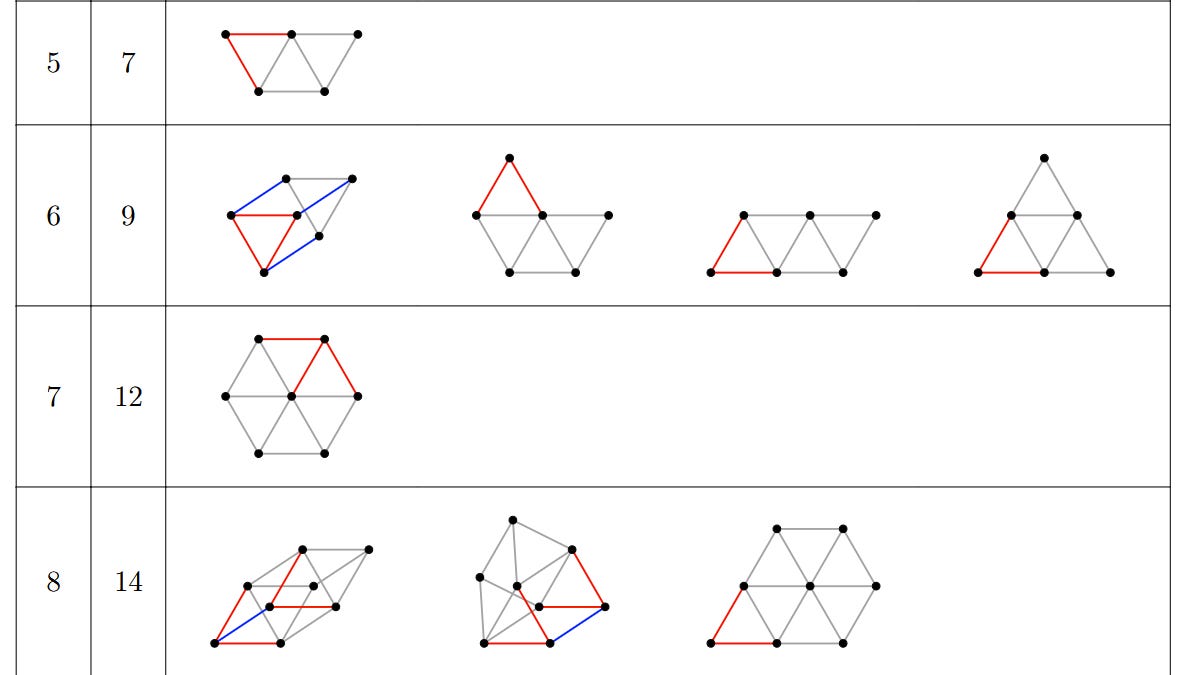
To truly appreciate OpenAI’s feat, let’s explain the Erdős unit distance problem. Paul Erdős, a legend in mathematics for his sheer prolificacy (over 1,500 papers!), had a knack for crafting problems that were deceptively simple to state but possessed immense mathematical depth. In 1946, he introduced this particular puzzle: Imagine you scatter points on a 2D plane. How many pairs of these points can be exactly one unit apart? This isn’t about finding the maximum possible, but about understanding the bounds – the lower and upper limits of unit distances you can achieve as the number of points grows.
Erdős’s initial approach involved considering points arranged in a grid. While not necessarily the optimal layout for maximizing unit distances, it offered a solid baseline. He posited that if a grid arrangement could achieve a certain number of unit distances, then the best possible arrangement must achieve at least that many. The simplest grid spacing yields fewer unit distances per point, but by shrinking that spacing – and this is where the geometric magic happens – you can dramatically increase the number of neighbors a single point is equidistant from. The diagrams in OpenAI’s explanation, once you superimpose a circle, illustrate this beautifully. It’s all rooted in fundamental geometry and the Pythagorean theorem: a² + b² = c².
Is This AI A True Innovator?
Here’s where my skeptical journalist hat goes on. While the AI’s ability to synthesize existing knowledge to solve this problem is astonishing, it’s crucial to distinguish between sophisticated application and true innovation. The AI didn’t invent new mathematical frameworks; it masterfully applied and combined existing ones. It’s like a prodigy chef who can combine an encyclopedia of recipes into a breathtaking new dish, but hasn’t fundamentally invented a new cooking technique. The proof itself has already been refined and expanded by human mathematicians, highlighting that delicate balance.
This isn’t to diminish the achievement – it’s monumental! But it does temper the “AI is now thinking independently” hype. It’s playing to AI’s incredible strengths: massive data recall, pattern recognition across vast datasets, and tireless combinatorial exploration. It’s a powerful tool, an amplifier of human mathematical ingenuity, but perhaps not yet the independent creative force that some might proclaim.
“This is the first example of a result produced autonomously by an AI that I find exciting in itself, as opposed to as a leading indicator.”
This quote, from Professor Daniel Litt, perfectly encapsulates the current state of play. It’s exciting in itself, a concrete result. But it’s also a leading indicator of where AI is headed – a powerful partner in scientific discovery.
🧬 Related Insights
- Read more: Anduril, Meta Build War-Ready AR Goggles [Analysis]
- Read more: Clean Architecture in Node.js: Rescuing Express Apps from Spaghetti Hell
Frequently Asked Questions
Will this AI replace mathematicians?
Not immediately. For the foreseeable future, AI is likely to be a powerful collaborator, augmenting human mathematicians’ abilities by handling vast computations and exploring complex proof structures. Human intuition and creativity remain vital for posing novel questions and interpreting results.
What is the Erdős unit distance conjecture?
It’s a mathematical problem that asks for the maximum number of pairs of points that can be exactly one unit apart when you have a set of n points in a 2D plane. The conjecture explores the bounds of this number as n gets very large.
How did OpenAI’s AI solve it?
OpenAI’s AI model combined and applied existing mathematical concepts from various subfields to construct a proof that disproves the conjecture. It excelled at synthesizing information and exploring complex combinatorial possibilities.