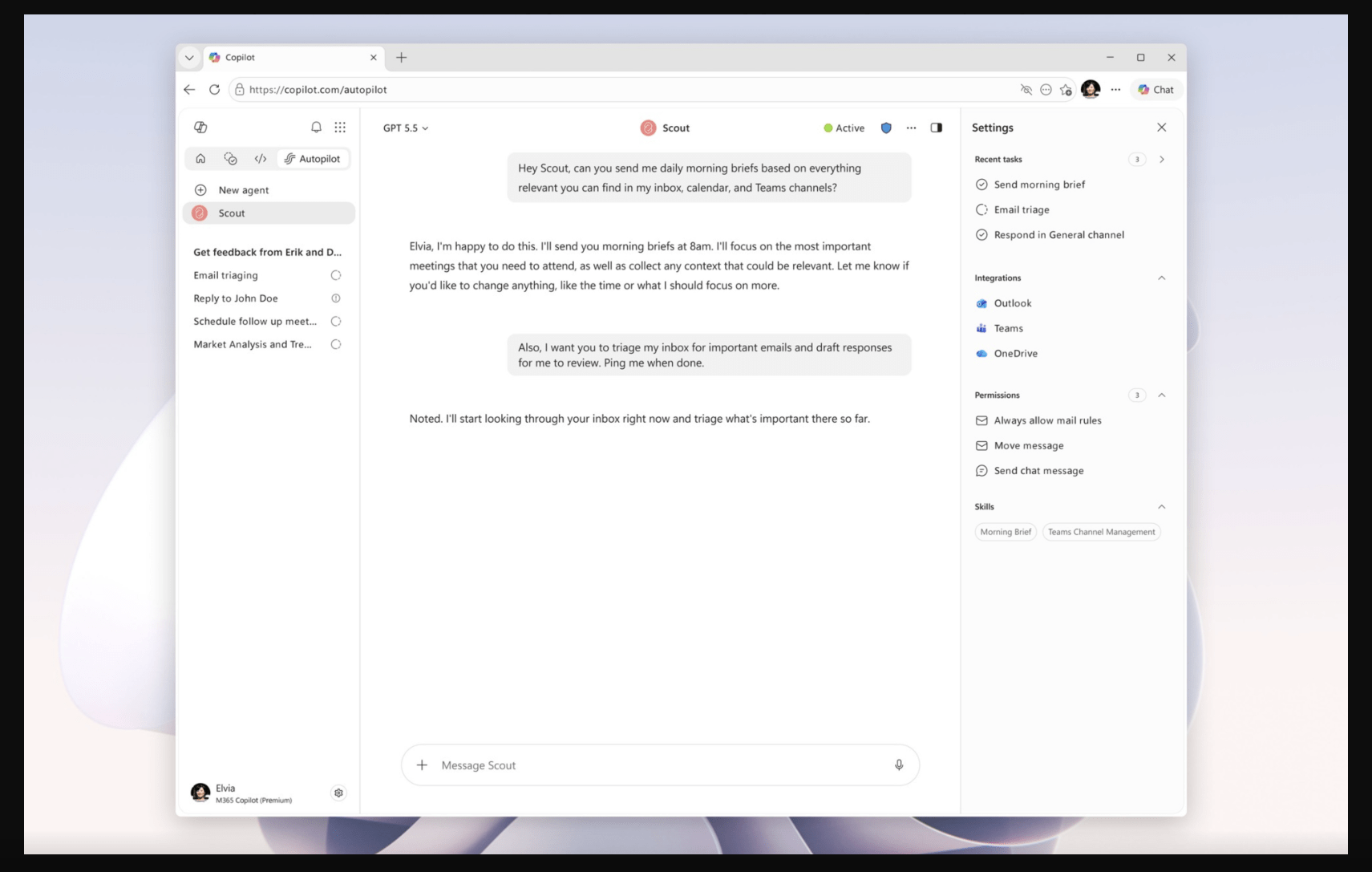
And then it happens. You get that ping. Not an email, not a Slack notification, but a genuine proactive nudge from Scout, your AI assistant, telling you to leave now if you want to make your 3 PM meeting across town, accounting for rush hour traffic that even your GPS missed. This isn’t your grandma’s virtual assistant; this is something else entirely.
Microsoft Scout is here, and it’s aiming to be your first real personal assistant, an always-on entity woven into the fabric of your digital life, much like a seasoned executive assistant anticipates needs before you even voice them. It’s not just about drafting emails or scheduling meetings anymore. This is an AI that observes, learns, and acts — proactively. Think less digital butler and more of a digital guardian angel for your productivity and sanity.
It’s fascinating to see Microsoft, a company that once compared open-source AI technology to a virus, now not just embracing, but contributing to that very same tech — OpenClaw. The narrative shift is wild. We’re talking about a fundamental platform shift here, akin to the jump from desktop applications to the cloud, or from dial-up to broadband. This is about AI becoming an ambient, ever-present layer.
The ‘First Real’ Personal Assistant
Omar Shahine, corporate vice president of Microsoft Scout, spells it out: “This is a personal assistant, it’s the first real personal assistant we’ve offered customers.” The emphasis on real is key. Scout isn’t confined to the chat window of a single app. It’s envisioned as a pervasive force, capable of monitoring local road traffic, your calendar, and even your email threads and Teams conversations to predict what’s important, what’s coming up, and what you need to prepare for. It’s the digital equivalent of your human assistant handing you a coffee and a briefing document before your big presentation.
This deep integration is what sets Scout apart from its siblings like Copilot, which, while powerful, largely operates within the defined boundaries of Microsoft 365 apps. Scout, conversely, is designed to have a broader purview, acting more like an extension of your own cognitive processes.
Embracing the Open Source Paradox
Microsoft’s pivot to OpenClaw is, frankly, surprising. Remember the concerns about OpenClaw’s skill extensions being a security nightmare? Now Microsoft is confidently integrating it, touting a rigorous intake process for supply chain risks and rapid changes.
Shahine reassures, “We operate OpenClaw in a cloud environment that’s in a sandbox, and we treat OpenClaw as untrusted so it doesn’t have secrets or access to any of your Microsoft 365 data.” They’re layering Microsoft’s own formidable security stack—Agent 365, Purview, Defender—on top, alongside the usual red teaming and privacy reviews. It’s a calculated gamble, but one that suggests Microsoft believes it has built a strong enough containment field to safely harness this potent open-source engine.
This embrace isn’t just about technology; it’s a strategic play. It mirrors Google’s own moves with Gemini Spark, signaling a new front in the enterprise AI race. The question isn’t if AI will manage our daily work lives, but how well, and crucially, how securely.
The Human Touch, Digitized
What strikes me most is the potential for AI like Scout to help us reclaim lost aspirations. Shahine notes, “A lot of people are using it to just be better versions of themselves… we all have aspirations we want for ourselves but we just often lose time and can’t do.” This is where the true platform shift lies. It’s not just about automating tasks; it’s about augmenting our human potential. By offloading the cognitive burden of remembering, tracking, and coordinating, AI assistants could free up mental bandwidth for creativity, strategic thinking, and genuine human connection. We’re not just looking at a more efficient workforce; we’re looking at potentially happier, more fulfilled individuals, finally able to pursue those passions that often get sidelined by the daily grind. It’s a future where technology doesn’t just serve us, but actively helps us become more us.
Scout is currently in a desktop preview for Microsoft’s Frontier customers in the US, with plans for a broader cloud rollout. The internal uptake has been significant, with over 3,000 employees already finding value in its capabilities, from scheduling to paperwork.
It’s a bold move, and one that puts Microsoft squarely at the forefront of this burgeoning AI assistant revolution. The race is on, and Scout is definitely in the running.
🧬 Related Insights
- Read more: Copilot Types Fast. Your Dev Process? Glacial.
- Read more:
Frequently Asked Questions
What does Microsoft Scout actually do? Microsoft Scout is an AI personal assistant that integrates with Microsoft 365 apps. It proactively helps users by managing calendars, drafting emails, monitoring traffic for appointment timing, and surfacing important information from Teams and emails.
Will Microsoft Scout replace human assistants? Scout is designed to augment human capabilities and automate routine tasks, rather than fully replace human assistants. It aims to free up employees’ time for more strategic or creative work.
Is Microsoft Scout secure since it’s built on OpenClaw? Microsoft states that Scout is built with strong security measures, including operating OpenClaw in a sandboxed cloud environment and treating it as untrusted. They utilize their own security tools like Agent 365, Purview, and Defender, alongside standard security reviews.