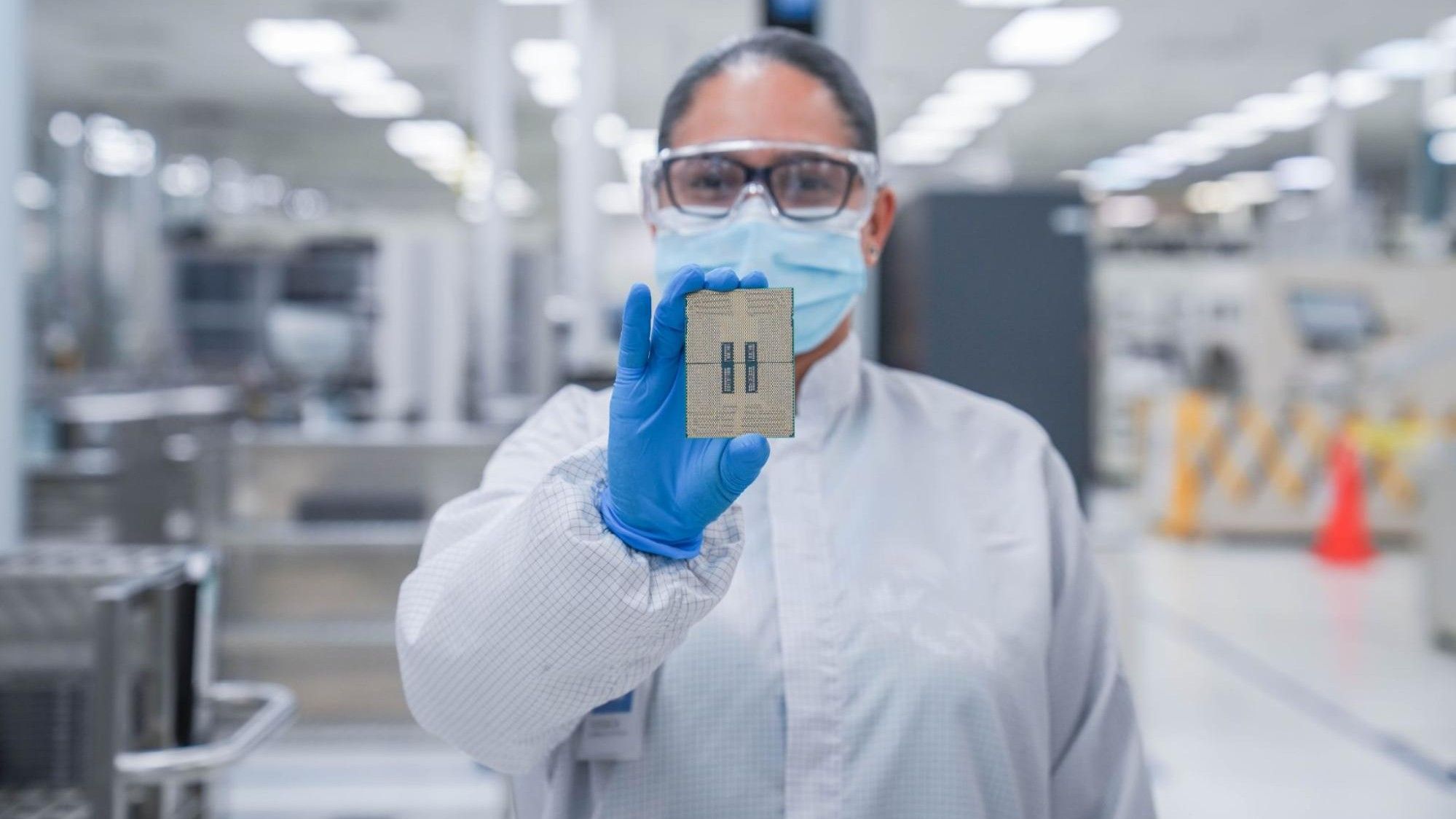
Get ready. Because if you’re even remotely connected to the silicon heartbeat of modern computing, you need to hear this: Intel’s next-generation Xeon 7 processors, codenamed ‘Diamond Rapids,’ are officially pegged for a 2027 launch. That’s right, 2027. We’re talking about a fundamental platform shift here, not just a minor upgrade. This isn’t just about faster chips; it’s about what those faster chips enable.
Intel dropped the bomb with some tantalizing details that paint a picture of a truly next-level data center CPU. Forget incremental bumps; Diamond Rapids is poised to deliver a seismic jolt. We’re looking at support for PCIe 6.0, which is like upgrading from a garden hose to a fire hydrant for data transfer. Then there’s the jaw-dropping 50% increase in core counts over the upcoming Xeon 6 series. Think of it as fitting an entire city’s worth of processors into a space that previously housed a bustling town. And to top it all off, twice the memory bandwidth. This is the kind of horsepower that doesn’t just speed things up; it opens entirely new avenues for what’s computationally possible.
The engine driving this beast? Intel 18A-P. This isn’t just Intel’s latest manufacturing process; it’s a refined version of their 18A node, a technology they were only just demoing recently. This suggests an aggressive push to get bleeding-edge manufacturing into their most critical server silicon, aiming for higher performance and better power efficiency.
The Marathon Race to 2027
Now, you might be thinking, ‘2027? That feels like light-years away!’ And you’d be forgiven for that sentiment. The original whispers about Xeon 7 suggested a much earlier arrival, perhaps even this year. But as the tech world often does, timelines have shifted, and the reality is Intel’s top-tier server chips are playing a longer game than initially anticipated. This gives AMD, with its Zen 6 EPYC Venice CPUs (slated for this year), a significant head start in the next-generation server arena.
This timing, however, isn’t entirely surprising given Intel’s broader roadmap. While Diamond Rapids is a significant milestone, the company has been consistently pointing to Coral Rapids, the generation that will follow Xeon 7, as their true next big leap, especially with the planned reintroduction of SMT (Simultaneous Multi-Threading). Intel is even exploring ways to accelerate Coral Rapids’ rollout, suggesting they see it as a critical inflection point.
A Bandwidth Bonanza
Let’s talk memory bandwidth, because this is where things get truly interesting for computationally intensive workloads. Diamond Rapids will echo AMD’s Venice by embracing PCIe 6.0, ensuring that data can flow to and from the CPU at blistering speeds. But the memory bandwidth doubles. The current Granite Rapids-AP, a 12-channel beast, tops out around 614 GB/s. Granite Rapids-SP, an 8-channel variant, manages 409 GB/s. Now, imagine that doubling. Depending on the exact configuration – Intel wasn’t perfectly clear on the comparison point – we’re looking at a potential of at least 1.2 TB/s or even 818 GB/s per socket. And with second-generation MRDIMM support, that figure could soar to an astonishing 1.6 TB/s. This isn’t just about getting data to the cores; it’s about feeding an ever-hungry beast without bottlenecks.
Core Count Carnival
And the cores. Oh, the cores! The top-end Granite Rapids-AP model boasts 128 cores. A 50% increase means we’re looking at a staggering 192 cores on Diamond Rapids. Rumors have even hinted at configurations climbing to 256 cores, with a more dense 512-core variant planned for later. While Intel is pushing back on the highest speculation, even the confirmed 50% uplift is monumental. This explosion in core count, combined with massive bandwidth, is the fuel for the AI infernos and massive simulation engines of the near future.
The Microarchitecture Mystery
The biggest question mark, however, hovers over the microarchitecture. Will these new cores support Hyper-Threading? Intel has notably omitted Hyper-Threading from its recent P-core designs, like Lion Cove and Cougar Cove, found in their Lunar Lake and Arrow Lake chips. If Diamond Rapids adopts those same P-core architectures, we could see a departure from traditional multi-threading. However, Intel’s statements in their January earnings call offer a glimmer of hope: they “will also reintroduce multi-threading back into our data center road map.” This suggests a deliberate decision to bring back that capability for their server-class silicon. Recent Intel documents point towards Panther Cove, an as-yet-unreleased microarchitecture, as the likely candidate for Diamond Rapids. We’ll likely get definitive answers soon.
“We expect to share more on Diamond Rapids in the late summer at Hot Chips, so stay tuned there.”
This quote, from an Intel spokesperson, is our beacon of hope for more concrete details. Hot Chips is a critical event for deep dives into processor technology, and its timing this summer will be a key moment for understanding what’s truly under the hood of Diamond Rapids.
Why This Manufacturing Node Matters
Diamond Rapids’ adoption of Intel 18A-P is a huge signal. It means Intel is not only pushing the boundaries of its own chip designs but is also confident enough in its most advanced manufacturing nodes to deploy them in its flagship data center products. Intel claims 18A-P offers a significant improvement over the base 18A, either delivering 9% higher performance at the same power or an 18% power reduction for equivalent performance. Improved reliability and voltage control further solidify this node as a mature platform, crucial for attracting external foundry customers. This is Intel playing the long game, not just for their server dominance, but for their foundry business as well.
The Competitive Landscape
Intel’s battleground is heating up. AMD’s Zen 6 Venice CPUs are on the horizon, promising up to 256 cores, a staggering 1.6 TB/s of memory bandwidth per socket, and a 70% jump in performance over their predecessors. From the initial teases, AMD appears to be holding the performance crown. This is the kind of competition that drives innovation at an exhilarating pace. The winner of this generational arms race will shape the next era of cloud computing, AI development, and scientific discovery.
This isn’t just about which company makes faster chips. It’s about the foundational technology that will underpin our increasingly digital world. The race for silicon supremacy is on, and the winners will be those who can translate raw power into tangible progress.
🧬 Related Insights
- Read more: AI Impact Lingo Exposed: Hype Over Help at India’s Summit
- Read more: AES-256 Reigns Supreme: Ditch RSA Before It’s Too Late
Frequently Asked Questions
What are Intel Xeon 7 ‘Diamond Rapids’ CPUs?
Intel Xeon 7 ‘Diamond Rapids’ are Intel’s next-generation server processors, officially slated for a 2027 launch. They are expected to feature significant upgrades in core count, memory bandwidth, and connectivity technologies like PCIe 6.0, built on Intel’s 18A-P manufacturing process.
When will Intel Xeon 7 ‘Diamond Rapids’ be released?
The official launch window for Intel Xeon 7 ‘Diamond Rapids’ CPUs is 2027.
What are the key improvements expected in Diamond Rapids?
Key improvements expected in Diamond Rapids include a 50% increase in core counts compared to Xeon 6, double the memory bandwidth, and support for PCIe 6.0. They will also utilize the Intel 18A-P manufacturing process.