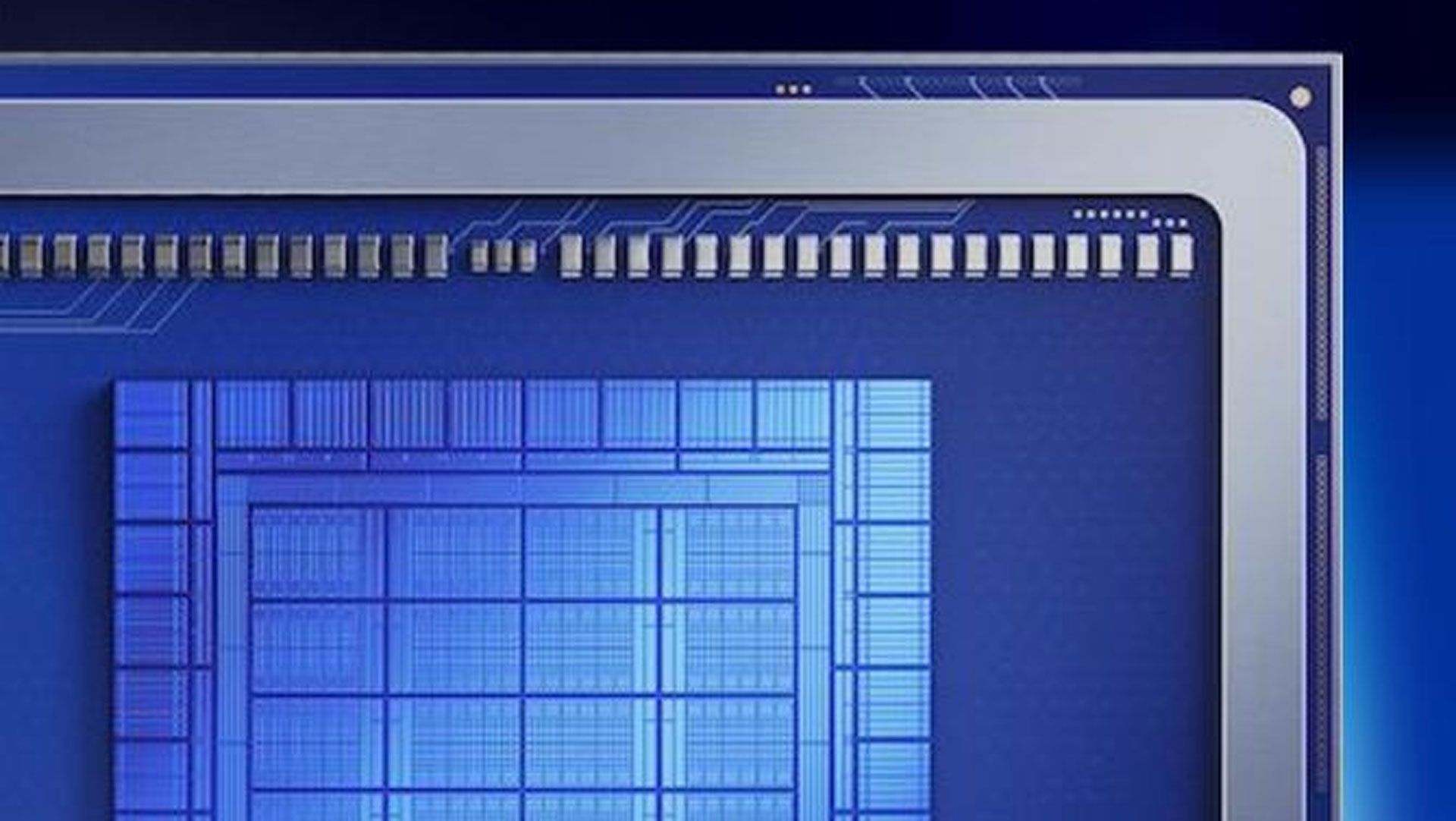
And just like that, at Computex, Intel pulled back the curtain. A little. On Crescent Island. Their new Data Center GPU.
This thing’s built on the Xe3P architecture. Intel’s calling it “built for agentic AI.” Which sounds fancy. It supposedly handles data types from FP4 all the way to FP64. Scientific computing, anyone? But raw throughput numbers? Nada. Intel’s playing coy.
Memory: The Big Play
Here’s the real headline: memory. Crescent Island is ditching GDDR and HBM. It’s all about LPDDR5X. Intel’s reference design sports 160GB. Partners can push that to a bonkers 480GB. That’s… a lot of RAM for an AI accelerator.
They’re going for a wide-and-slow approach. Think a 640-bit bus. Hooking up 20 LPDDR5X devices. It’s math. To hit 480GB, you need 24GB modules. Samsung’s already making them. With 10.7 Gbps LPDDR5X, that’s 684 GB/s of bandwidth. Not shabby.
This memory strategy isn’t just about stuffing more RAM in. It’s about keeping data close to the GPU. Less shuffling. More efficient inference. Intel’s also sidestepping the HBM shortage. And advanced packaging constraints. Easier to build. Easier to scale. Potentially. We don’t know where they’re fabricating the actual package.
Fitting Into Existing Racks
Crescent Island is air-cooled. Power draw? A tidy 350W. Sounds like it’ll slide right into existing 4U or 5U servers. Good news for companies wanting on-premise inference. Imagine eight of these beasts. That’s 3.8 terabytes of local GPU memory. In one box. For massive models. Or legions of AI agents.
Software. Always the software. Intel’s pushing oneAPI. It’s their answer to CUDA and ROCm. Less adoption, sure. But Intel claims it’s “open, upstreamed, and Day 0 ready.” We’ll see.
When Can You Get It?
Intel’s being typically vague. “Coming soon.” Second half of 2026 is the whisper. More details will trickle out. As they do.
Intel says its Crescent Island reference design will include 160GB of LPDDR5X, but that the chip is designed to allow partners the flexibility to build accelerators with up to 480GB of memory.
This whole push for massive local memory isn’t just a tech spec. It’s a direct answer to the looming bottleneck of AI model sizes. We’re staring down LLMs that dwarf anything we’ve seen before. If these models need to constantly fetch data from slower system RAM or even network storage, inference speed plummets. Crescent Island, with its theoretical 480GB of LPDDR5X, aims to keep entire colossal models resident directly on the accelerator. It’s a bold gambit, betting that the latency and bandwidth benefits of local memory outweigh the potential drawbacks of LPDDR5X compared to HBM for certain workloads.
And let’s be honest. Intel needs a win. They’re trailing NVIDIA badly in the AI hardware race. Throwing a curveball like this, focusing on a different kind of memory architecture, could be their play. It’s not just about chasing raw teraflops. It’s about finding a niche, a way to solve a problem that others might be neglecting. Whether it actually pays off remains to be seen, but it’s certainly a more interesting strategy than just trying to replicate NVIDIA’s recipe.
🧬 Related Insights
- Read more: Browser AI Without the Server Begging: WASM and ONNX Cut the Crap
- Read more: Google’s Scion: Open-Sources the Multi-Agent Orchestrator That Actually Measures Up
Frequently Asked Questions
What is Intel’s Crescent Island GPU?
Crescent Island is Intel’s next-generation Data Center GPU, codenamed for its Xe3P architecture. It’s designed for AI inference, with a key focus on offering very large amounts of LPDDR5X memory to combat memory shortages for large AI models.
How much memory will Crescent Island have?
Intel’s reference design will feature 160GB of LPDDR5X memory, with the potential for partners to create configurations with up to 480GB of LPDDR5X memory.