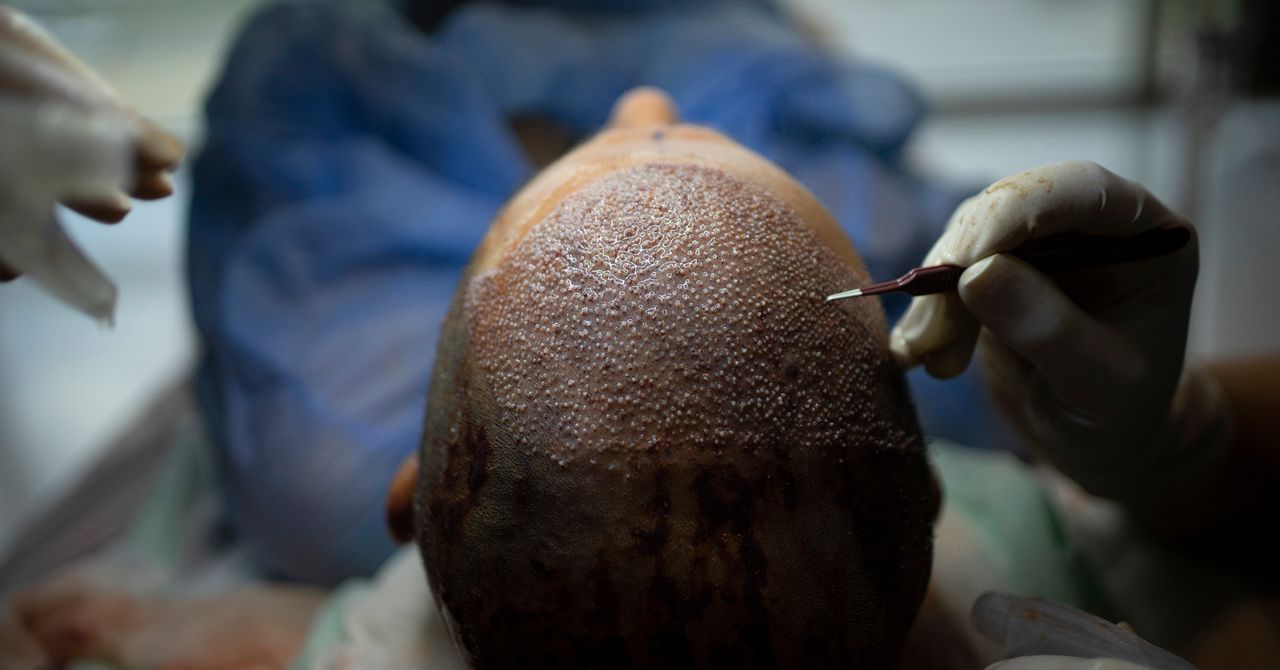
It’s not about the what that’s happened; it’s about what this seismic shift in Turkey’s hair transplant industry means for the average person booking a flight. It signals a profound recalibration of what constitutes cutting-edge medical practice, blurring lines between surgical necessity and deeply ingrained human desires for identity and confidence.
This isn’t just another medical tourism anecdote. The explosion of Turkey’s hair transplant sector reveals a fascinating undercurrent: a sophisticated, if at times chaotic, innovation spurred by necessity and an uncanny ability to repurpose existing technology. Think dental motors adapted for delicate follicular extraction, or sapphire blades, honed for ophthalmology, finding a new life in scalp incisions. It’s a proof to ingenuity, where necessity truly does become the mother of invention – or in this case, the mother of impossibly dense hairlines.
The psychological weight of hair cannot be overstated. Across cultures and millennia, it’s been a potent, if often subconscious, signifier of youth, health, and fertility. Our brains are wired to read it, to interpret its density and condition as cues about vitality. So, as the global hair transplant market balloons into a multi-billion dollar behemoth – projected to hit anywhere from $7.33 billion to $11.61 billion in 2024 alone – the allure of regaining that perceived vitality becomes an undeniable driver.
And Turkey, often humorously dubbed “Turkish Hair Lines” or its airport “Istanbul Hairport,” has cornered this market. While official data for hair transplants specifically remains elusive, it’s estimated that a third of the 1.39 million medical tourists visiting Turkey in 2025 sought aesthetic treatments, contributing significantly to the nation’s $3 billion medical tourism revenue. This isn’t accidental; it’s the result of a deliberate, albeit organically evolved, strategy.
The Algorithm of Aesthetics
To truly grasp Turkey’s dominance, we must look beyond the superficial economic factors – affordable labor, favorable exchange rates. This story is rooted in a deep architectural shift, a blend of salvaged technology and a profound respect for craft passed down through generations.
Dr. Mustafa Tuncer’s vision, sparked in 1999 at a Düsseldorf trade show, was to elevate Turkish cosmetic surgery from a niche service for domestic elites traveling abroad to a global powerhouse. His Esteworld clinics aimed to not just match, but surpass European standards. This marked the genesis of ‘Health Tourism 1.0’ – the creation of comprehensive facilities integrating plastic surgery and hair transplantation.
Dr. Burak Tuncer, continuing his family’s legacy, articulates a philosophy that eschews the purely cosmetic. He views hair not as mere aesthetic adornment, but as a unique, irreplaceable tissue. “Hair is a tissue that cannot be replaced or cloned,” he states, emphasizing the gravity of each follicular unit. “If roots are damaged during the hair-transplant process—whether while being extracted or implanted—we permanently lose that unique tissue. That is why we treat every single strand of hair with the same value and care as we would a kidney or a heart.” This profound respect for the biological material, coupled with an relentless drive for technical precision, forms the bedrock of their success.
This internal momentum propelled the sector into ‘Health Tourism 2.0.’ The sheer volume of demand forced a unique evolutionary path, one where innovation wasn’t dictated by a central R&D department but emerged from the clinic floor, from the hands of practitioners adapting and refining tools. It’s a model that eschews top-down directives for a more decentralized, almost organic, bloom of applied engineering.
Hacking the Machine: From Dentistry to Dermis
The transformation of seemingly unrelated technologies is the real story here. The delicate, high-speed motors essential for dental drills were repurposed for the incredibly precise task of extracting hair follicles – a task requiring minute control and minimal trauma. Similarly, the razor-sharp sapphire blades, designed for the microscopic precision of eye surgery, proved ideal for creating the minute incisions needed for follicle implantation. This isn’t just about cost-saving; it’s about recognizing the inherent capabilities of existing technologies and creatively applying them to a new domain.
This pragmatic approach, drawing from what the original article calls Anatolia’s “ancient craft culture,” is what sets the Turkish model apart. It’s a blend of high-tech adaptation and low-tech mastery, a fusion that results in outcomes often hailed as superior, even as the underlying tools might be re-purposed. The master-apprentice model, a cornerstone of traditional crafts, has been effectively translated into microsurgical techniques, ensuring the propagation of nuanced skills.
The sector has transitioned to a second phase, Health Tourism 2.0, through its own internal dynamics. Tuncer describes this perio
This isn’t the sterilized, rigidly controlled innovation we often associate with Silicon Valley. It’s messier, more adaptive, and deeply human – a powerful reminder that groundbreaking advancements can emerge from unexpected places, driven by a complex interplay of biological need, economic opportunity, and sheer, unadulterated craft.
My unique insight? This entire industry functions as a vast, decentralized AI model for aesthetic optimization. Each clinic, each surgeon, is a node refining its ‘parameters’ (techniques, tool adaptations, patient management) based on millions of data points (successful transplants, patient satisfaction). The ‘training data’ isn’t code; it’s human hair, scalp anatomy, and centuries of artisanal skill. And the ‘algorithms’? They’re embedded in the hands of surgeons who’ve honed their touch through relentless practice, adapting tools like a hacker might adapt software. This isn’t AI creating procedures; it’s humans acting like AI, iteratively improving a complex biological process.
🧬 Related Insights
- Read more: Coinbase Just Won a Major Regulatory Win—But Don’t Mistake It for a Victory
- Read more: Bitcoin’s 22% Bloodbath: Why the Worst Quarter Since 2018 Actually Matters
Frequently Asked Questions
What does the Turkish hair transplant industry do? Turkey has become a leading global destination for hair transplant surgeries, offering advanced procedures at competitive prices by creatively adapting and utilizing specialized medical equipment and traditional craftsmanship.
Is this industry safe? While Turkey offers high-quality procedures, as with any medical tourism, patients should thoroughly research clinics and surgeons, ensuring they are accredited and have a strong track record of patient safety and success.
Will this tech be used elsewhere? The innovative repurposing of medical and dental equipment seen in Turkey’s hair transplant sector has already inspired other regions to explore similar cost-effective and efficient methods for aesthetic procedures.