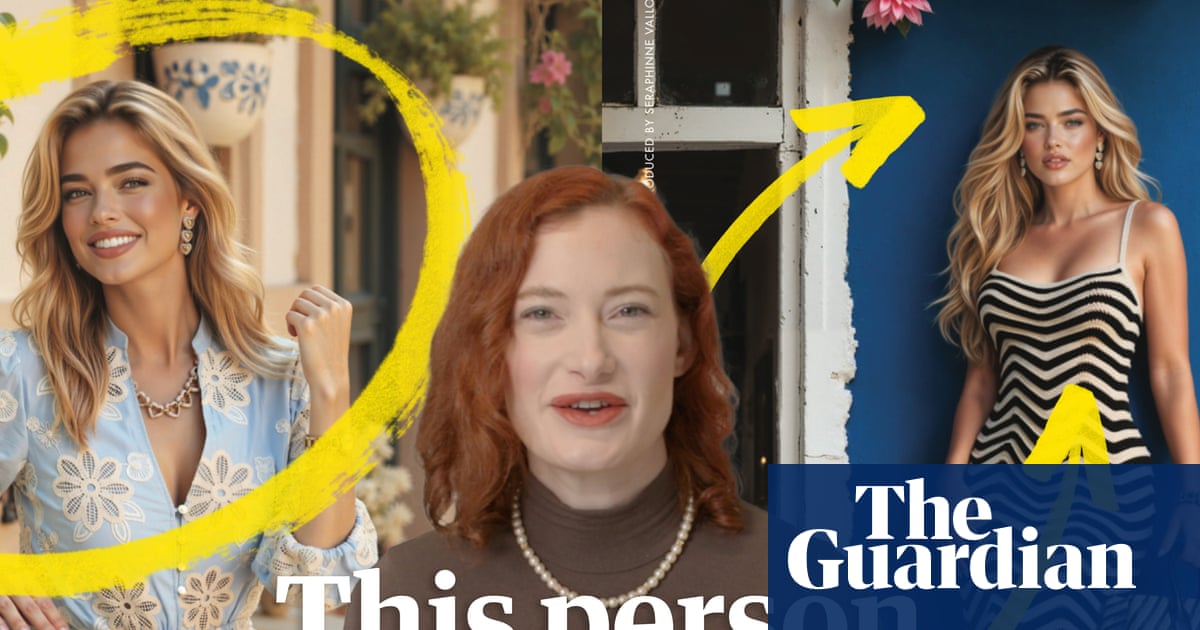
The shimmering fabric of a dress, modeled not by a human but by an algorithm’s digital dream, caught the afternoon light.
It’s easy to get lost in the sheer novelty of it all. We’re talking about AI models, digital twins sculpted from code, appearing on e-commerce sites, and frankly, they’re not just a fleeting trend – they’re signaling a seismic shift, a genuine platform change for the fashion industry. Think of it like the jump from typewriters to word processors; fundamentally different, game-changing. This isn’t just about prettier pictures; it’s about reimagining how we create, market, and even perceive fashion.
Alyx Gorman, our own lifestyle editor, dove headfirst into this digital looking glass when The Iconic, an Australian e-commerce giant, started showcasing garments on AI-generated personas. The big question on everyone’s lips, naturally: are these pixels actually selling substance? Or are we just buying into a sophisticated illusion?
This move from The Iconic isn’t some rogue experiment. They’ve stated their expectation clearly: ‘Where AI-generated imagery is used to advertise products for sale on our platform, our expectation is that it is clearly labelled and that the product itself is represented as accurately as possible for customers.’ Transparency, a buzzword we hear constantly, but here, it seems to hold real weight. They’re acknowledging the artificiality while striving for authenticity in product representation.
The Independent Brand’s Secret Weapon?
Atoir, the designer behind some of these AI-modeled creations, offered a particularly compelling perspective. For independent brands in a fiercely competitive landscape like Australia’s, these tools aren’t just novelties; they’re potential lifelines. ‘The Australian fashion industry is highly competitive, particularly for independent brands,’ they noted. ‘We believe that when used responsibly, tools like this can help smaller businesses to operate with greater agility while still maintaining the creative standards and product integrity that matter to both the brand and the customer.’ This is where the real magic, or perhaps the practical genius, lies – empowering smaller players to punch above their weight.
It’s like giving a local artisan access to a global advertising agency, but without the astronomical costs. Imagine a small boutique, perhaps in a quaint coastal town, able to conjure up a diverse range of models showcasing their latest collection without ever needing to book a studio or pay model fees. This democratizes visibility in a way that feels truly exciting.
Is This Just Hype, or a Fundamental Shift?
Let’s be clear: the current iteration of AI models in fashion isn’t about replacing human models with digital clones for editorial spreads. Not yet, anyway. It’s more about efficiency and scalability in commercial contexts. It’s about creating hyper-realistic representations for product pages, saving time, money, and logistical headaches. We’re seeing AI-generated models used to promote products, and the emphasis from brands like The Iconic is on clear labeling. This isn’t a stealth operation to trick consumers; it’s a strategic deployment of new technology.
But this is just the beginning. We’re witnessing the nascent stages of AI becoming a foundational layer for creative industries, much like the internet or the smartphone did before it. The implications stretch far beyond a single dress on a website. Think about personalized fashion experiences, where AI could tailor visuals to individual customer preferences, or even the creation of entirely new aesthetic styles that humans might not have conceived of on their own. The creative potential, when unfettered by the constraints of physical reality and traditional production cycles, is staggering.
My unique insight here is that this isn’t just about efficiency; it’s about new modes of creation. For decades, fashion design has been a relatively linear process: sketch, pattern, sample, manufacture, market. AI injects a non-linear, iterative element at the visual representation stage. Designers can now ‘test’ how a garment looks on an infinite array of virtual individuals, under any lighting condition, from any angle, before a single physical stitch is made. This dramatically speeds up the feedback loop and opens doors to entirely novel design explorations that were previously too costly or time-consuming to explore.
Consider the ethical dimensions, too. While the article touches on labeling, we’re entering a space where the ‘ideal’ human form can be continuously optimized by algorithms. This raises serious questions about body image and representation. Will we see a homogenization of beauty standards dictated by AI, or will this technology be harnessed to celebrate diversity in unprecedented ways? The former is a chilling possibility, but the latter offers a glimpse into a more inclusive digital future.
The Future is Already Here (and it’s Digital)
So, what’s the verdict? Is AI fashion merely a sophisticated Photoshop job, or the dawn of a new era? It’s undeniably the latter. The technology is here, it’s being deployed, and it’s fundamentally changing how brands connect with consumers. The speed at which this is happening is breathtaking. What was science fiction a year ago is now a commercial reality. It’s a wild, exhilarating ride, and we’re only just buckling up.
🧬 Related Insights
- Read more: Three Hours of Green Lies: How OpenTofu and GitHub Actions Fixed My IaC Nightmares
- Read more: Maple Linux 1.4: Canada’s No-Nonsense Privacy Play
Frequently Asked Questions
What does this AI model in fashion mean for consumers?
For consumers, it means potentially more accurate product representations, faster shopping experiences, and perhaps more personalized marketing. It also means a greater need for transparency, ensuring that AI-generated visuals are clearly labeled and don’t misrepresent products. The hope is for greater diversity and inclusivity in how clothing is showcased.
Can AI create truly unique fashion designs?
Yes, AI can generate novel design concepts by learning from vast datasets of existing fashion. While current applications often focus on visual representation of existing garments, the underlying generative AI technology can be used to create entirely new patterns, silhouettes, and even entire collections that push creative boundaries.
Will AI replace human fashion models entirely?
It’s unlikely to replace them entirely, especially for high-fashion editorial work where human expression and emotion are key. However, for commercial applications like product advertising and e-commerce, AI models offer significant cost and efficiency benefits, meaning their role will undoubtedly expand, potentially reducing the demand for human models in certain sectors.