And then it hit me. You’re standing on a street corner, utterly lost, fumbling with your phone, the GPS signal a fickle whisper. But what if your AirPods just… knew? What if they could glance at the street sign, the architecture, the general chaos, and whisper, ‘Turn left at the red awning, just past that guy juggling pigeons’? That’s the audacious, mind-bending future Apple might be quietly cooking up, a future where your earbuds aren’t just for listening, but for seeing.
Forget a simple firmware update. We’re talking about a fundamental platform shift, a seismic tremor in how we interact with technology. According to the ever-reliable Mark Gurman over at Bloomberg, Apple has been tinkering with AirPods sporting cameras, not for grainy selfies or covert ops, but to essentially give Siri eyes. They’re apparently in late-stage testing with Apple employees, a sure sign this isn’t just a flight of fancy, but part of a broader “AI device push.”
But here’s the rub, the little snag in this futuristic silk: the hardware might be ready, but Siri’s visual smarts? Not quite there yet. Sources hint at significant delays, with Apple brass wrestling with the thorny paradox of injecting a potential privacy nightmare into an accessory that’s practically glued to our ear canals. It’s like handing a toddler a laser pointer and hoping for the best. Will the use cases be compelling enough to outweigh the palpable unease?
The Visual Leap: Navigation, Shopping, and the ‘Smart’ Assistant
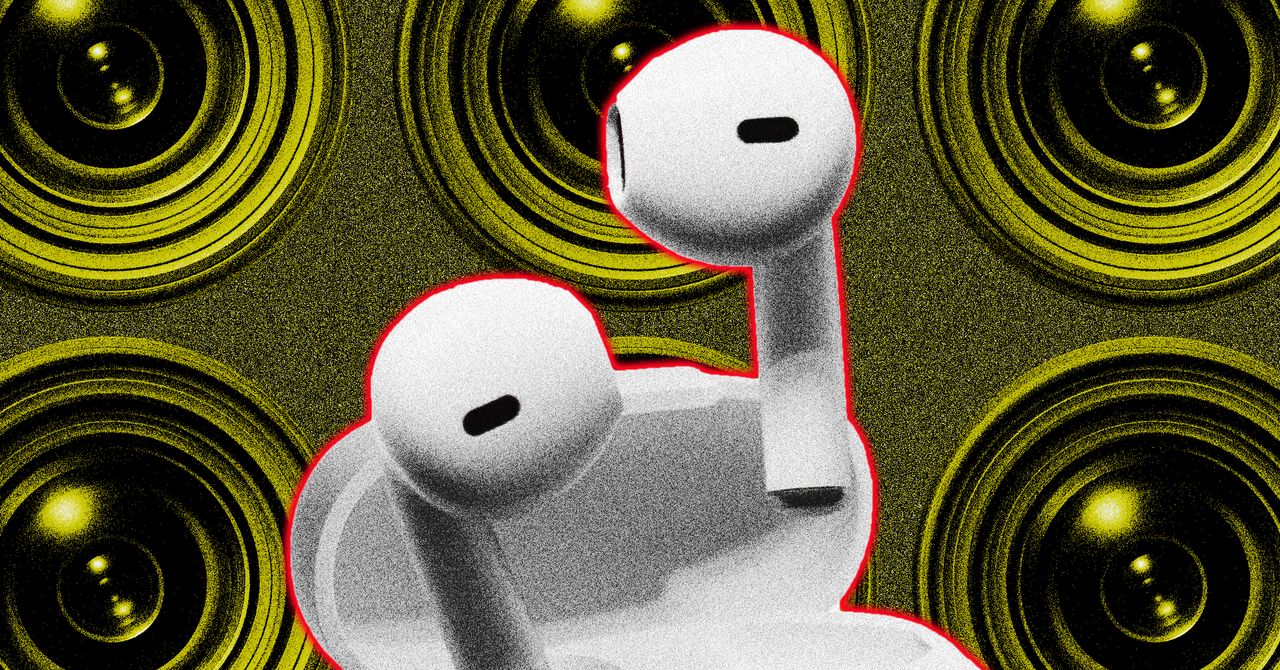
The idea itself is intriguing, bordering on sci-fi chic. These aren’t the chunky cameras you’d find on Ray-Ban Stories; think more subtle, integrated into the AirPods’ elongated stems. The goal isn’t to replace your iPhone’s camera but to act as passive, contextual observers for Siri. Imagine walking through a bustling market, asking Siri, ‘What’s this fruit?’ and getting an instant, visual ID. Or perhaps navigating a new city, not just by audio cues, but by landmarks recognized by your earbuds, rectifying GPS drift with a glance. Google’s own smart glasses are reportedly employing similar vision-based tech for navigation, so Apple is hardly alone in this nascent frontier.
Peter Richardson, a VP at Counterpoint Research, paints a vivid picture: standing before a fridge, asking Siri what’s for dinner. This isn’t just about recognizing ingredients; it’s about a rich mix of context. Is it Tuesday? A pre-training day? A Friday night vibe? Are friends coming over? This kind of multi-layered intelligence—combining visual data with calendar, fitness trackers, and who knows what else—is where the real magic might lie. It’s about making assistants less like obedient parrots and more like… well, actual companions who understand the nuances of your life.
And let’s not forget the accessibility angle. For visually impaired users, an AI-powered Siri with visual input could unlock incredible new capabilities, enhancing features like Image Explorer and Voice Over. The potential for infrared capabilities alone opens up a whole new sensory dimension. The biggest question mark, however, remains: are these cameras front-facing, looking out at the world, or world-facing, capturing whatever’s around you? A small LED light, as Gurman suggests, will presumably signal when visual data is active—a digital canary in the coal mine.
The Data Gold Rush: Training the Next Generation of AI
On its face, this looks like a massive, real-world data acquisition play. As AI ventures beyond the realm of text and into the complex territories of vision, mapping, and robotics, a ubiquitous accessory like AirPods becomes an unparalleled data-gathering tool. Think of it as the 2026 equivalent of Google’s Street View cars, but infinitely more personal and pervasive.
“Getting information in, visual or even acoustic, that’s new information that’s never really been used to train AI,” Richardson notes. “But it’s only useful if it can then be used to train it.”
This is where the plot thickens. Apple, famously, doesn’t yet boast a foundational AI model that rivals OpenAI’s GPT or Google’s Gemini. Their strategy has been more about partnerships. But what if these camera-equipped AirPods are the key to unlocking their own AI destiny? Anshel Sag, principal analyst at Moor Insights & Strategy, suggests this could be the data trove Apple needs to develop its own powerful, vision-centric models. The irony, of course, is Apple’s staunch, market-defining emphasis on privacy colliding head-on with the insatiable appetite of AI for raw, visual data.
If Apple indeed partners with Google to embed Gemini, as rumored, then honoring their vaunted privacy policies will require some serious data wrangling. We’re talking about rigorous anonymization, radical data cleaning—essentially, scrubbing out anything that could remotely identify an individual. Alternatively, they could process this visual data on-device, either on the AirPods themselves or via the iPhone, using it for basic contextual cues to enhance Siri. The technical hurdles for achieving high-fidelity, on-device processing for complex visual tasks are still immense.
The Privacy Tightrope Walk
This is where the enthusiast in me has to pause and put on my skeptic’s hat for a moment. Apple’s brand is built on a bedrock of trust, a carefully curated image of privacy-first innovation. Launching AirPods with cameras feels like deliberately walking a tightrope over a canyon filled with user apprehension. Every ding, every glitch, every perceived overreach could shatter that carefully constructed edifice. The question isn’t if there will be privacy concerns, but how aggressively Apple will move to mitigate them, and whether their solutions will be transparent and effective enough to quell the inevitable storm.
Will we get a tiny LED that signals recording? Will data be processed locally, ephemeral and unseen? Or will this be another step towards a world where our every visual interaction is logged, analyzed, and commodified? The potential is staggering, both for user empowerment and for mass surveillance disguised as convenience. This isn’t just about better Siri; it’s about the next battleground for data, privacy, and the very definition of personal computing.
The AI Platform Shift is Here
What we’re witnessing with these potential camera AirPods isn’t just an incremental upgrade. It’s a glimpse into the future of AI as a truly ambient, integrated platform. Think less about specific apps and more about an intelligent layer woven into the fabric of our daily lives. The AirPods, a device already deeply embedded in our personal space, becoming a sensory organ for AI? That’s not just evolution; it’s a revolution. This could be the moment we stop using AI and start living with it, where our environment becomes a constant source of intelligent interaction. It’s exhilarating, and frankly, a little terrifying. We’re on the cusp of something monumental, and the sound of it might just be the subtle click of an AirPods camera opening its eye.