Shader hell.
We’ve all been there. You fire up a brand new game, practically vibrating with anticipation, only to be met with minutes of agonizing shader pre-compilation. And then, just when you think you’re in the clear, the game sputters and freezes mid-action because it’s busy compiling yet another shader. It’s the kind of technical annoyance that can suck the joy right out of a highly anticipated release. First impressions, folks, they really matter.
So, what’s the big idea behind Microsoft’s “Advanced Shader Delivery” (ASD)? According to the folks who tested it, it’s supposed to be the silver bullet. They’re talking about reductions in game load times of up to 95% and a 33% bump in 1% low FPS. Sounds pretty spiffy, right? The promise is simple: less stutter, faster launches, and a generally smoother ride from the moment you hit ‘play’.
Pipeline State Objects (PSOs), for the uninitiated (which, let’s be honest, is most of us), are the arcane incantations that tell your graphics card how to render what you’re seeing. Modern games, bless their bloated hearts, can have an absolutely staggering number of these PSOs. Trying to pre-compile all of them? It’d take ages. Developers have tried their best to patch this problem, but it’s like trying to plug a dam with a band-aid – some leaks are inevitable. The dream scenario, of course, is to have every possible shader ready to go the moment you launch. But in practice, for massive AAA titles, that’s a pipeline that could run for hours, easily.
And that’s where Microsoft waltzes in, with Advanced Shader Delivery. They’re pitching this as the grand solution, the thing that will finally banish shader compilation woes from our lives. They’re claiming it’s baked into the game download process itself, just another asset to snag when you’re grabbing the main game files. This means quicker initial loads and, crucially, smoother performance right out of the gate after an install, an update, or even a driver refresh.
The Sausage Factory: How it Works (Allegedly)
The magic, we’re told, happens through something called a State Object Database (SODB). Developers apparently generate these databases by capturing PSO inputs and then, get this, pre-compiling the shaders offline. No GPU required, no waiting around for your powerful (and expensive) hardware to do the grunt work. This compiled output, dubbed a Precompiled Shader Database (PSDB), can then be packaged up and shipped alongside the game via the Xbox store. It’s designed to be flexible, targeting a wide range of hardware without needing each specific piece of silicon present during the compilation phase. It’s a bit like a universal translator for graphics commands, if you squint.
Once the game is installed and this ASD update lands, you’ll apparently see a ‘Shaders’ folder pop up, complete with an SODB and a PSDB file. The game then, theoretically, sees these goodies and skips the compilation step. If your drivers get an update? The shaders will supposedly update too, keeping everything in sync. Microsoft’s big boast is a potential 100% cache hit rate on first run, leading to those dramatic load time reductions and that glorious, stutter-free gameplay.
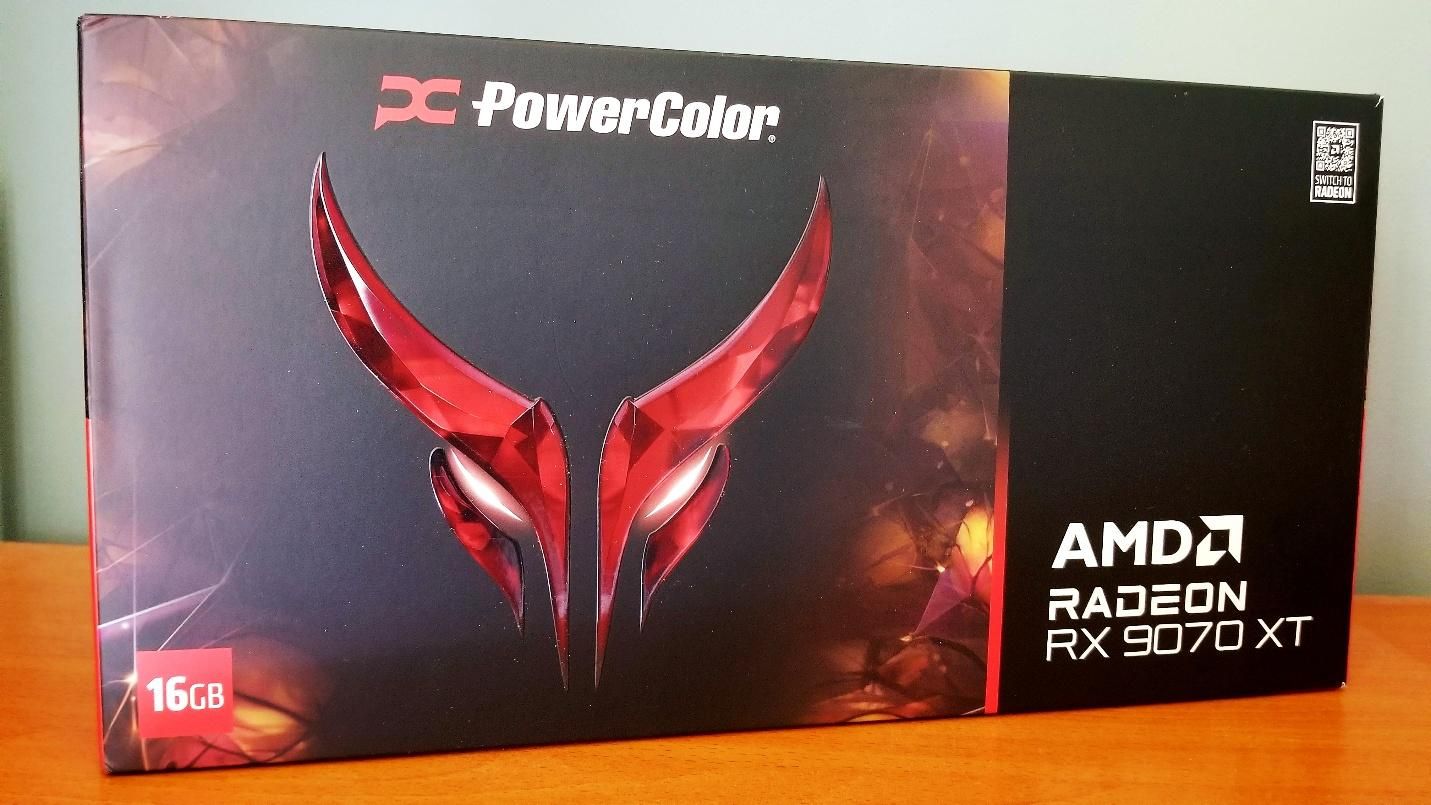
But here’s the rub. Right now, this is primarily an Xbox store play. And even then, it’s only showing up in the public preview, with specific hardware requirements. We’re talking Windows 11 24H2 or higher, a recent version of Xbox Gaming Services, the Xbox Insider Hub, and critically, AMD RDNA 3, 3.5, or 4 GPUs with specific driver versions. NVIDIA and Intel are supposedly on the horizon, but don’t hold your breath.
“Theoretically, if developers programmatically capture SODBs with every required shader represented in the PSDB – and the system functions correctly – a game could achieve a 100% cache hit rate on its first run. This would not only dramatically reduce initial load times but could also entirely eliminate shader compilation stutter during gameplay.”
That’s a lot of “theoretically” and “if.” And it’s why I’m here, asking the real questions: who’s actually making money off this? It’s Microsoft, pushing its store, its services, and its preferred hardware partners. AMD gets a leg up with its latest cards. Developers get… a new hoop to jump through, presumably to get their games featured in the Xbox store and maybe, just maybe, reduce player complaints. But are the players seeing a tangible benefit that outweighs the added complexity and the vendor lock-in?
The Real-World Grind: Does it Work?
The initial tests, as reported by our peers, paint a picture of some serious gains. We’re talking about those headline-grabbing load time improvements and noticeable dips in those dreaded 1% low frame rates. Six games were put through their paces, and the results seem to suggest that when ASD is firing on all cylinders, it’s genuinely impressive. The stutter that plagues so many PC gamers could, in theory, become a relic of the past. It’s the kind of stuff that makes you lean forward, ready to believe the hype.
But let’s not get ahead of ourselves. This is a preview. It’s limited. And let’s face it, the PC gaming ecosystem is a chaotic beast. Driver updates, different hardware configurations, game engine quirks – there are a million ways this could go sideways. The fact that it’s currently restricted to AMD’s latest hardware and Windows 11 feels less like a grand unified theory of gaming performance and more like a targeted marketing play. It’s good for the early adopters with the right gear, but for the vast majority of players? It’s still a distant promise.
So, is Advanced Shader Delivery the revolutionary tech we’ve been waiting for? Or is it just another incremental improvement, dressed up in shiny new corporate speak? From where I’m standing, 20 years in this business, it looks like a well-intentioned feature that’s got a long way to go before it’s a true universal fix. The potential is there, absolutely. But the execution, the accessibility, and the ultimate benefit for the average gamer? That’s still very much up in the air.
It’s a fascinating development, don’t get me wrong. The idea of eliminating shader stutter is the dream. But the current rollout feels more like a beta test for a select few, rather than a feature that will fundamentally change how we all experience PC gaming. We’ll be watching to see if it expands beyond this narrow slice, and more importantly, if it can deliver on its ambitious promises for everyone, not just the gamers with the bleeding-edge AMD rigs.
🧬 Related Insights
- Read more: Why PII Keeps Leaking into Test Data — And the Brutal Fix That Stopped It
- Read more: New Rig, Old Snail: Dave’s Garage Exposes Why Your Upgrade Feels Like a Downgrade
Frequently Asked Questions
What does Advanced Shader Delivery do? Advanced Shader Delivery is a feature designed to reduce game load times and eliminate shader compilation stutter by pre-compiling shaders and distributing them with game downloads, so they’re ready when you start playing.
Is Advanced Shader Delivery available on all GPUs? No, currently Advanced Shader Delivery is primarily supported on AMD RDNA 3, 3.5, and 4 architectures on Windows 11. Support for NVIDIA and Intel GPUs is expected in the future.
Will this make my old games run faster? Advanced Shader Delivery is designed for games that implement support for it. It won’t retroactively improve performance on older titles unless they are updated to utilize the new system.