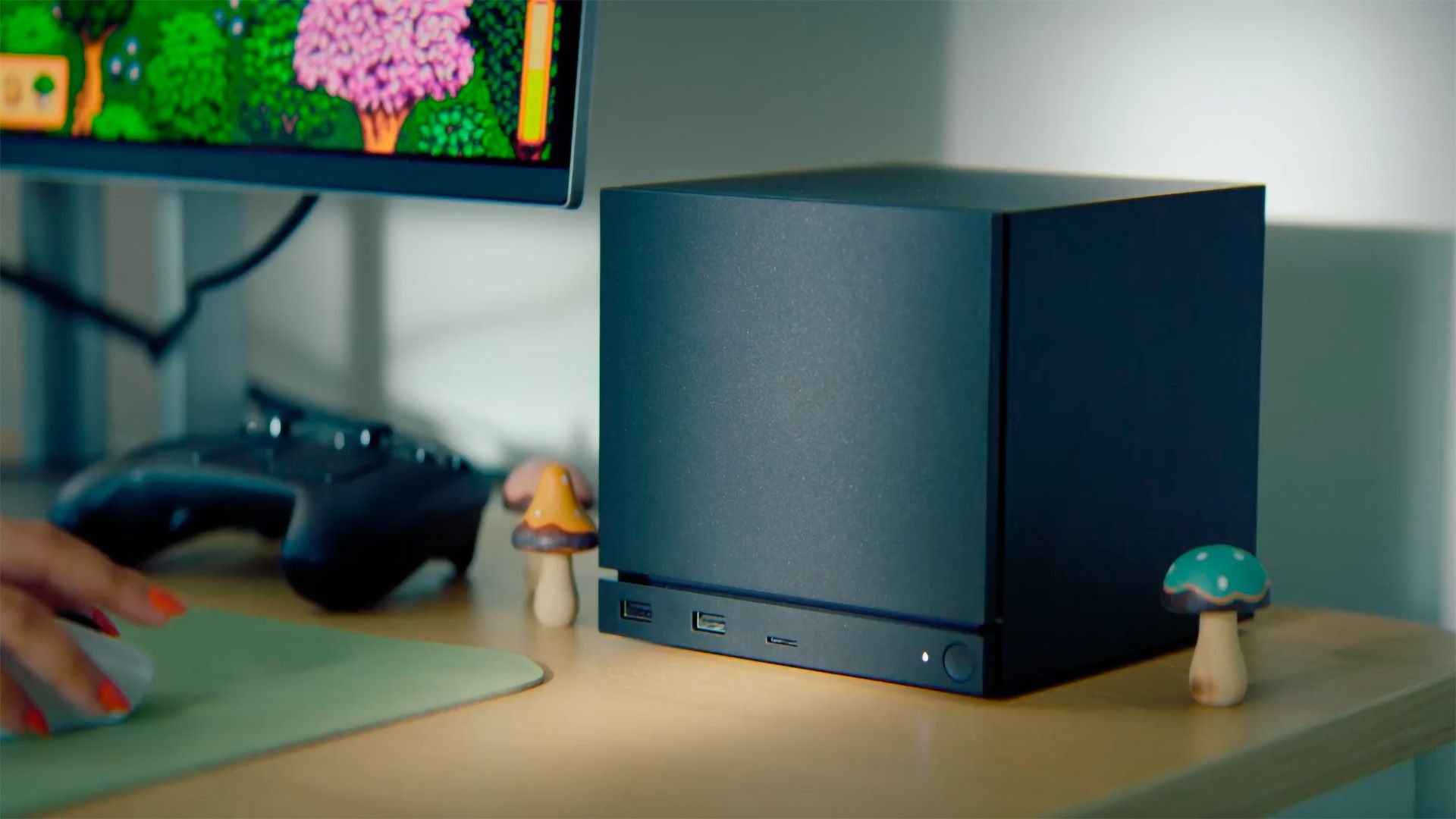
Here’s a number that’ll make you squint: 2025. That’s when Valve first announced the Steam Machine, alongside its now-released Steam Controller and a VR headset that, frankly, most people have forgotten about. Two years later, and that console? Still a phantom. Until now.
The Khronos Group, the keepers of the Vulkan flame — a graphics API that promises more direct hardware access and potentially better performance — just casually listed an “AMD Steam Machine” in its conformant product database. Think of it like your car getting its emissions sticker; it means it meets a standard, not that it’s suddenly a Ferrari.
So, what does this actually mean for the beleaguered Steam Machine, a project that’s seen more delays than a poorly managed budget airline? It means Valve is, demonstrably, still kicking the tires. It means the hardware and software are, at a foundational level, playing nice with Vulkan. Developers can, theoretically, rest a bit easier knowing the graphics stack isn’t going to spontaneously combust. But does it mean it’s launching next month? Don’t pack your bags for Valve HQ just yet.
This isn’t a stamp of approval for every Vulkan-powered game to run flawlessly. It’s a technical handshake. The console passes the sniff test for the API, ensuring the underlying plumbing works as expected. Performance, frame rates, compatibility with your entire Steam library? Still very much up in the air. This is the kind of news that gets gamers whispering conspiracies in darkened corners of Reddit, but it’s hardly a confetti-cannon announcement.
Who’s Actually Making Money Here?
This is the question that always hangs in the air around Valve’s hardware ambitions. They’ve got their fingers in a lot of pies: SteamOS, the Steam Store, the wildly successful Steam Deck. The Steam Deck, by all accounts, is a money-maker. It brought SteamOS out of the niche and into the hands of millions, proving that a dedicated, PC-like gaming portable could fly. The Steam Controller? A quirky, decent accessory. The VR headset? Let’s just say it wasn’t exactly a Vive killer.
The Steam Machine, however, was always the ambitious, maybe even hubristic, bet. The idea was to bring PC gaming into the living room, a battleground where consoles have long reigned supreme. But when memory and storage prices went supernova around the time of its planned launch, the cost ballooned. Valve, notoriously unwilling to subsidize hardware like Sony or Microsoft do, risked pricing itself out of its own target market. This Vulkan certification is a tiny, faint glimmer of hope, but the economic reality hasn’t changed. Will a conformant console be affordable enough for the average gamer when components are still making pockets lighter?
So, It’s Coming Back? Or Just Stuck in Limbo?
Valve announced the Steam Machine, Steam Controller, and a VR headset back in November 2015. Since then, the controller has been released, and the VR headset has faded into relative obscurity. The console, however, has been a recurring phantom, announced, delayed, and re-announced. Each time, the narrative gets a little thinner.
Here’s the thing: The Steam Deck success story changed the game for Valve’s OS and software ambitions. It showed they can deliver a polished hardware experience. But the PC component market is a beast. Last year, we saw rampant GPU price gouging and memory costs that made even mid-range builds feel like luxury purchases. If Valve can’t secure affordable components in bulk, this latest flicker of life for the Steam Machine might just be a flickering candle about to be snuffed out by market forces.
“While this is in no way, shape, or form a confirmation that the console is arriving soon, it’s still a step in the right direction. It indicates that Valve is still actively working on the console despite the setbacks driven by insane memory and storage prices.”
That quote, buried in the original announcement, perfectly encapsulates the situation. It’s a step. A small, cautious step. Not a sprint towards a finish line. Valve needs to find a way to make this machine economically viable. Without subsidies, that means either incredibly aggressive component sourcing or a price tag that makes even hardcore PC enthusiasts pause.
What Valve’s been doing all this time, presumably, is trying to navigate that treacherous hardware landscape. The Vulkan compliance is a sign they haven’t abandoned ship, but it’s also a proof to how difficult hardware development can be when you’re not a company that typically plays the console game with deep pockets and established supply chains. Maybe they’ve found a deal. Maybe they’re waiting for prices to stabilize. Or maybe, just maybe, this is the last gasp of a project that’s been on life support for years.
🧬 Related Insights
- Read more:
- Read more: Klix: Ditching CLI Chaos for Python’s Slickest Command-Line Runtime
Frequently Asked Questions
What does Vulkan compliance mean for the Steam Machine? It means the hardware and drivers meet the technical standards of the Vulkan graphics API, assuring developers that the basic graphics stack will function consistently. It does not guarantee performance or game compatibility.
Why was the Steam Machine delayed? The primary reason cited for delays has been the soaring costs of memory and storage components, making the console potentially too expensive for its target audience, especially as Valve is reluctant to subsidize hardware costs.
Will the Steam Machine be affordable? This remains the biggest question. Given Valve’s stance against subsidizing hardware and the volatile component market, achieving an affordable price point is a significant challenge, even with Vulkan compliance.