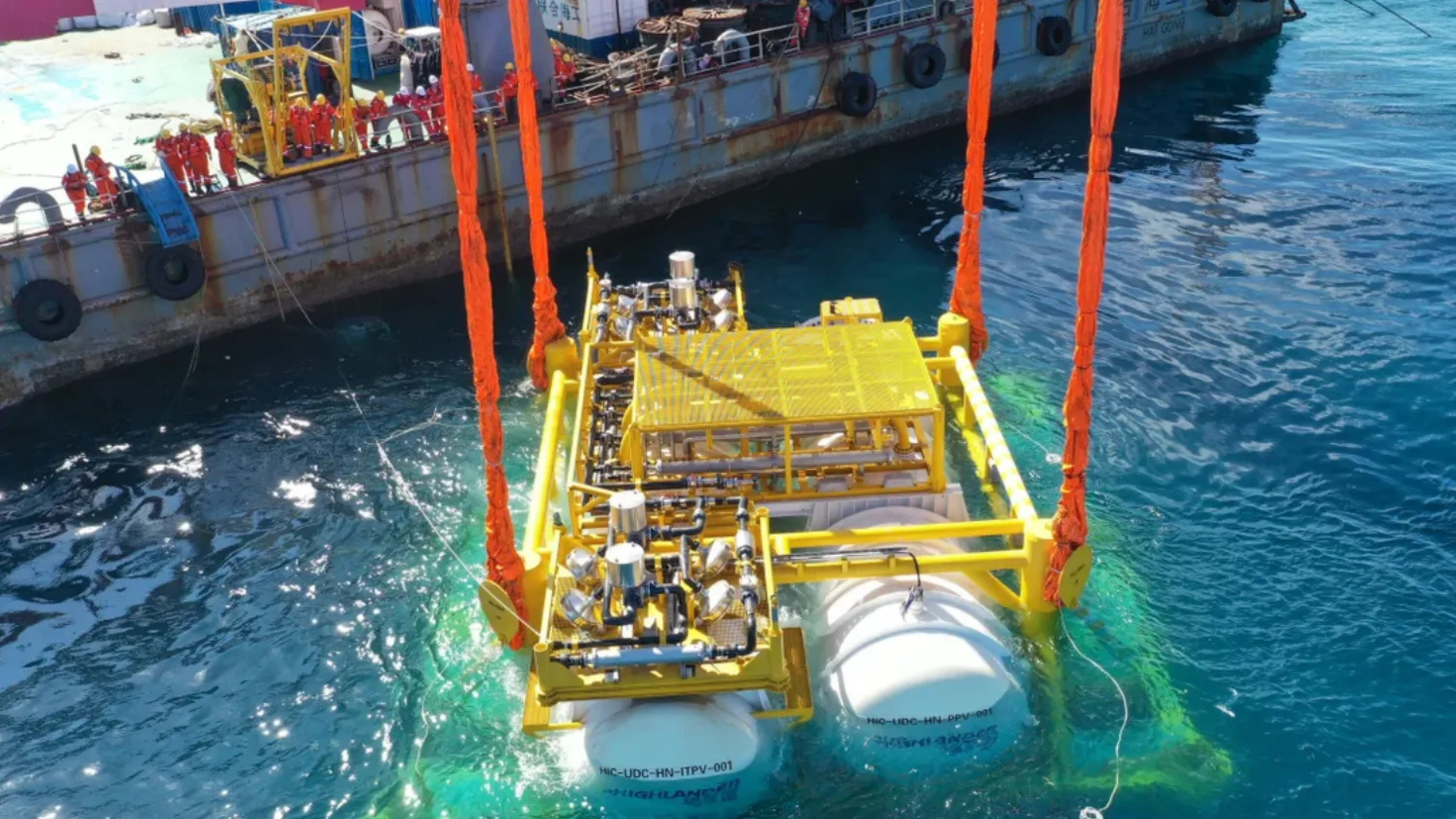
When you picture a data center, what comes to mind? Rows upon rows of humming machines, vast halls filled with air conditioning units, an almost industrial symphony of heat and noise? Prepare to have that image shattered. Because China has just gone and done it – deployed the world’s first offshore wind-powered underwater data center into full commercial operation.
This isn’t some far-off science fiction concept; it’s happening now, just off the coast of Shanghai. We’re talking about a $226 million facility, a veritable underwater fortress housing nearly 2,000 servers, all humming away 35 meters beneath the waves. Think of it like a colossal, self-contained brain, submerged and silently thinking, powered by the very wind that whips across the ocean’s surface.
A Deep Dive into the Tech
The real genius here, the bit that makes me sit up and take notice, is the cooling. Traditional data centers are energy hogs, and a massive chunk of that energy goes towards keeping those furiously working processors from melting into slag. They need industrial chillers, HVAC systems – a whole ecosystem of heat management. This subsea marvel, however, simply opens its metaphorical mouth and drinks in the surrounding ocean. Seawater, with its remarkably stable temperatures, acts as a colossal, passive heat sink. It’s elegant. It’s brilliant. It’s the kind of ‘why didn’t we think of this sooner?’ innovation that defines platform shifts.
The facility boasts a Power Usage Effectiveness (PUE) below 1.15, a figure that frankly blows most land-based operations out of the water. Traditional setups often hover around 1.5 or even higher, meaning nearly half their power consumption is dedicated to just keeping things from overheating. This underwater operation is hyper-efficient, a lean, mean, computing machine drawing directly from the planet’s own cooling system.
This project is more than just a clever engineering feat; it’s a potent symbol of China’s ambition to weave renewable energy directly into the fabric of its digital future. By connecting directly to nearby offshore wind farms, this data center is powered by the very elements it inhabits. As the insatiable demand for AI processing power continues to skyrocket, the world is desperately seeking novel solutions for both energy and thermal management, and this subsea experiment feels like a powerful answer.
The Challenges Lurking Beneath the Surface
Now, let’s not pretend this is a walk in the park – or rather, a swim in the ocean. The challenges are, to put it mildly, significant. Saltwater is a notorious beast for corrosion. Maintaining pressure seals at depth for decades is no small feat. Subsea cables can be fickle, and accessing hardware for repairs when you’re hundreds of feet below the surface is… well, complicated. It’s a far cry from popping open a server rack in a climate-controlled room. Operators are betting heavily on sealed modular designs, strong remote monitoring, and redundant systems to minimize the need for physical intervention.
It’s impossible not to draw parallels to Microsoft’s earlier Project Natick, which explored similar waters. While Microsoft eventually shelved its commercial ambitions for that particular project, the trials offered invaluable data, even suggesting lower hardware failure rates underwater. This Chinese initiative, however, appears to be taking that research and diving headfirst into full-scale operation, aiming to prove the commercial viability of this audacious concept.
The trend is undeniable. From Peter Thiel’s wave-powered floating data centers to this submerged Shanghai powerhouse, the pressure is on to innovate. AI’s appetite for energy and its resulting heat output are creating a new frontier for infrastructure development, and the ocean, with its vast, untapped resources, is increasingly looking like the next big data frontier.
This isn’t just about China pushing the envelope; it’s a signal. A signal that the fundamental assumptions we’ve held about computing infrastructure – its location, its power source, its cooling methods – are ripe for re-evaluation. We’re witnessing the genesis of a new era, an era where the digital and the natural world aren’t just coexisting, but are deeply, fundamentally intertwined. It’s exhilarating. It’s slightly terrifying. And it’s absolutely the future.
🧬 Related Insights
- Read more: OpenAI CEO Apologizes for AI Shooter Fail
- Read more: Inside the Autonomous Driving Market Map: 90+ Players Battling for Scale
Frequently Asked Questions
What does the underwater data center actually do? This facility houses nearly 2,000 servers and is designed to process demanding workloads like artificial intelligence computations, big data annotation, and 5G infrastructure tasks. Its subsea location and unique cooling system are key to its operational efficiency.
How is it powered and cooled? It’s powered by nearby offshore wind farms, utilizing renewable energy. Cooling is achieved passively by using the surrounding ocean water as a heat sink to absorb the waste heat generated by the servers.
Will this replace traditional data centers? It’s unlikely to replace all traditional data centers in the immediate future. However, it represents a significant technological advancement and a potential blueprint for future, more sustainable and efficient data center designs, especially for power-intensive AI applications.