You’re staring at the screen, knuckles white, tweaking a prompt for the tenth time. “Assess how plausible the following text is,” you typed, feeling vaguely like you’re conjuring magic. The LLM coughed up nonsense. Again. This is fine for playing around, but building actual software that relies on these inscrutable language models? That’s a whole different, and frankly, terrifying, ballgame.
This is where the fuss around automating LLM prompts really kicks in. Forget the conversational back-and-forth; we’re talking about software that needs to spit out consistent, predictable results, day in and day out, fed by data it’s never seen before. If your application sends a prompt and gets gibberish back, you can’t just lean in and rephrase. The machine needs to work, period.
And that, my friends, is the million-dollar (or maybe billion-dollar, if this thing truly pans out) question: can we actually automate the art of prompt engineering to the point where it’s strong and reliable enough for production?
The Prompt-Writing Tightrope Walk
Think about it. You’re building a doc-processing app. It’s supposed Bottom line:, translate, extract… standard stuff. But what if it needs to critique the plausibility of the content? Your initial prompt: prompt_text = f"Assess how plausible the following text is: {document_text}". Seems simple enough.
Except the LLM might get hung up on metaphors. Or decide “plausible” means something wildly different than you intended. Or just rate everything as “fully plausible” or the opposite, without any nuance. Suddenly, your simple prompt is a tangled mess of caveats: “If the document makes claims that are metaphorical, assess the general intent and not the literal meaning.” Sound familiar? Each tweak, each extra sentence, is a gamble. It might fix one problem while creating two new ones. It’s like trying to defuse a bomb with a butter knife.
And as the prompts grow longer, more complex—more like digital spaghetti—predicting the outcome of a minor edit becomes an exercise in futility. You’re essentially guessing which incantation will appease the silicon oracle.
Why This Matters for Your Bottom Line (and Sanity)
This isn’t just about documents. Emails, legal texts, tweets, even audio transcripts – the input is always going to be a grab bag of the unexpected. We’re talking about emails that are bizarrely long, confusingly worded, or just plain weird. Testing your application requires a massive, diverse dataset that mimics the chaos of the real world. Otherwise, you’re just hoping for the best.
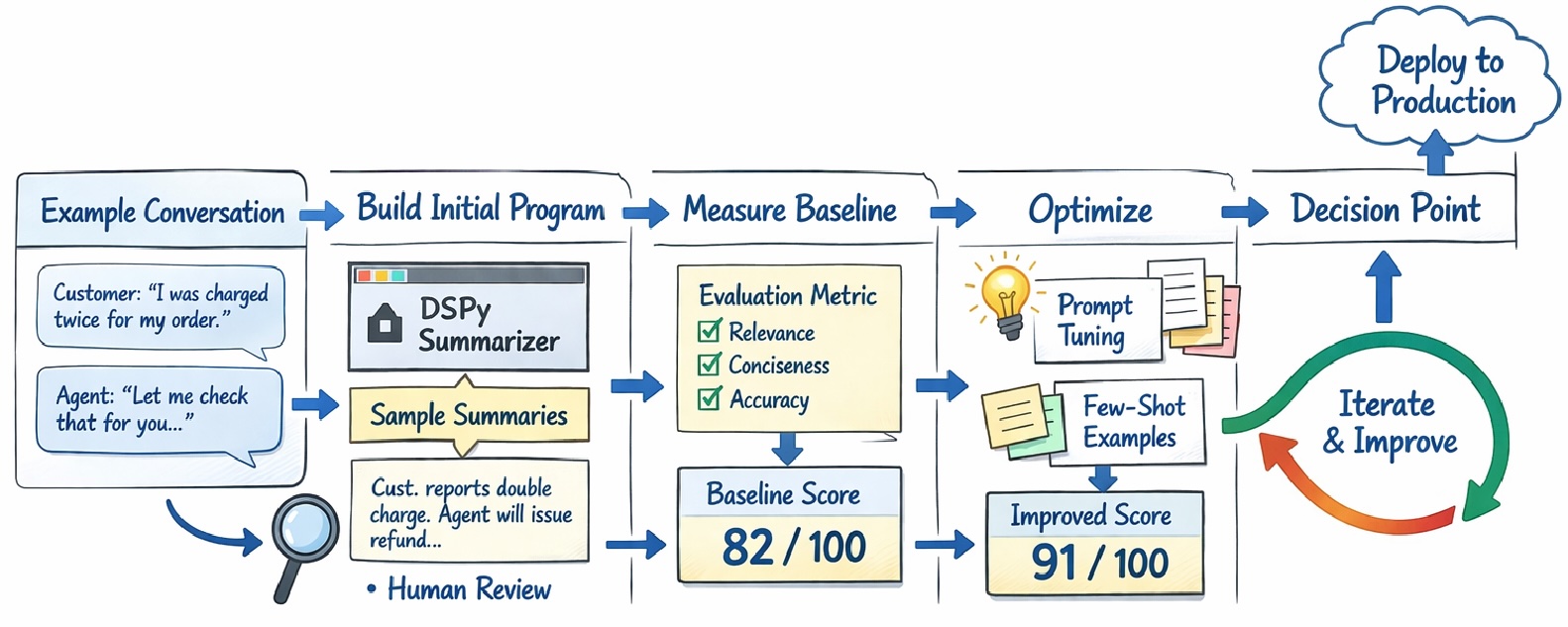
And that’s where the hype train for tools like DSPy starts chugging along. The claim? That this Python library can not only generate these prompts for you but also rigorously evaluate them. The promise is that you can be confident, truly confident, in how well your prompts will perform when the rubber meets the road.
Part of what makes it difficult to create a reliable prompt is that we can’t fully predict the input we’ll have for the prompt.
Sounds nice, right? But let’s get real. For twenty years, I’ve seen Silicon Valley tout magic bullets. They promise to solve the impossible with a slick piece of software. Usually, it’s just repackaged complexity or a new way to extract cash from VCs and gullible startups.
So, the big question remains: is DSPy just another shiny object, or is it the genuine article? Does it actually cut through the Gordian knot of prompt engineering, or is it just another layer of abstraction that makes us feel like we’re in control while the underlying chaos persists?
So, Who’s Actually Profiting From This Automated Prompt Madness?
The companies building these LLMs, obviously. OpenAI, Google, Anthropic – they’re printing money selling access to their models. But tools that make using those models easier? That’s where the real gold rush is. Think of it like the California Gold Rush: pickaxes and shovels (i.e., the LLMs themselves) were essential, but the folks selling the supplies? They often made out like bandits.
DSPy, and similar emerging tools, are the new pickaxes. They’re not replacing the core technology, but they’re making it more accessible, more “usable” for the masses. And in the land of venture capital, accessibility often translates to massive valuations and even bigger exits. The book being plugged here, Building LLM Applications with DSPy, by Serj Smorodinsky and an unnamed co-author, is just another sign of this ecosystem solidifying. More books, more courses, more conferences mean more money changing hands.
But here’s the cynical veteran’s take: for every developer who finds salvation in DSPy, there are likely a dozen who are still wrestling with the fundamental limitations of LLMs themselves. The tool might automate the prompt, but it can’t invent the underlying intelligence or fix the inherent unpredictability of these models when faced with novel situations.
We’re still in the Wild West, folks. And while DSPy might offer a slightly better lasso, don’t expect it to tame the stallion overnight.
🧬 Related Insights
- Read more: 60% of Banks Ditch New Rails for Payments Hubs—Smart Move or Desperate Patch?
- Read more: 7 Ways to Say ‘No’ in Code Review Without Torching Bridges
Frequently Asked Questions
What does DSPy actually do? DSPy is a Python tool designed to automate the creation and evaluation of prompts for Large Language Models (LLMs). It aims to help developers build more reliable LLM-powered applications by generating and testing prompts programmatically.
Will DSPy replace human prompt engineers? It’s unlikely to replace them entirely, but it could automate many of the more tedious and repetitive aspects of prompt engineering, allowing human experts to focus on more complex, nuanced, or creative prompt design.
Is DSPy a good investment for a startup building an LLM app? Potentially. If it delivers on its promise of reliable prompt generation and evaluation, it could significantly reduce development time and improve application stability. However, as with any new tool, thorough testing and understanding its limitations are crucial before committing resources. The real question is who gets paid if it works: the DSPy creators or the LLM providers?