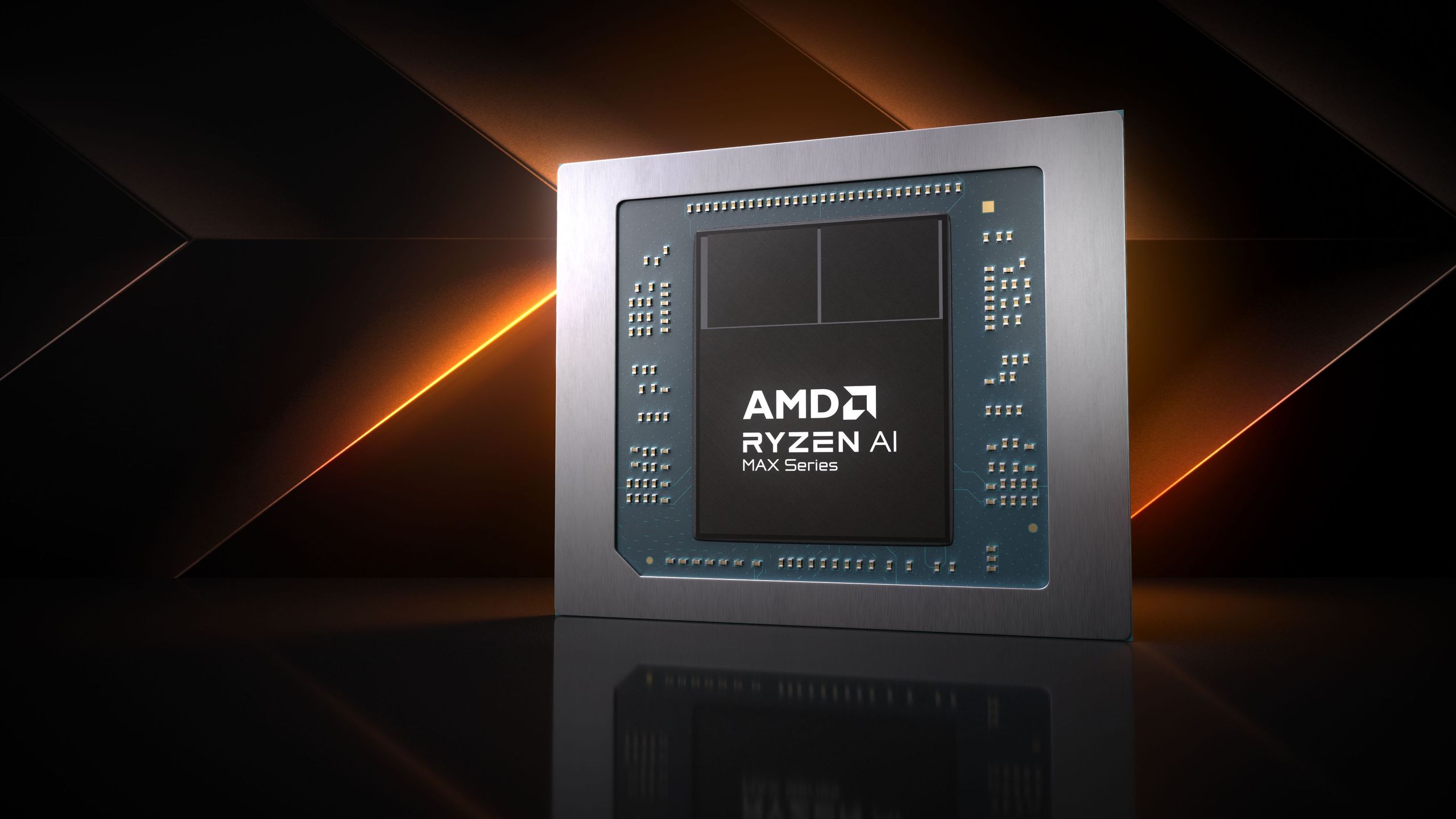
Here’s the thing: AMD’s new Ryzen AI Max 400 ‘Gorgon Halo’ APU is here, and it’s got a number that’ll make your eyes water: 192GB of unified memory. That’s… a lot. Enough to run a 300-billion parameter LLM, they claim. A category first, apparently, for x86 clients. Bravo.
Except, let’s pump the brakes. You know what else has a lot of memory? Apple’s M-series chips. And guess what? They’ve had to dial back options due to the global DRAM shortage. AMD, bless their ambitious hearts, is pushing more memory onto their chips at a time when sourcing it is apparently harder than finding a unicorn. It’s less a “minor miracle” and more a “potential PR dumpster fire” waiting to happen.
These aren’t consumer chips, mind you. Not yet, anyway. We’re talking ‘Pro’ here. Targeting the commercial market. The Ryzen AI Max PRO 400 series. Enterprise-grade security, manageability, reliability. All the buzzwords. Which leaves the consumer market… up in the air. A bit like AMD’s ability to actually deliver these things with 192GB installed.
Is 192GB of Memory Actually Useful?
Look, the specs are familiar. Zen 5 cores, RDNA 3.5 graphics, XDNA 2 NPU. A slight clock bump on the flagship 495 to 5.2 GHz. It’s a refresh. A minor one, really, building on the ‘Strix Halo’ chips. The real story is the memory. They’re touting it as a way to run massive LLMs. And sure, having that much memory could be a game-changer for certain AI workloads. But are there enough of those workloads, available today, on an x86 platform, that truly demand this kind of RAM overkill? And will developers actually optimize for it? Or will it just sit there, a monument to theoretical capability?
AMD dropped a statistic: the Ryzen AI Halo system, running Linux, supposedly offers up to 14% higher tokens per second than Nvidia’s DGX Spark with specific LLMs. And around 4X scaling against a Mac Mini M4 Pro in AI tasks. Strong claims. But a Mac Studio is a more apt comparison, they admit. Still, the DGX Spark starts at $4,700. The Ryzen AI Halo? Pre-orders open in June, starting at $3,999 for a configuration with 128GB of RAM. That’s competitive. It’s also only available with Linux and Windows, unlike the Linux-only DGX. A win for flexibility, perhaps.
Why Are We Still Talking About DRAM Shortages in 2026?
AMD says “coming soon.” No timeline. No partners for Gorgon Halo systems. They did mention several OEM partners are excited and systems will be announced from them starting in Q3 2026. Q3 2026. That’s… a ways off. And this is for the Pro line. Consumer availability? Anyone’s guess. The previous ‘Strix Halo’ chips were niche, appearing in machines like the Framework Desktop and ROG Flow Z13. Expect a similar, conservative rollout for Gorgon Halo. They’re not exactly flooding the market.
AMD will be announcing the Ryzen AI Max PRO 400 Series, featuring AMD PRO technologies which deliver enterprise-grade security, manageability, and reliability.
This quote, from AMD itself, is telling. It’s about the Pro features. The enterprise spiel. The consumer side seems like an afterthought. If it even materializes.
So, what’s the takeaway here? AMD is pushing the envelope on memory capacity for x86 APUs, which is undeniably impressive on paper. But the timing is questionable, the market for such extreme memory capacity on this platform is still developing, and the promise of 192GB might just be that – a promise. One that could crumble under the weight of real-world supply chain realities. Or, you know, just a lack of compelling use cases beyond theoretical benchmarks. Keep your wallet closed for now. This one’s a long play, and frankly, a bit of a gamble.