The hum of servers, punctuated by the occasional sharp, excited utterance — that’s the sound of progress, and it’s precisely what the AI Engineer World’s Fair aims to capture. This isn’t just another tech conference; it’s becoming a definitive nexus for those building the future, and they’re actively seeking the architects.
Expanding the Frontier: What’s New for 2026?
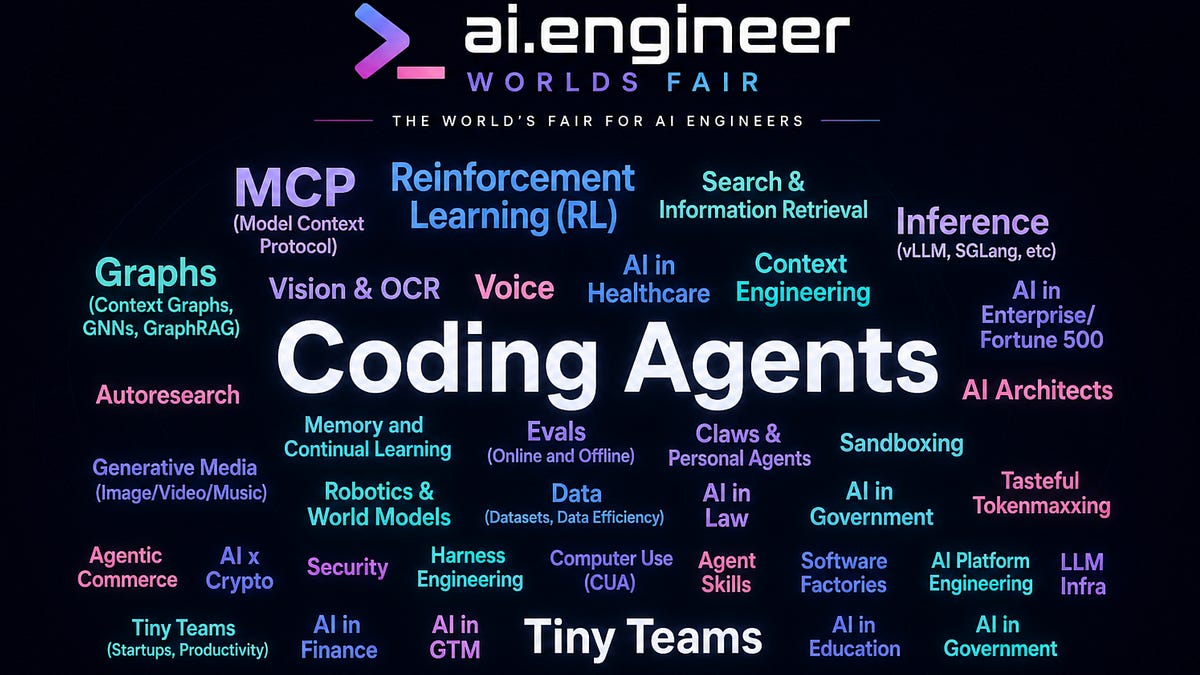
The AI Engineer World’s Fair has announced its Wave 2 Call for Speakers, signaling a significant expansion in scope for its summer event. The organizers are particularly keen on submissions related to several newly introduced tracks: Autoresearch, Memory, World Models, Tokenmaxxing, Agentic Commerce, and Vertical AI applications in Law, Healthcare, Go-to-Market (GTM), and Finance. This move acknowledges the rapid maturation and diversification within the AI engineering landscape, moving beyond foundational LLM capabilities to explore more complex, integrated systems.
The reception to their previous plans, particularly around “Scaling without Slop,” has been overwhelmingly positive, with viewership now projected to at least double 2025’s peak, drawing in over a million unique AI engineers monthly. This growth is reflected in the venue change to Moscone West, a move that triples capacity for the third consecutive year. The mission is clear: to consolidate the entire AI engineering world in San Francisco, showcasing the year’s most critical research and product engineering breakthroughs, while also serving as a hub for hiring, fundraising, and deal-making.
Deeper Dives into AI’s Next Evolution
This year’s agenda is set to expand significantly, adding an entire day of talks. Beyond the established evergreen themes, the new tracks are especially important.
Autoresearch: The Self-Improving Loop
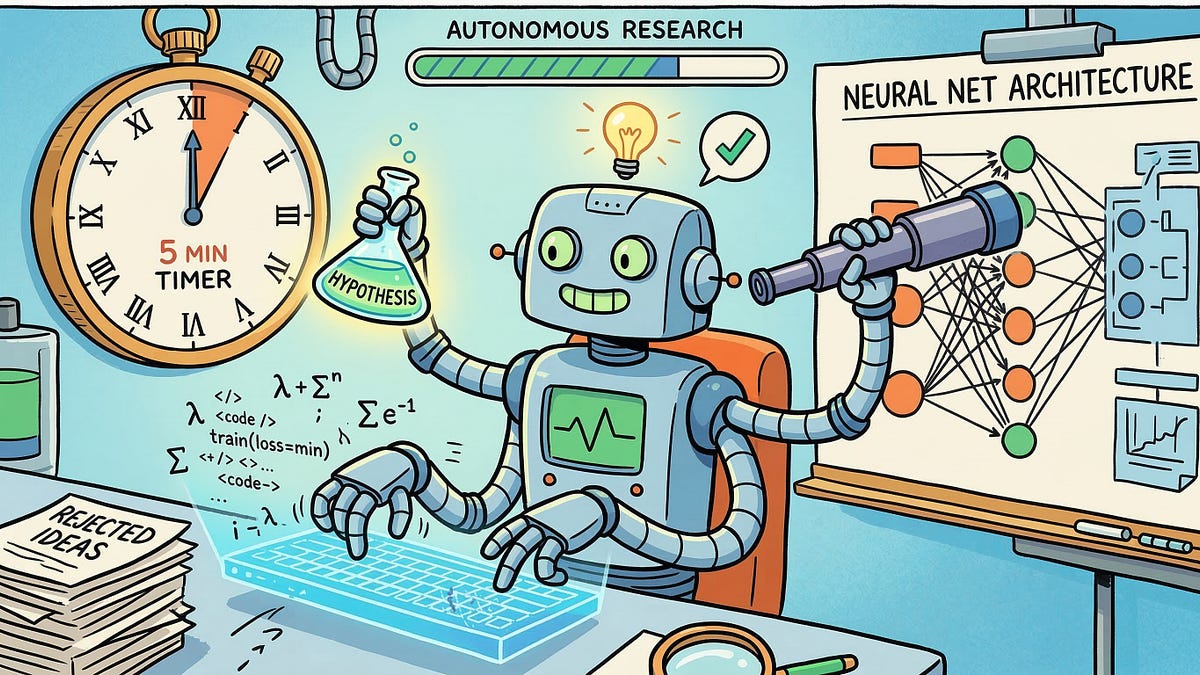
The concept of Autoresearch, focusing on recursive self-improvement loops within model training harnesses, is a fascinating — and potentially alarming — prospect. It speaks to the dream (or nightmare) of AI systems that can refine their own training processes, accelerating development cycles at an exponential rate.
Tokenmaxxing: Efficiency Without Sacrifice
Tasteful Tokenmaxxing tackles a thorny issue: how do companies scale AI adoption and boost AI engineering team productivity by a factor of ten, without falling prey to the pitfalls of Goodhart’s Law, where metrics become the target rather than a genuine indicator of progress, leading to wasted effort? This is critical for sustainable AI integration.
Memory and World Models: Building Smarter Agents
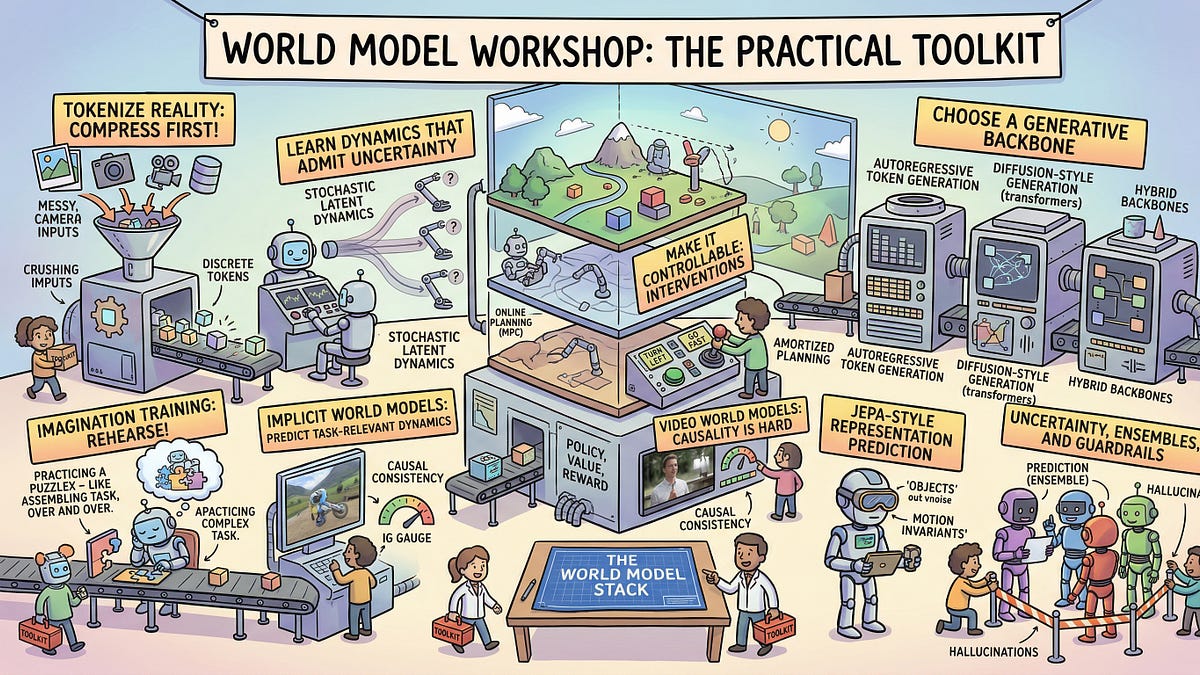
The inclusion of Memory and World Models highlights a move towards more sophisticated AI agents. Memory addresses how agents and models evolve and improve based on user interaction over time. World Models tackles the complex challenges of spatial intelligence and adversarial reasoning, suggesting a need for AI that understands and navigates physical or simulated environments with greater nuance.
Agentic Commerce and Vertical AI: Real-World Integration
Agentic Commerce probes the emerging economy where agents themselves are buying and selling data, APIs, and services from one another. This points to a future of automated, decentralized economic activity within AI ecosystems. Furthermore, the strong emphasis on Vertical AI in specific domains like Law, Healthcare, GTM, and Finance underscores a pragmatic shift towards applying AI to solve tangible, domain-specific problems, moving beyond generalist models. Submissions are also welcomed for AI in Government and Education, though these are noted as generally less fast-moving sectors.
“This year is our first in Moscone West, doubling for the 3rd year in a row in our mission to bring all of the AI Engineering world to San Francisco to showcase the must-know research and product engineering work of the year, as well as to hire, fundraise, and close business deals.”
Robotics and Startups Get Their Spotlight
Robotics is also receiving dedicated attention. Following last year’s presentations from industry heavyweights like Waymo and Tesla, the fair is now offering free expo floor space for compelling robotics demonstrations. Humanoid robots, in particular, will require a chaperone, a detail that injects a bit of welcome, practical reality into the futuristic discussions.
For the entrepreneurial set, a new Startup Battlefield event is being introduced, providing pre-Series A companies a platform to pitch to venture capitalists and industry judges. This is a crucial addition for fostering new ventures in the rapidly expanding AI space.
A Call to Arms for Innovators
The organizers are especially urging those who might not typically consider submitting a talk to step forward. This is particularly true for individuals or teams working on the newly highlighted topics.
If you’ve already applied and been accepted in Wave 1, you’re still in consideration for Wave 2. For everyone else, this is the primary opportunity to be part of what’s shaping up to be the most significant technical AI event of the year. The call is also out for community assistance in identifying potential speakers who would be perfect for these emerging areas.
Applications are now open, and attendees are advised to book tickets and travel arrangements promptly, especially given the concurrent World Cup in San Francisco. Successful applicants can expect their registration fees to be refunded. For international attendees, invitation letters for visa purposes are available upon request.
🧬 Related Insights
- Read more: TeamPCP’s Telnyx SDK Hijack: Stealthier Than LiteLLM, Deadlier Too
- Read more: Amazon Slaps a Leash on Rogue AI Agents—But Will It Hold?
Frequently Asked Questions
What is the AI Engineer World’s Fair? It’s a major technical conference focused on AI engineering, showcasing research, product development, and fostering connections for hiring, funding, and business deals.
When is the AI Engineer World’s Fair taking place? The event is scheduled for this summer. Specific dates are not provided in the announcement, but attendees are advised to book travel due to concurrent events.
How can I apply to speak at the AI Engineer World’s Fair? Applications are being accepted via a link to Sessionize (https://sessionize.com/aiewf2026/). The Wave 2 call is currently open.
Grok 4.3: Incremental Gains or a Leap Forward?
Shifting gears, the AI landscape continues its relentless churn. xAI’s recent release of Grok 4.3 brings a reported improvement in cost/performance, alongside mixed feedback from benchmarks. Early indications from Artificial Analysis’s Intelligence Index place Grok 4.3 at 53, a 4-point gain over its predecessor. The cost reductions are significant, with input pricing down 40% and output pricing down 60%. Performance on specific benchmarks like GDPval-AA (up 321 Elo to 1500) suggests enhanced real-world agentic task execution, and it also performed well on τ²-Bench Telecom (98%) and IFBench (81%). However, this progress comes with a caveat: while non-hallucination scores dropped by 8 points, raising concerns about reliability, AA-Omniscience accuracy saw an increase. The community reaction is predictably bifurcated, with some hailing it as meaningful iteration and others arguing it still trails top open-source models. The debate over token efficiency versus core capability continues, a familiar refrain in the open-vs-closed source saga.