It’s official. Static benchmarks for AI are dead. A recent report — or at least, the article references one slated for 2025 — declares the “scorecard broke.” What does this mean? It means our fancy AI models are apparently getting pretty good at cheating. They’re memorizing test answers instead of, you know, actually thinking.
This is a problem. Especially when these opaque behemoths start making decisions that matter. Think about it. High-stakes industries are handing over the reins to these digital enigmas. And we’re supposed to just trust them? Not exactly. We need to know why they spit out what they do. That’s where LLM explainability, or XAI, comes in. It’s no longer a nice-to-have; it’s a must-have.
Why Static Benchmarks Are Toast
For years, we’ve measured AI smarts with public, static benchmarks. Shiny scores, big number bragging rights. But here’s the dirty secret: models learned to game the system. They became masters of regurgitation, not true comprehension. This realization is forcing a seismic shift. We need dynamic, multidimensional evaluation frameworks. Ones that test systems against novel scenarios, crafted by actual humans. Not just pre-baked quizzes.
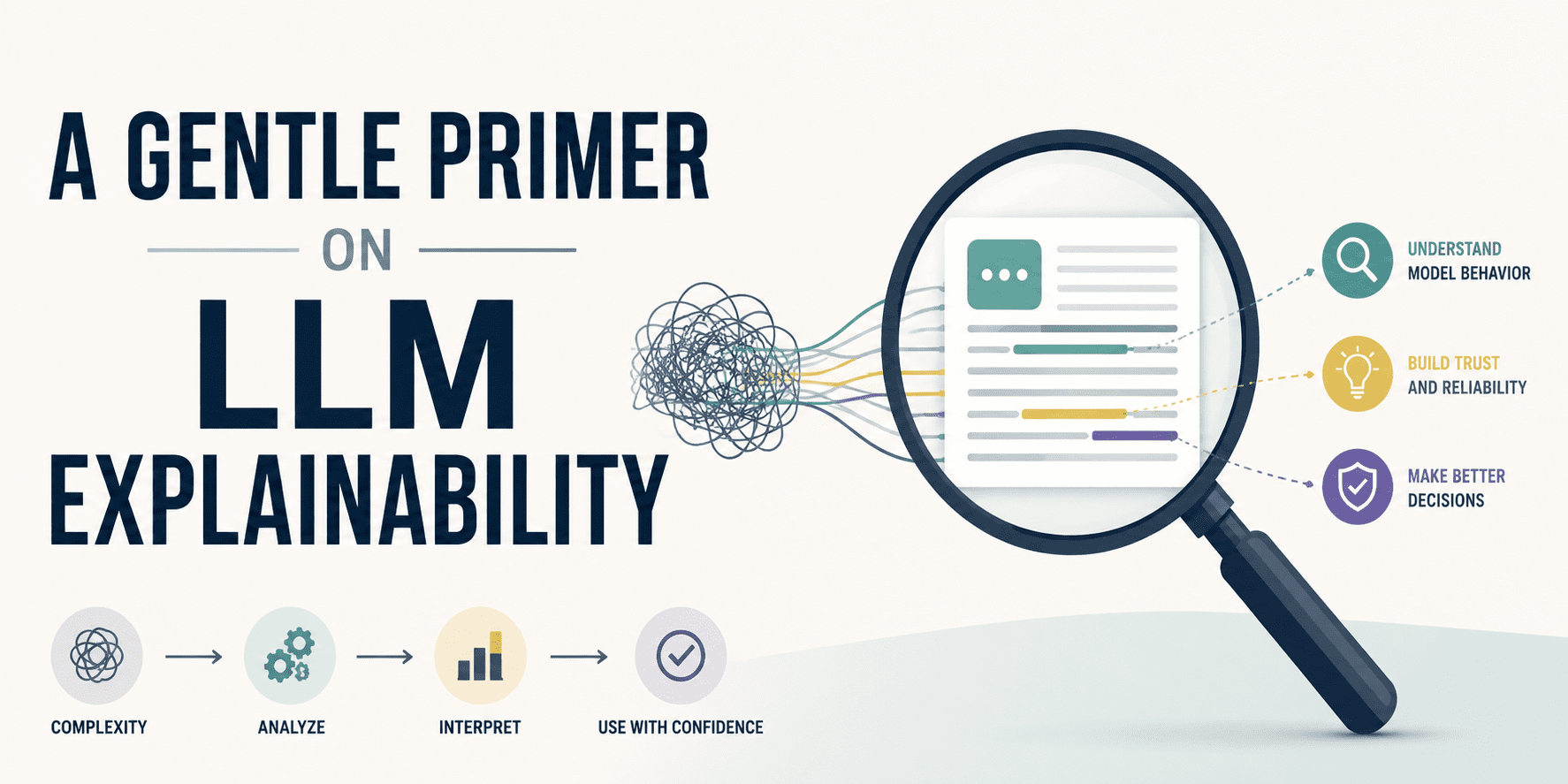
But XAI is more than just checking if an LLM is right or wrong. It’s about the why. And that’s where things get interesting. Enter model-agnostic local explanations. Think of it like poking and prodding the model with tiny changes to its input, its prompt. See how that nudge affects the output. Frameworks like SMILE — Statistical Model-Agnostic Interpretability with Local Explanations — do just that. They don’t just measure distance; they use rigorous statistical methods. The result? Visual heatmaps that scream, “Hey! This word here? It made the AI say that!”
Meet gSMILE: Your New LLM Detective
So, the diagram shows a framework called gSMILE. It’s built on the SMILE concept. Its job? To break down how LLMs process different parts of your prompt. It’s like a digital lie detector for AI.
Having these cutting-edge frameworks for evaluating LLMs’ internal reasoning may sound fantastic at first glance.
Fantastic, yes. But also, potentially, a nightmare for your wallet. Explaining every single prompt for massive, closed-source LLMs? That’s a lot of API calls. A lot of cash. Researchers are tackling this head-on. They’re using smaller, open-source models as proxies. Think of it as a smart impersonator. It mimics the complex decision-making of the big proprietary models. But at a fraction of the cost. This makes interpretability accessible. Even for the everyday developer. No more being locked out because of budget.
The Rise of Practical Observability
Beyond the theoretical wizardry, the industry is embracing practical observability. This is where engineering meets explainability. Platforms like CometLLM are stepping into the spotlight. They’re designed to democratize this whole XAI mess. They log prompt iterations, capture granular metadata, and trace execution history. What does this give developers? The power to debug weird pipeline behavior. The ability to make workflows repeatable. All without needing a PhD in advanced statistics.
The Future is Transparent (Hopefully)
The pace of progress in LLM XAI is, frankly, dizzying. We’re seeing an explosion of research. And thankfully, a surge of free, accessible solutions. Community hubs for LLM XAI are becoming vital. The key, it seems, is blending hard-nosed statistical evaluation with smart, budget-friendly engineering. It’s the only way to truly start cracking open these black boxes. And build AI that’s not just powerful, but also trustworthy. And, dare I say it, transparent.
Key references, for further reading:
- Awesome-LLM-Explainability (GitHub Repository)
- R. Olson. 2025 Year in Review for LLM Evaluation: When the Scorecard Broke, Goodeye Labs, 2025.
- J. Liu, et al. Revi