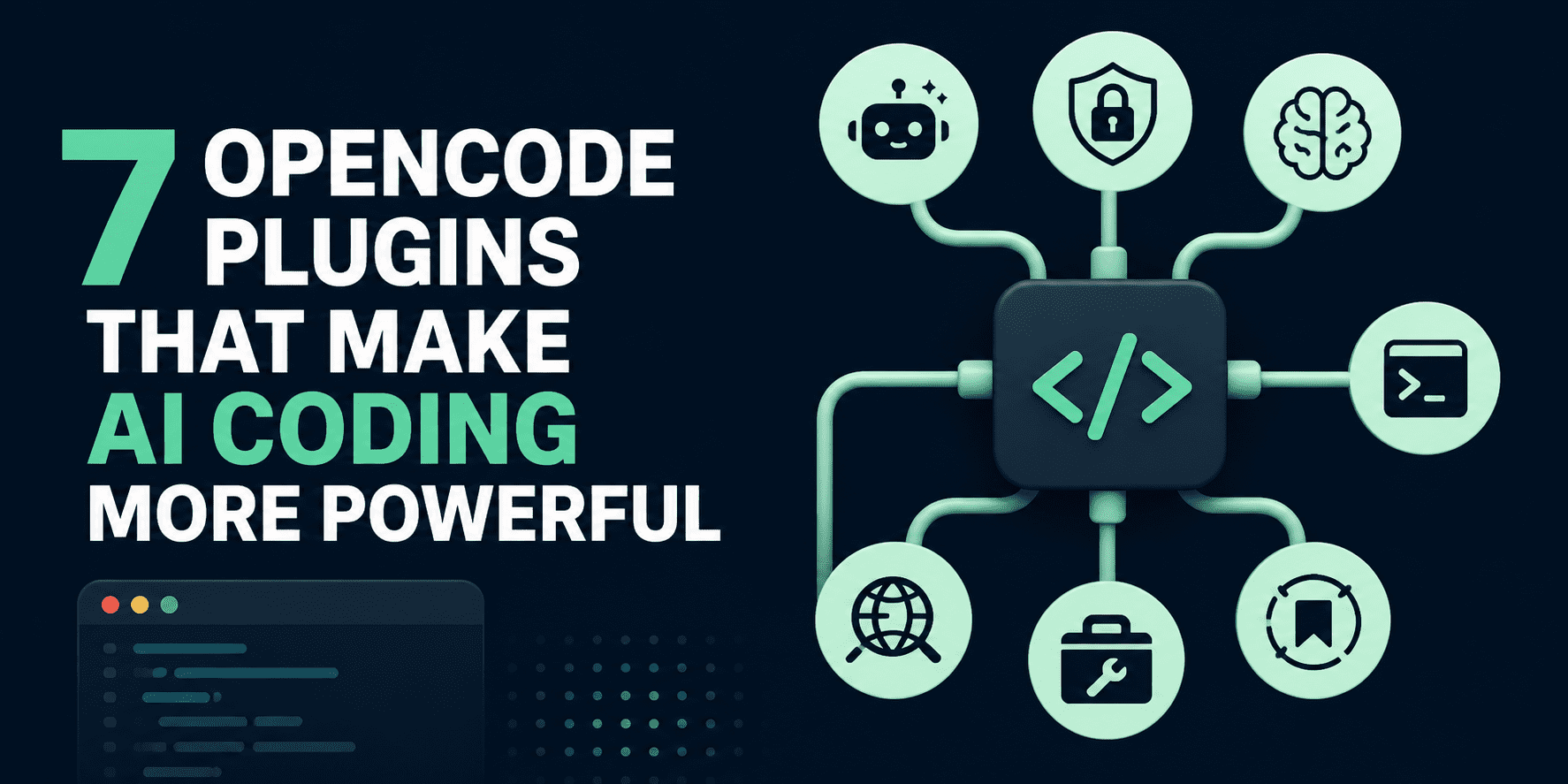
Forget the basic AI coding bot. Everyone assumed these things would be simple autocomplete machines. A glorified spell-checker. How quaint.
Well, that assumption just went out the window. A whole ecosystem of OpenCode plugins is bursting onto the scene, promising to inject some much-needed brains — and persistence — into our AI coding buddies.
This isn’t just about better code suggestions anymore. This is about transforming a stateless assistant into something that actually remembers you, knows how to use a terminal, and can even conduct research with citations. It’s a seismic shift. And these seven plugins are leading the charge.
Memory. Please. For the Love of All That is Code.
Ever feel like you’re explaining the same problem to your AI assistant for the tenth time? Yeah, me too. Opencode Supermemory tackles this head-on. It’s the plugin that gives your AI a brain, letting it retain what you’ve shared across sessions and projects. Finally, an AI that doesn’t have the memory of a goldfish. This is how you build a genuine collaborator, not just a glorified notepad.
Opencode Supermemory gives the agent the ability to retain what users share across sessions and even across projects.
Unlocking New Models Without the Hassle
Paying for premium AI models can be a drag. Opencode Antigravity Auth hooks you up. It lets you authenticate via Google and unlock access to beasts like Gemini 3.1 Pro and Claude Opus 4.6 Thinking. Suddenly, your free OpenCode is slinging top-tier AI. It’s a clever workaround, and frankly, a brilliant move for developers who want the best without breaking the bank.
The Terminal is Your New Best Friend (Again)
If you thought AI agents were confined to generating code snippets, think again. Opencode Pty brings interactive pseudoterminal (PTY) support. This means your AI can now launch background processes, feed them input, and actually read their output later. It’s like giving your AI a set of hands and a direct line to the command line. Long-running tasks? Interactive sessions? No problem. This elevates OpenCode from a writing assistant to a genuine operations tool.
Research Smarter, Not Harder
Stuck down a rabbit hole of Stack Overflow links? Opencode Websearch Cited injects some much-needed rigor into AI-powered research. This plugin adds web search with actual citations. It doesn’t just find information; it tells you where it found it, supporting Google, OpenAI, or OpenRouter configurations. For anyone drowning in research, this is a lifeline. No more guessing if the AI made it all up.
The Kitchen Sink: Oh My Openagent
If you’re the type who wants it all, Oh My Openagent is your answer. This plugin is the Swiss Army knife of OpenCode extensions. It throws in background agents, LSP/AST tools, curated agent packs, and Claude Code compatibility. It’s designed as an all-in-one power pack for those who want to squeeze every last drop of functionality out of their AI coding agent. Think of it as the ultimate upgrade.
Skills That Stick Around
Reusability is the name of the game in software development. Opencode Agent Skills champions this with support for discovering and loading agent skills from various locations. This is particularly useful for teams aiming for portable skill libraries and smoother, Claude-style workflows within OpenCode. It’s about building modular, shareable AI capabilities.
Who’s Using What?
Transparency is often lacking in AI usage. Opencode Wakatime aims to fix that. It tracks AI-assisted coding activity, time spent, and file changes, plugging into the familiar WakaTime dashboard. For individuals and teams, this offers crucial visibility into how OpenCode is actually being utilized. Understanding usage patterns is key to optimizing workflows and resource allocation.
The New Frontier of AI Collaboration
These plugins aren’t just bandaids; they’re fundamental upgrades. They’re shifting the paradigm of AI coding assistants from simple tools to persistent, integrated partners. The flexibility here is remarkable. You can tailor your AI agent to your specific pain points, whether it’s memory, model access, terminal control, or research. This rapid evolution signals a future where AI assistants are deeply embedded and highly customizable. It’s an exciting — and slightly terrifying — prospect for the pace of development.