This isn’t just about saying ‘build me a website.’ It’s about what this means for the actual folks writing code, debugging tricky errors, and shipping features.
What Anthropic’s Claude Code is quietly demonstrating through a series of hands-on projects is a shift from AI as a novelty to AI as a collaborative engineering tool. We’re talking about moving beyond mere code generation and into an integrated workflow where an AI agent actively participates in the development lifecycle. Think of it as a junior engineer, a tireless debugger, and a documentation assistant rolled into one, all accessible via your terminal or IDE.
Beyond the Prompt: Building Tangible Software
The original article lays out a roadmap, starting with the absolute basics. The first project, a simple web app built with Claude Code, isn’t groundbreaking in its output, but it is in its process. It teaches the fundamental interaction loop: describe your intent, let Claude scaffold, review, test, and iterate. This is crucial because it grounds the often-abstract concept of AI-assisted development in a concrete, repeatable methodology. You’re not just asking it to write code; you’re engaging in a dialogue to construct an application.
Games, Mobile, and the Full Stack: Scaling the AI Partnership
Moving onto a retro 2D game and then a React Native mobile app isn’t just about adding complexity for complexity’s sake. Games, with their immediate visual feedback and interactive elements, provide a more engaging environment for debugging and refining logic. Similarly, mobile app development forces a deeper consideration of architecture and user experience—areas where AI can struggle if not properly guided. The jump to a full-stack application is where things get particularly interesting. This isn’t just frontend UI; it’s database connections, authentication flows, and deployment pipelines. Successfully navigating this requires Claude Code to understand interdependencies across an entire application stack.
The projects start with a simple first app, then move into games, mobile apps, full-stack applications, and finally custom MCP-powered workflows. Each project helps you build a different Claude Code skill step by step.
This progression is key. It mirrors the learning curve of a human developer but compressed. The ability to debug across these disparate layers—frontend, backend, database—is what separates a sophisticated coding assistant from a glorified autocomplete.
Extending the Agent: The MCP Frontier
The fifth project, creating a custom MCP server for Claude Code, is arguably the most architecturally significant. Model Context Protocol (MCP) isn’t just a buzzword; it’s the mechanism by which these AI agents can break out of their sandboxes and interact with the real world. By building a custom MCP server, developers are essentially teaching Claude Code how to use their tools, their APIs, and their internal systems. This moves us from an AI that writes code to an AI that can operate within a specific technical environment, a significant leap toward true operational integration.
This is where the real power lies for established development teams. Imagine an AI that can access your internal code repositories, trigger CI/CD pipelines, or query proprietary databases to inform its code generation or debugging. It’s not just about speeding up individual tasks; it’s about re-architecting how software development teams function.
The Underlying Shift: From Generator to Collaborator
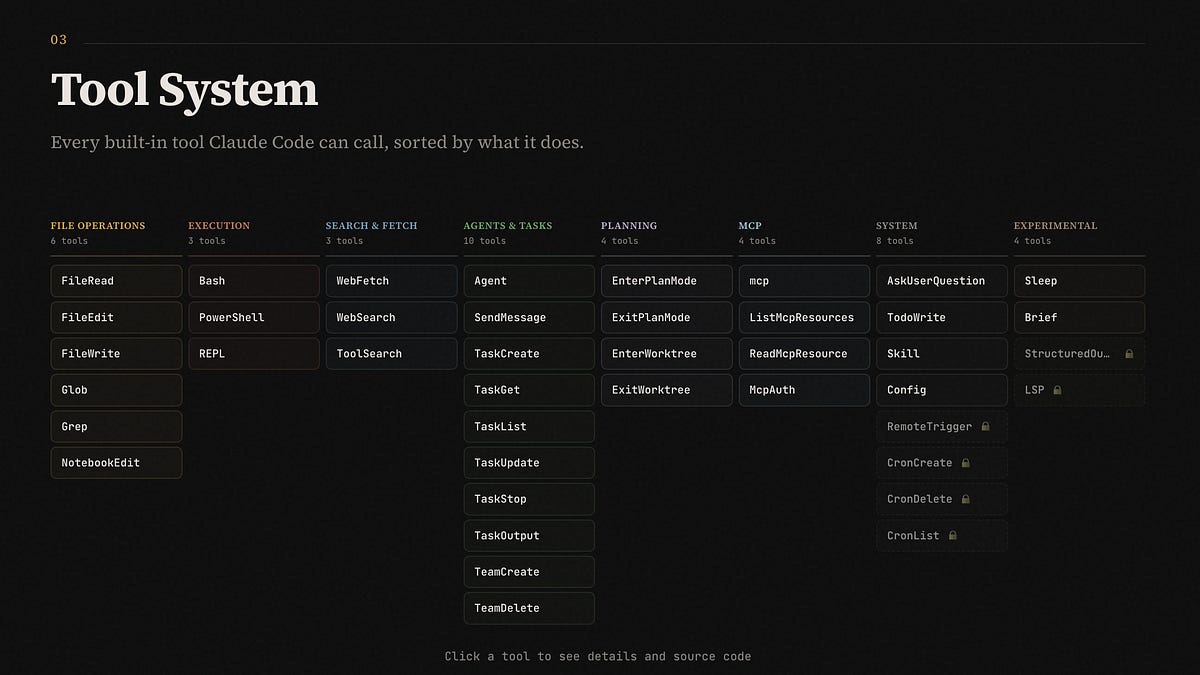
What this collection of projects underscores is the evolving architectural role of AI in software development. We’re moving past simple code completion or generation towards an agentic paradigm. Claude Code, with its ability to read code, run commands, and (through MCP) interact with external systems, is a prime example of this architectural shift. The ‘fun’ aspect isn’t just about gamifying coding; it’s about making these powerful, complex AI capabilities accessible and practical for everyday development workflows.
This isn’t about replacing developers. It’s about equipping them with a more intelligent, more integrated set of tools that can handle the more tedious, repetitive, or even complex systemic tasks, freeing up human engineers for higher-level problem-solving, architectural design, and creative innovation.
What does Claude Code actually do?
Claude Code is an AI agent developed by Anthropic designed to assist with software development. It can read codebases, edit files, execute commands, identify and fix bugs, write tests, and create commits. It integrates with development environments and can connect to external tools and services via the Model Context Protocol (MCP).
Will this replace my job?
This is unlikely. Claude Code and similar AI development tools are positioned as collaborators, not replacements. They aim to automate tedious tasks, accelerate workflows, and assist in debugging, allowing human developers to focus on more complex problem-solving, architectural design, and creative innovation.
How does MCP change things?
MCP (Model Context Protocol) allows AI agents like Claude Code to interact directly with external tools, databases, and APIs. This means Claude Code can access and utilize your specific systems and data sources, moving beyond generalized knowledge to perform tasks within your unique operational environment.